

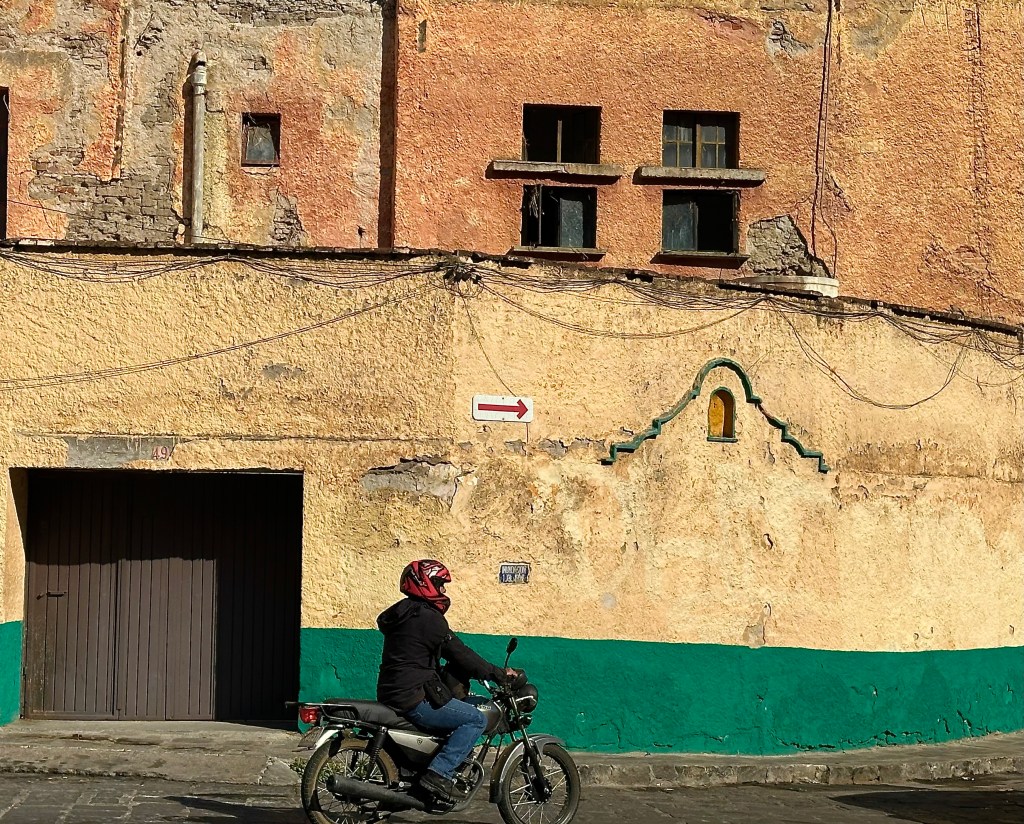
Hay dos Méxicos; there are two Mexicos, said our driver, Francisco, as we passed through the interminable sprawl of Mexico City on our way to San Miguel de Allende. We were passing through a stretch of sometimes makeshift auto body shops, with hand-lettered signs and beat-up cars, trying to ascertain some of the products being advertised.

There’s this Mexico–he nodded over to one of the more ramshackle garages–the one of pirated auto-parts and knock-off brands, of people scraping by, and then there is the Mexico you are headed to.
I almost didn’t go to San Miguel de Allende, expecting a sort of Disneyfied version of Mexico (“yoga studios on every corner,” my friend Beth had all but sneered.) But my traveling companion Patricia had had her heart set on it for years. It had, after all, been named one of the most beautiful places in the world to visit. I already loved Oaxaca and Mexico City from earlier visits. Really, I thought, how bad could it be.

The draw of places like San Miguel for tourists is that frisson of discovery as you wander the narrow cobblestoned streets flanked by Spanish casas. There is a delight to the eyes, a human scale and an intimacy to these streets. The cathedral, it’s steeple a confection of pink sandstone reminiscent of Gaudi, is iconic.

San Miguel is not the faux-Mexico my friend had suggested, and yet, the contrast between the two Mexicos can be stark. It’s a real live city of over 170,000 that spreads out into a valley and into the hills for miles.
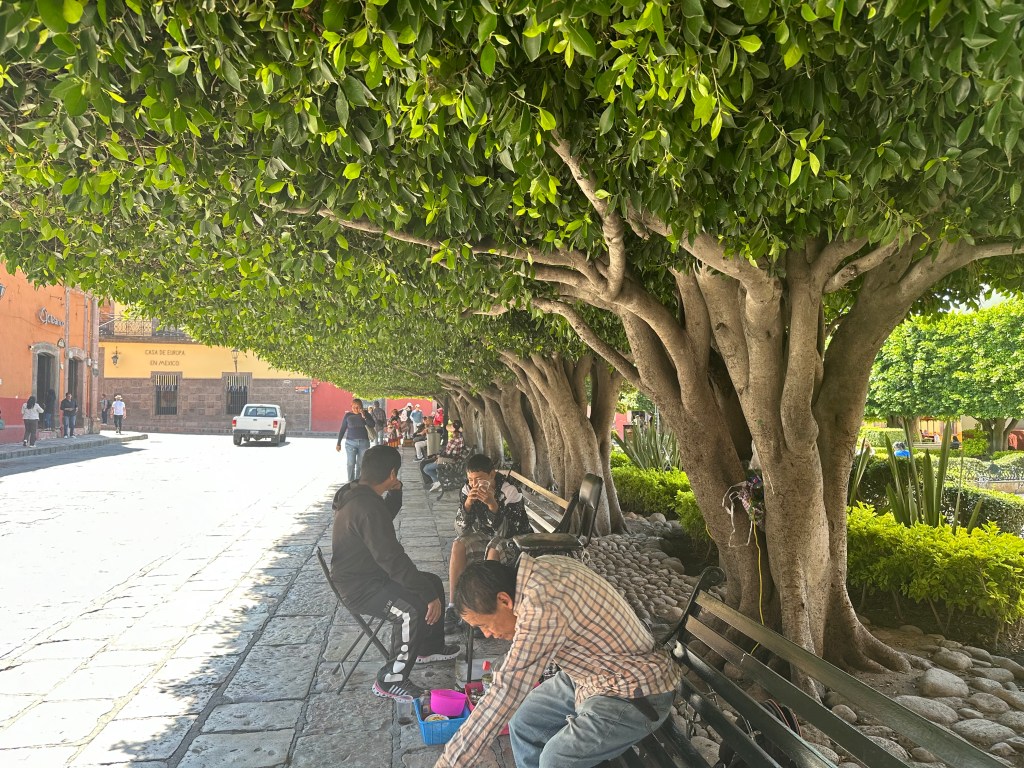
Charm oozes from many of the narrow streets.

That said, for at the last 60 years its picturesque charm has made it a magnet for expats and affluent retirees, joining the artists and writers who have been coming there for even longer. The city now has 20,000 expats. Nestled up against the colonial city are gated condominium developments and lavish mansions. Centro shops include many real estate offices (with homes at US prices) and expensive clothing stores.
We were struck by the juxtaposition of the two Mexicos we visited Fabrica La Aurora, one of the attractions of San Miguel. Throughout most of the 20th century, the expansive building was a textile mill, turning out high-quality cotton fabric for clothing and tennis shoes. Over the years, it employed hundreds of sanmiguelenses. Put out of business in the 1980s by cheaper Chinese cotton, the building was converted in the early 2000s to artist studios and design stores.

The restoration of the building is spectacular, with much of the original architecture preserved and with vestiges of the weaving equipment now forming giant art-pieces.

But as my friend and I wandered through the Fabrica, we found little in the shops to grab our attention (and let me be clear, I go to Mexico to shop, among other things). It felt like a high-end Home Goods for people staging their $2 million condos.
Some faded black and white photos along the hallway of the workers who had once filled these rooms did pique my interest in the history of the mill.

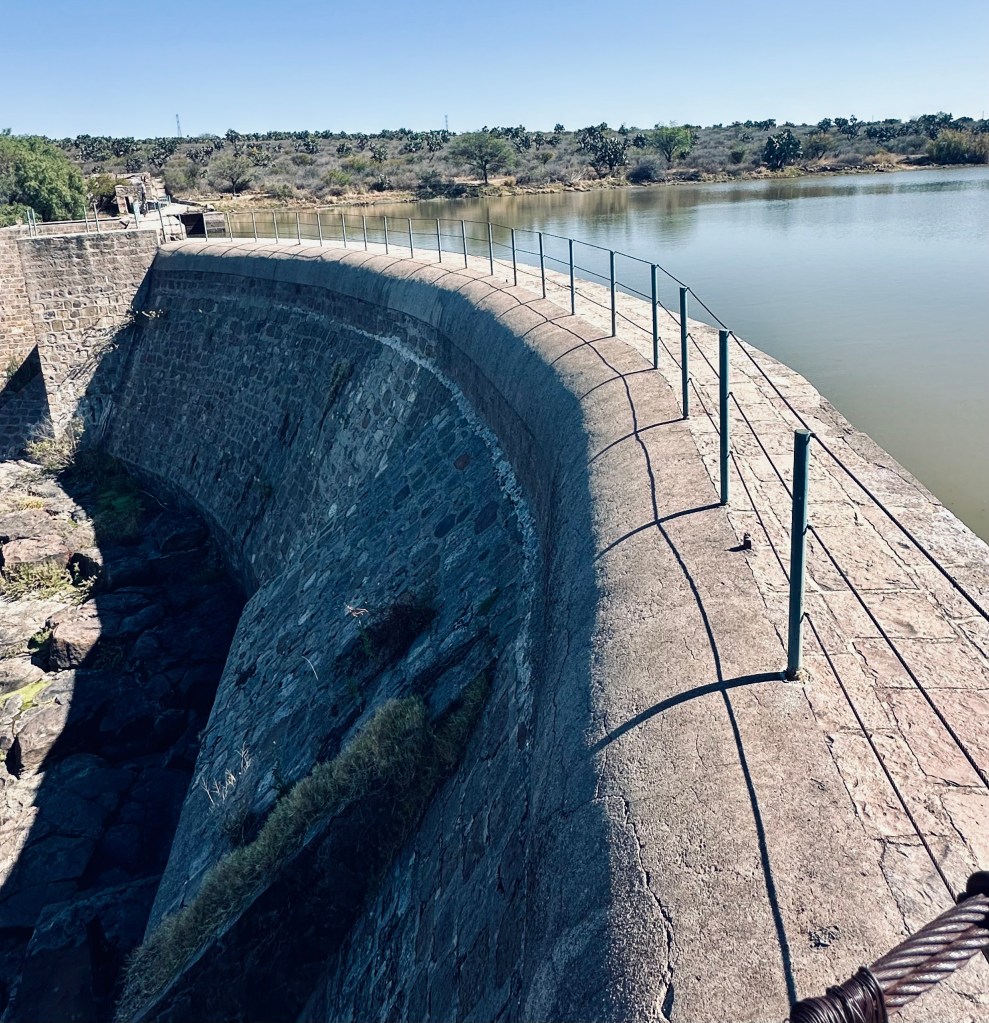
We had come from a delightful morning walk through the Jardin Botanico Charco del Ingenio, on the outskirts of town. There, as you amble through the high desert landscape filled with nopal and columnar cacti, dried up mesquite and scattered agave. Here an ancient reservoir had been dammed in the early 1900s to feed water to the Fabrica, connecting this landscape to the industrial past.

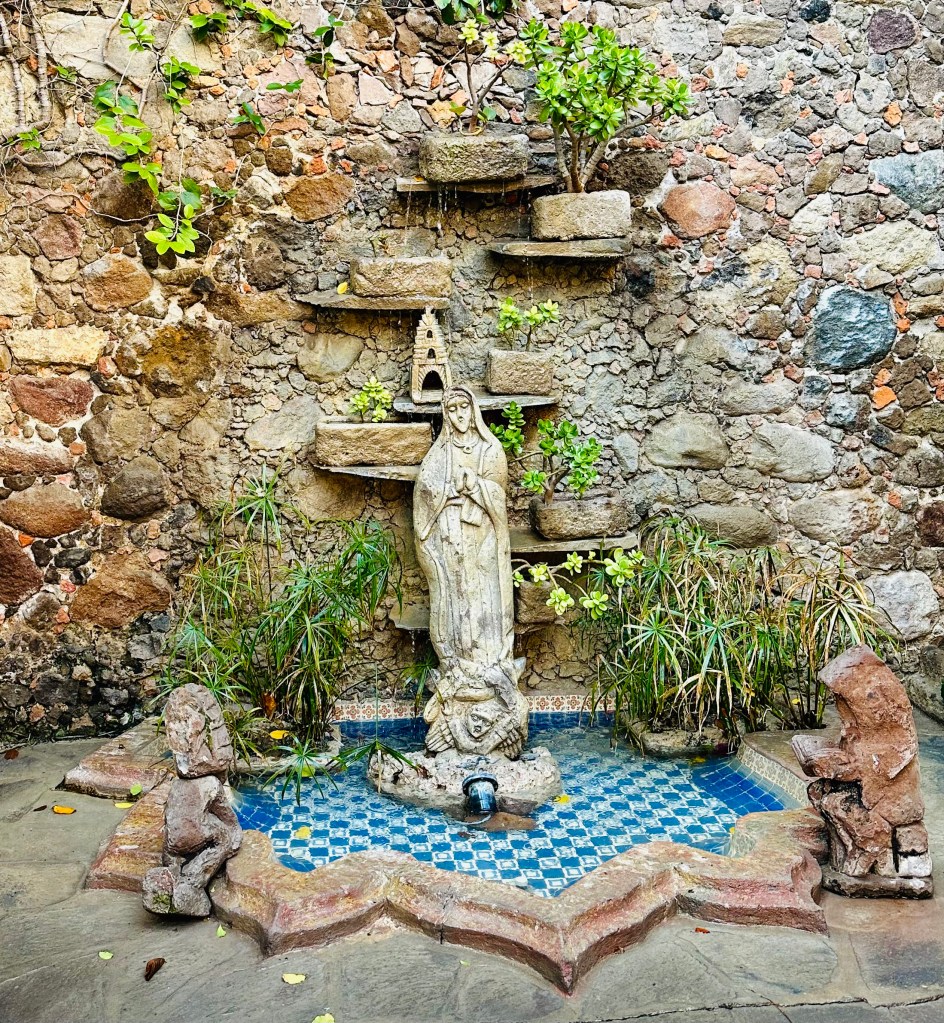
Our AirBnB lodging for the four nights we were in San Miguel felt like the culmination of the American owner’s lifetime of Mexican art collection fantasies. We had a 400-year old mansion built around a shaded courtyard now lushly filled with fountains, statuary, fuschia and purple bougainvillea climbing over trellises and balconies.

At one end, stood a kind of altar to goddess of Mexico, the Virgin of Guadalupe.
The house was filled to the brim with crockery and paintings, heavy doors carved from antique benches, mounted with hand-forged iron hinges, carved wooden toys and candelabras.
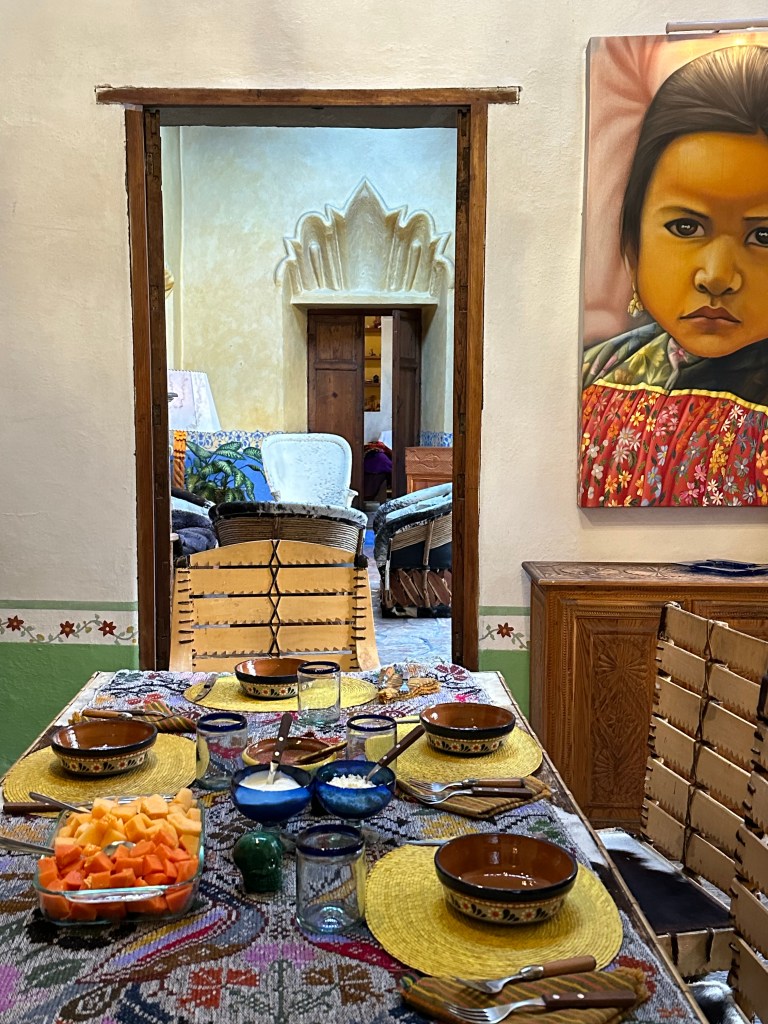
We had a view from a second floor balcony to the Parroquia, especially beautiful lit up at night. The owner offered to have two local women come in to make us breakfast—fresh salsa with marjoram and thyme, chilaquiles, tortillas, fresh squeezed orange juice. We paid them separately from a hand-scribbled listing of the groceries they had purchased that morning. Two Mexicos.

From San Miguel, we headed west to the city of Guanajuato, the capital of the eponymous state. The colonial Guanajuato, like San Miguel, was founded in the 16th century. Within 100 years, the nearby silver mines produced 2/3 of the world’s silver. The city spreads out along a steep valley, crawling up along the mountain slopes.
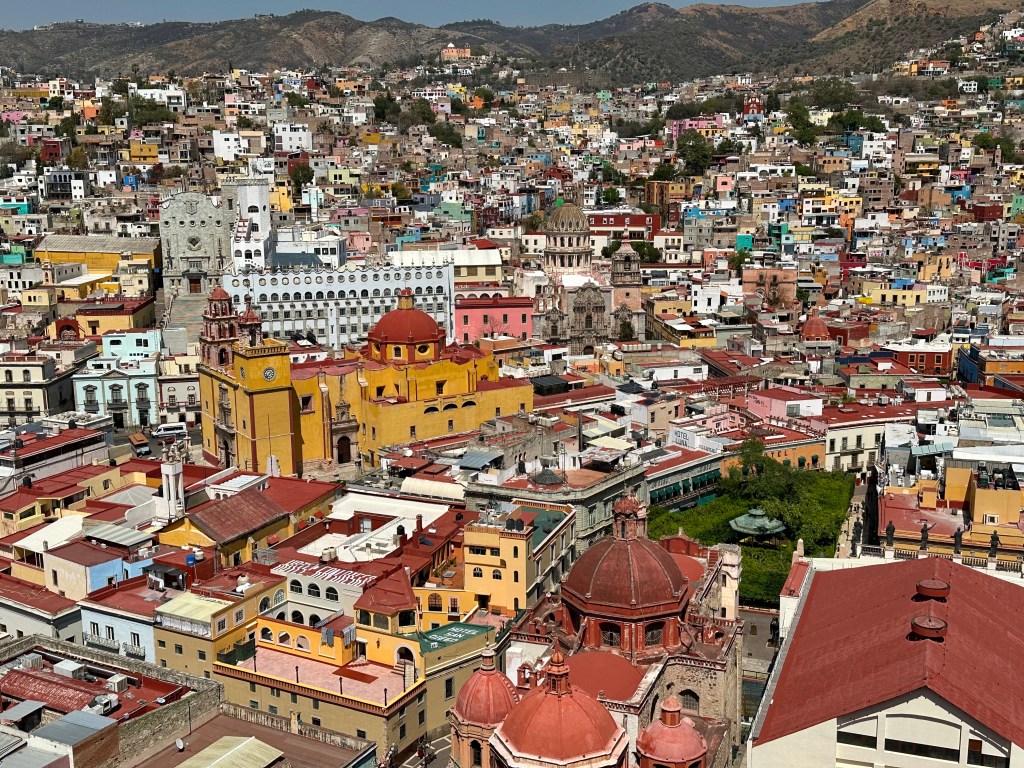
From the top of a funicular that took us up to the El Pípila statue which stands sentry over the city, we could see the vast expanse of brightly colored buildings anchored by the majestic 17th century yellow and ochre Basilica Colegiata de Nuestra Señora de Guanajuato. El Pipila was a fighter for Mexico’s independence, leading the first successful assault on the Alhóndiga, the Spanish grain exchange building, causing the War of Independence to explode.
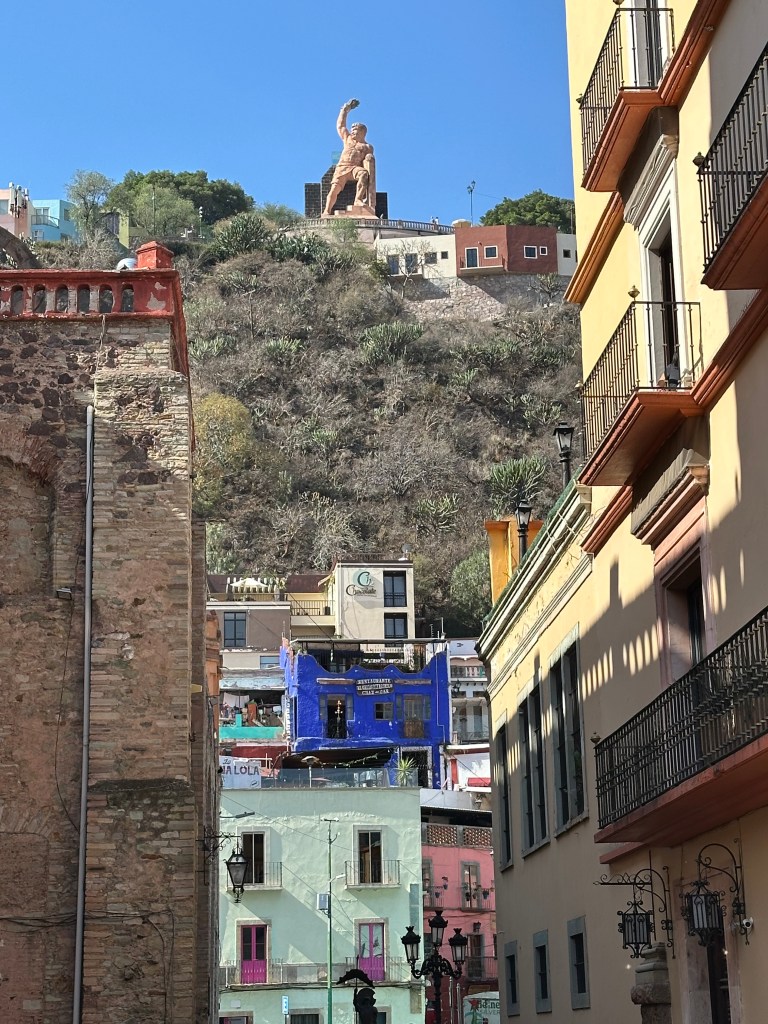

Guanajuato’s historic center-the narrow streets, the elegant facades- has the Spanish colonial ambience of San Miguel, but without the polish, without the look of having been preserved to be seen by outsiders.

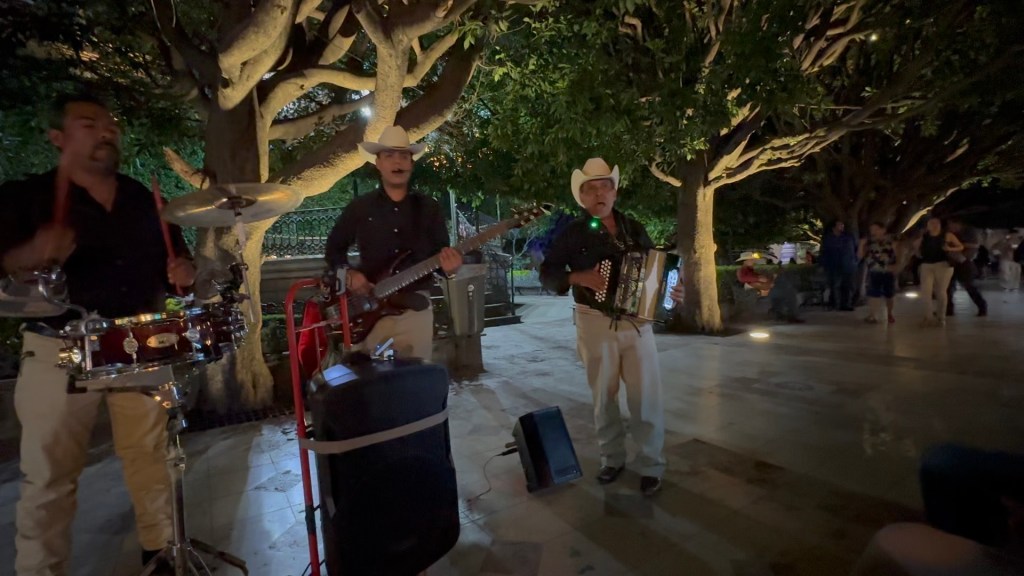
It’s a lively city—cafes and restaurants with students from the University of Guanajuato, norteño bands playing nightly on the town square, roving street performers known as callejoneadas, site of the annual international Cervantes Festival—but lively with people who live and work and study there.

As I wandered the streets, I felt more of the organic unfolding of a 500-year old city, one with crumbling facades adjacent to a luxury hotel, with a market that sells more produce and meat and food than artesania.
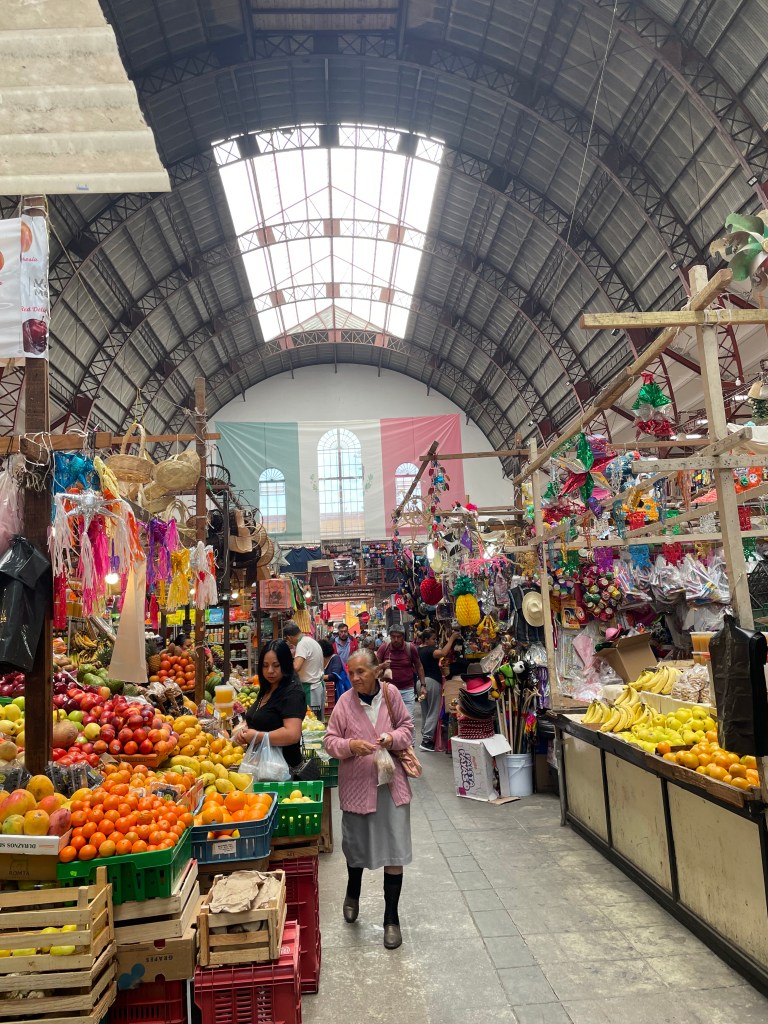

I felt a different pace than in San Miguel, not languid exactly, but a less heightened pitch. The plazas invited us to linter in the evening, enjoying the crowds gathering around the Teatro Jaurez and along the sidewalks

Our home for the two nights we were in Guanajuato was the glorious Hotel Casa del Rector. Housed in a renovated 19th century mansion, it was home to a governor of Guanajuato and for fifty years the Rector of the University. From its rooftop patios, seemingly built into the edge of a cliff, we could see for miles around.
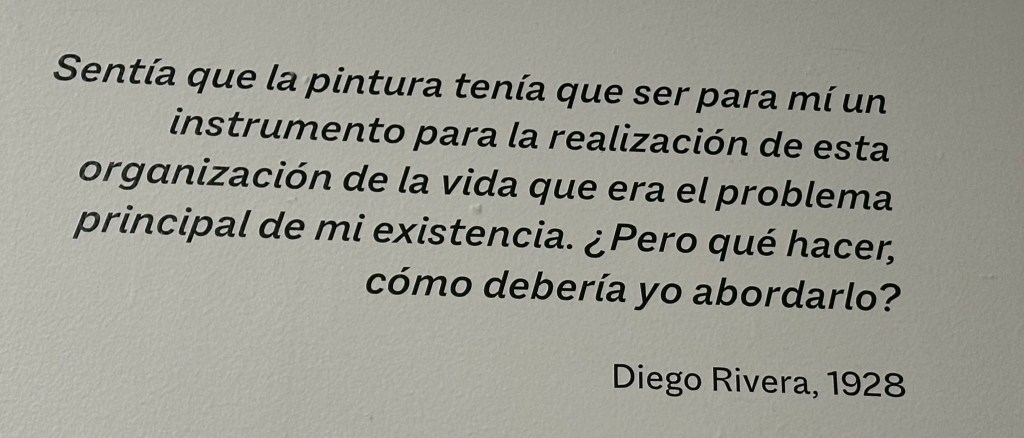
A few doors down is the home in which Diego Rivera grew up and is now a museum dedicated to the painter. I learned about his growth as an artist and his youthful commitment to representing the lives of the poor, the workers and the indigenous people of Mexico, coming as he did from the bourgeoisie.
On the four-hour drive back to Mexico City, Francisco once again pointed out the two Mexicos. We were looking for a place to pee and passed a few rundown places with dirty plastic chairs out front and solitary ancient-looking gas tanks. We don’t want to stop there, he said, the gas they sell is stolen, pilfered from corrupt gas distributors, and inside the prostitutes will be aggressive. Soon, we found a clean and modern rest stop, worth of an American interstate. Two different worlds, a few miles apart.
Mexico is one place I keep returning to – I am attracted to its people, its art, its culture and history, and its landscape. I immerse myself in heir Spanish with all its mexicanismos. Like all places, it’s a world of great contrasts. Two Mexicos. I humbly acknowlege in which Mexico I stand.
 Old and On the Way
As always, Sharon, both your words and pictures make me “feel” the experience.
LikeLike
Thank you Anita!!
LikeLike
I love your descriptions of both Mexicos-so evocative of each.
I am always left wanting to know more about what you describe so beautifully.
LikeLike
Thank you so much Stacey!!
LikeLike
Ah wonderful Sharon. Guanajuato has been on my list of places to go, and now even more. I love the rich mixture of ancient and modern that regular people dwell in, a mixture of the two Mexicos on top of each other. Thank you for this!
LikeLike
Thanks Nancy! 100% recommend a visit. I could have stayed longer
LikeLiked by 1 person
And now I get to go. Glad to have your perspective!
LikeLike
This was so wonderful to read Sharon. You took me there! I love that culture too in its many variations and am now longing to go again!
LikeLike
Thanks Tina! Meet you there some day😉
LikeLike
I loved reading this Sharon. You took me there! I love that culture in all its variations and am now longing to go again.
LikeLike
Gracias, Sharon….siempre muy interesante..¿Cómo va la cadera?
>
LikeLike
Gracias, Sandy. Se va bien. Mi única queja de San Miguel es que las aceras es que las banquetas de adoquín eran muy difíciles para mi cadera. Aparte de eso, muy hermoso.
LikeLike