

Sometimes the trip you plan is not the trip you end up having.
Our trip to Portugal was originally going to be five-day layover on the way to a couple weeks of wandering around Morocco. I had been planning the Morocco trip for months and had given the Portugal part almost no thought at all, other than to meet up with old friends in Lisbon.
Then, in October, war broke out in Gaza and Israel. Not long after that, there were anti-Israel and anti-American demonstrations in Casablanca and Rabat. Aside from the horror of what was happening, I became terrified of the violence escalating region-wide. At the same time, the worsening arthritis in my hip was making my dream of a week hiking in the Anti-Atlas Mountains doubtful. To top it off, my husband Pete was tired from an unsuccessful, if well-fought, campaign for a seat on our Town Board (we learned that local politics can be exhausting).
So, we cancelled the Morocco portion of the trip and booked new flights home from Lisbon (TAP didn’t make it easy, but that’s another story). I’ll admit to moments of wondering if I had chickened out in an over-abundance of caution (“I AM intrepid” I kept repeating to myself.)
But, then again, two mostly unprogrammed weeks in Portugal is not exactly a bad Plan B.

Turns out, Portugal is a place where wandering and happenstance and unplanned surprise can be abundantly enjoyed. and well fed and be welcomed warmly and still be awestruck. It was a place that reminded me of the joys of traveling without too many plans, of being open to what presents itself.
Portuguese weather in December did some of the deciding for us. Although I live in the cold Adirondacks where the mantra is “there’s no bad weather, only bad clothing”, I’ll be the first admit that sightseeing in pouring rain isn’t the most fun way to travel. And yet, rainy December is offseason in Portugal: Cheap hotels! Less tourists!

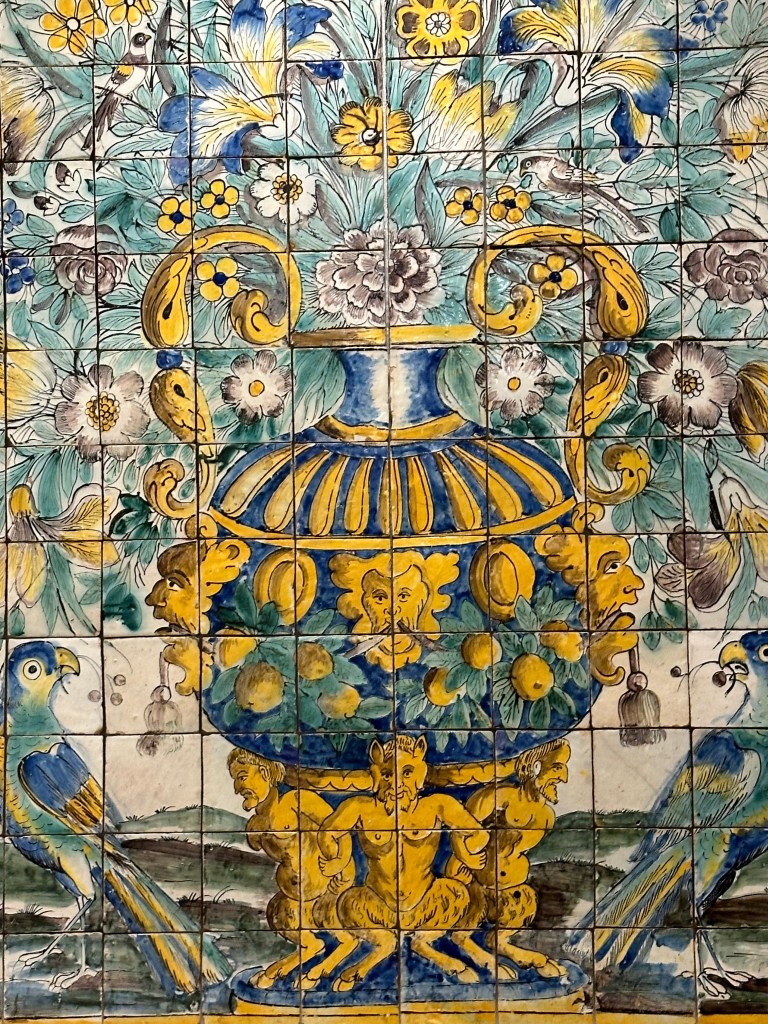
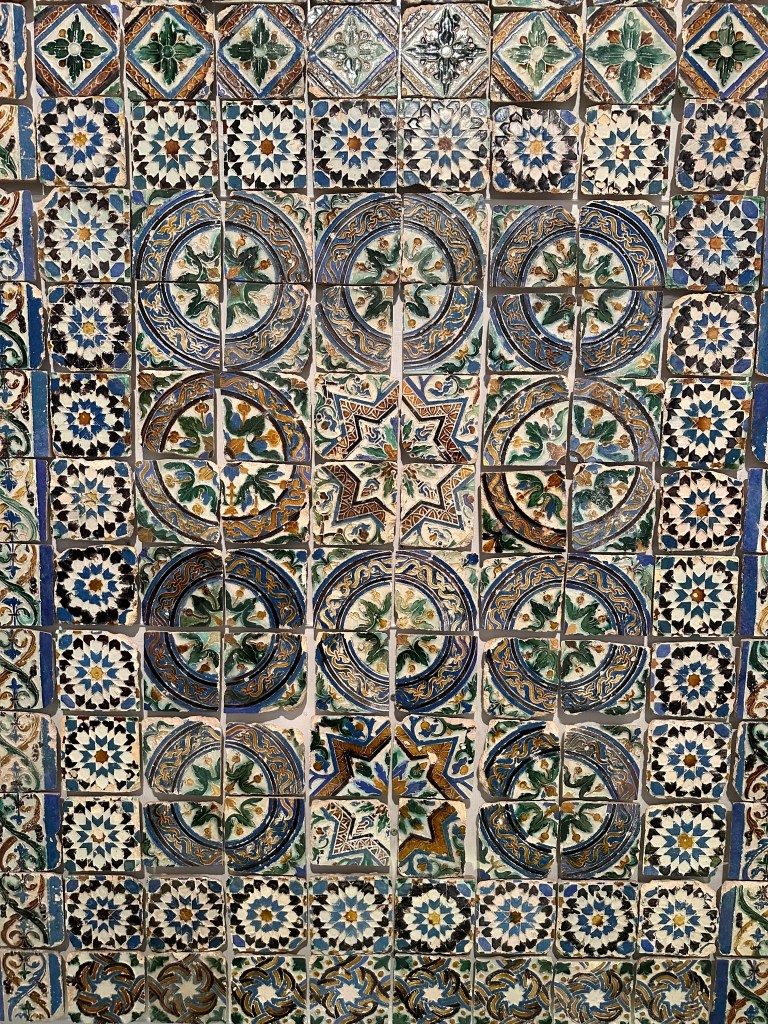
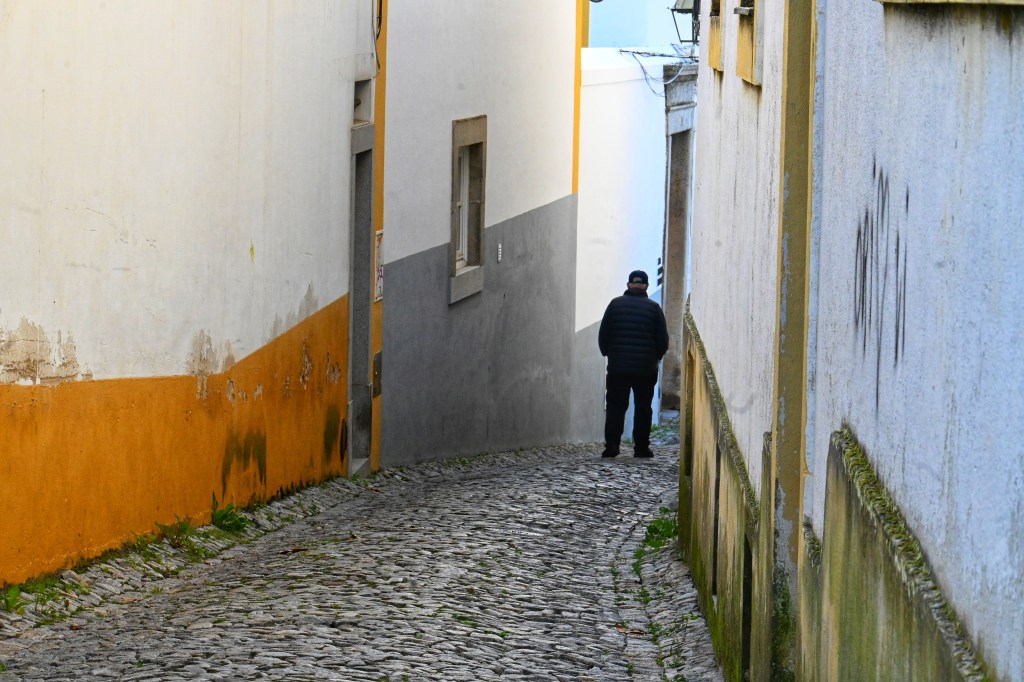
Plus, as I remind myself, you never do know what you will see when what appears to be an obstacle obscures your path. On our second day in Lisbon, the rain came down in sheets. Not a pleasant foggy mist that you can navigate easily in your rain gear, but rushing streams that whooshed down the narrow, cobblestoned streets of the Alfama, creating ponds along Largo do Chafariz, whose ancient sewers were not up to the downpour. After visiting the Fado Museum, we jumped into a cab for the Museu do Azulejo (the National Tile Museum) which would have been a leisurely walk along the Targus on a nice day.

The rain was still belting the cobblestones after our hour or two admiring the azulejos and the museum café was packed with people who didn’t want to venture out. We took advantage of a slight lightening of the downpour and dashed out onto the nearest intersection. A menu was posted on a whiteboard on a nondescript building across the street. That was all we needed to decide on a lunch for the day.

From the soggy grey downpour outside, we found ourselves in a brightly lit, lively restaurant, what I might have called a luncheonette if it were in New York, with the hand-written signs, the sheafs of candy and snacks piled behind a long counter. Late on a weekday afternoon, there were intense conversations around us and the clanging of plates.
We took a deep breath and soon realized we could relax, dry off, have a glass of wine, and watch ordinary Lisboans come and go.


It was Day 2 in Lisbon, and we settled in with the kind of meal that would become the norm in Portugal: fish (always fresh and grilled to perfection), thick seafood soups, salads and fries and, red wine that, even if vin ordinaire, was always delightful.
It wouldn’t be the last time on the trip that Pete and I stumbled onto unplanned meals or walks or villages in Portugal that drew us in with charm, or graciousness or beauty.
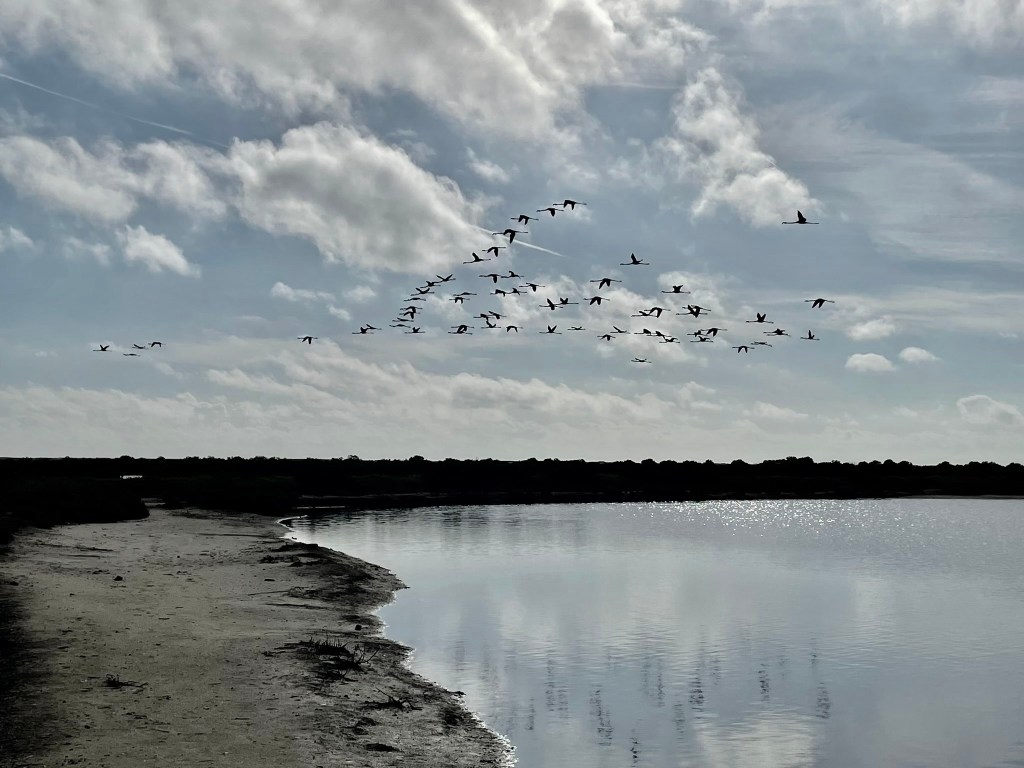
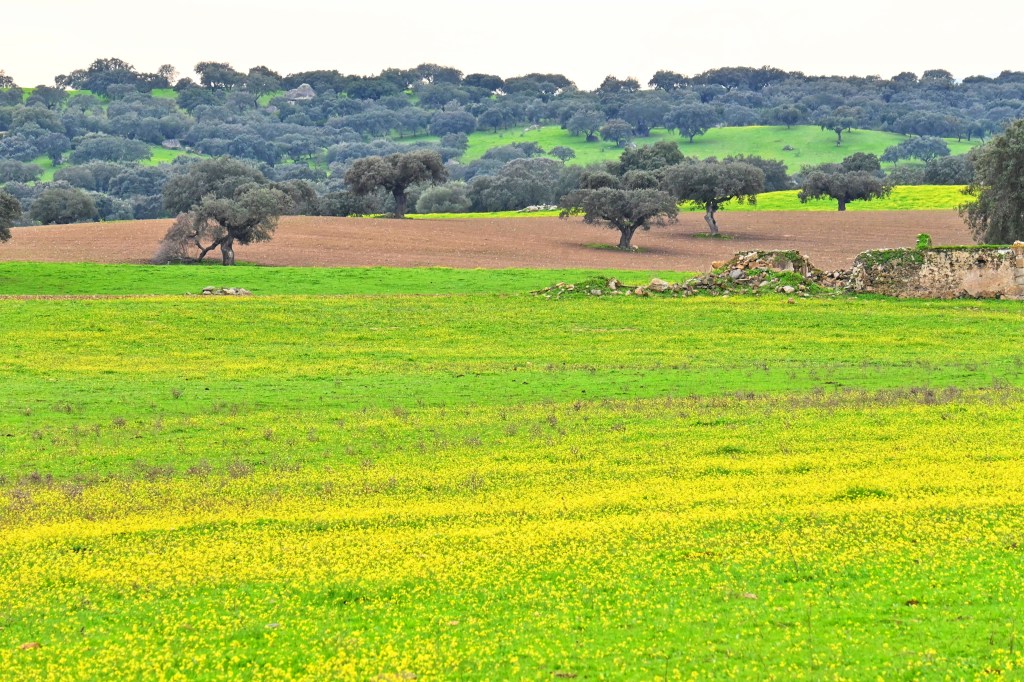
One of our impromptu side trips was a two-day detour into Seville (Spain). Seville is a marvelous city worthy of its own post. From Seville we drove to Belmonte, in the mountainous Beiras region of northwest Portugal. We passed through Spain’s Extremadura and crossed over hills into the Alentejo, a lush and stark region studded with ancient twisted cork trees.
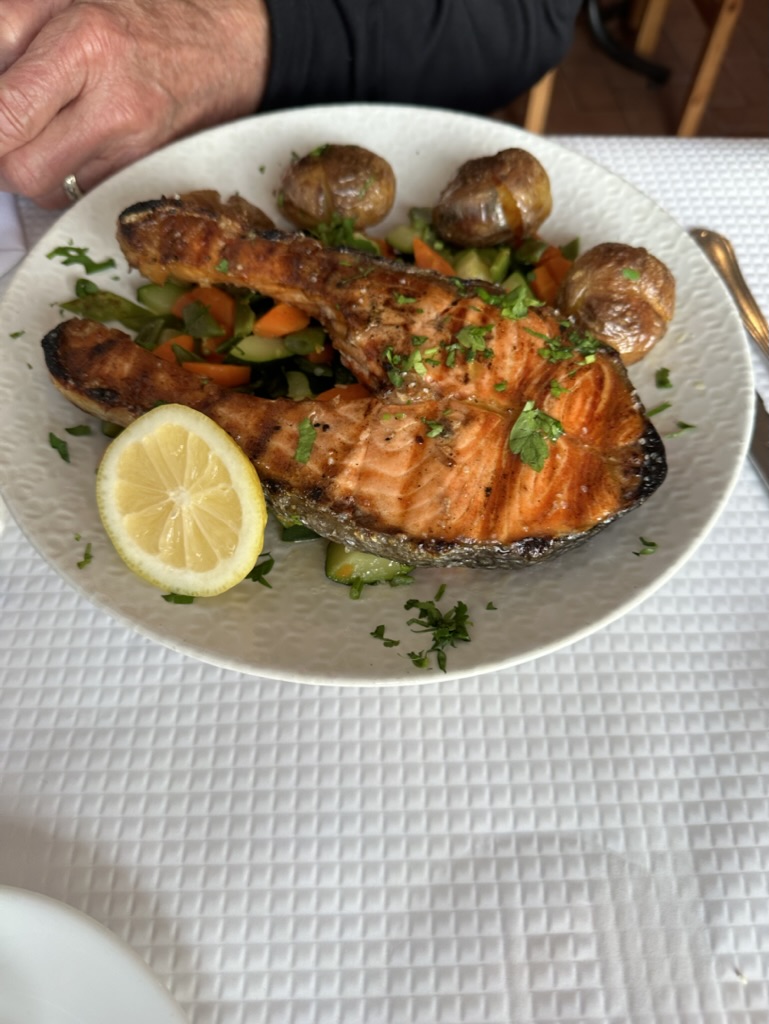
Midday, we pulled over at a roadside restaurant in the small town of Fortios, as in Lisbon, nothing much calling us there other than hunger and a sign for food. And even though we were miles from Lisbon, I felt that same sense of warmth and conviviality. The flavors of the simplest foods were, once again, rich and delightful.

From here, we played much of the trip by ear, stumbling by a stroke of luck in the minimalist hotel that felt like a retreat center in Belmonte.
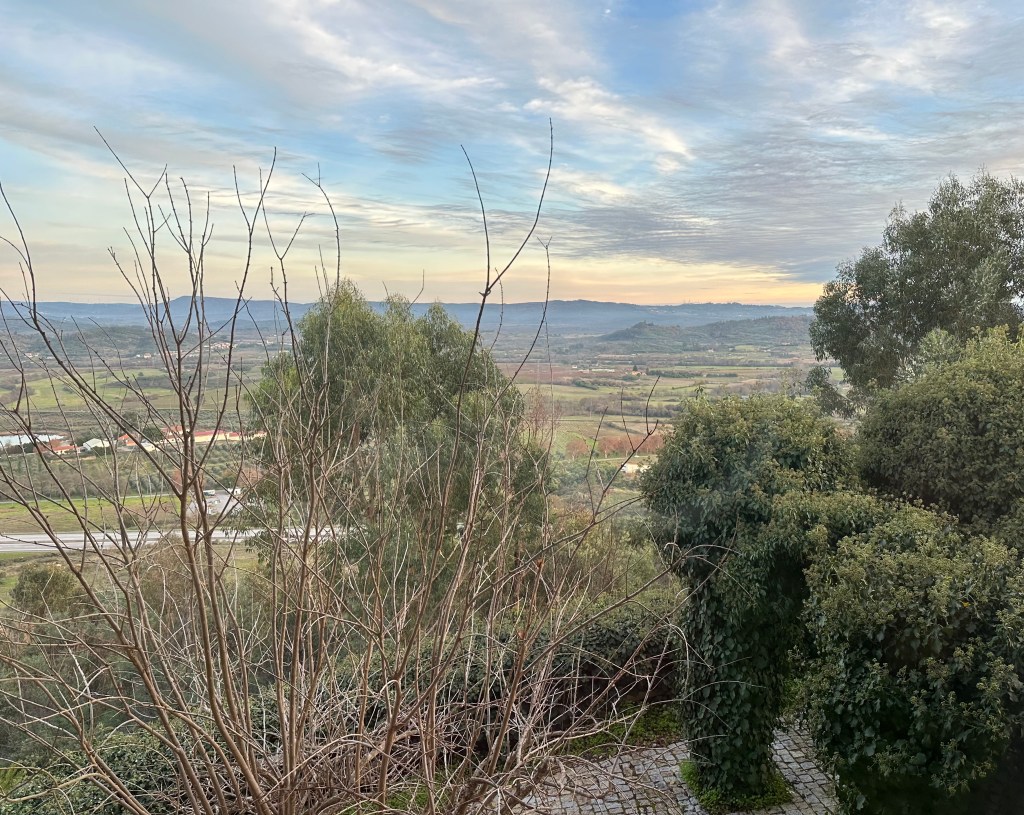
We had headed to Belmonte, which is not on most tourist routes, because of the museum dedicated to the 500-year history of crypto-Jews in Portugal (and also discovered a museum devoted to the making of olive oil). This small but fascinating museum is worth a detour if the history of the Jews in the Iberian Peninsula interests you at all. (Yes, Portugal had an Inquisition as well, which started not long after the Spanish Inquisition.)


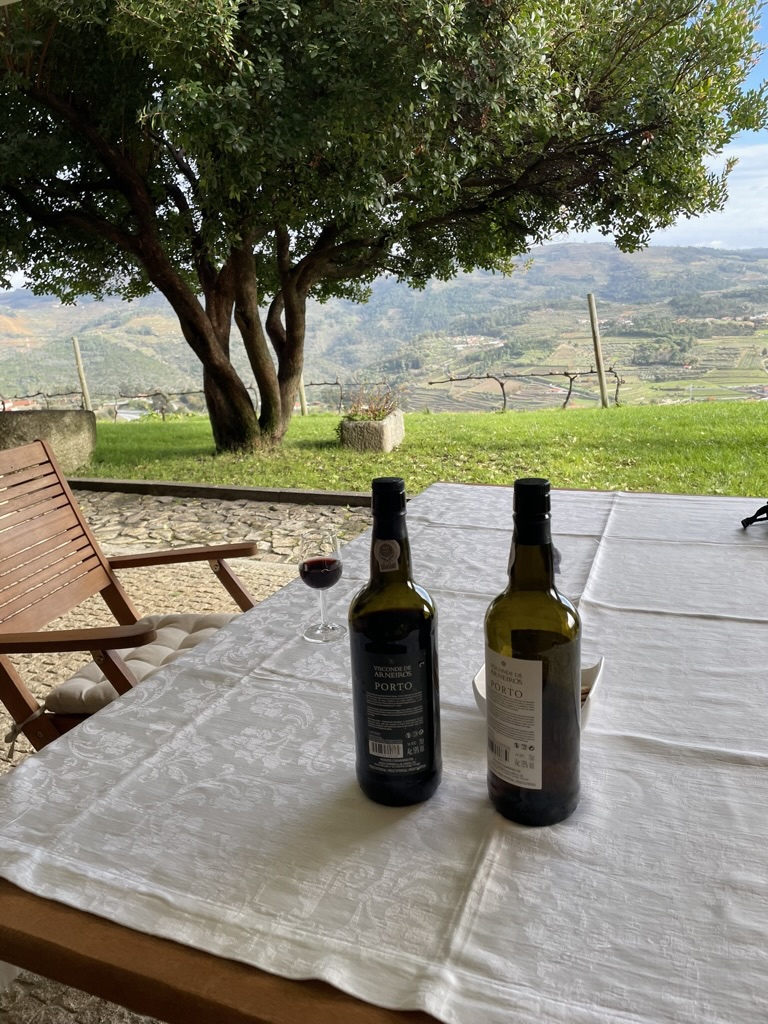
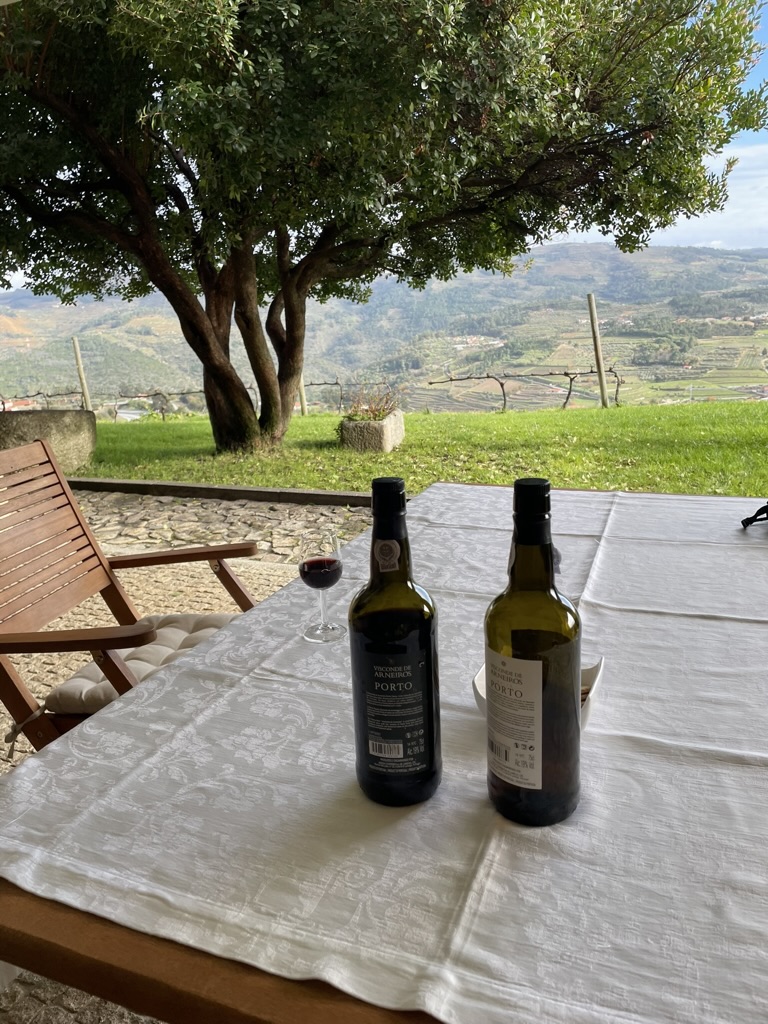
The Douro Valley, a UNESCO World Heritage Site, was a place I expected to be beautiful. What surprised me was not that it was indeed beautiful, but how this remarkable layered landscape has been lovingly preserved. In December, the hordes of tourists have thinned out and the few villages we saw seemed quiet, almost a little forlorn in the winter grey rain.

We stayed in a quinta (farm) in the town of Lamego, whose most surprising feature were the blocks and blocks of homes that appeared to be abandoned.


At breakfast the next day, our host insisted that the one Douro experience we must not miss is the drive along the river from Lamego to Pinhão, a tiny village at the confluence of the Douro and Pinhão Rivers. Having no set plans, we followed her advice—finding a spectacular drive along a curving road that, in places, almost seems to dip into the river. From this vantage, I was overwhelmed by how intensively cultivated the Douro Valley is. Every square inch is abundantly planted, whether with grapevines or persimmons or lemons, with farmland descending to the road or the water’s edge.
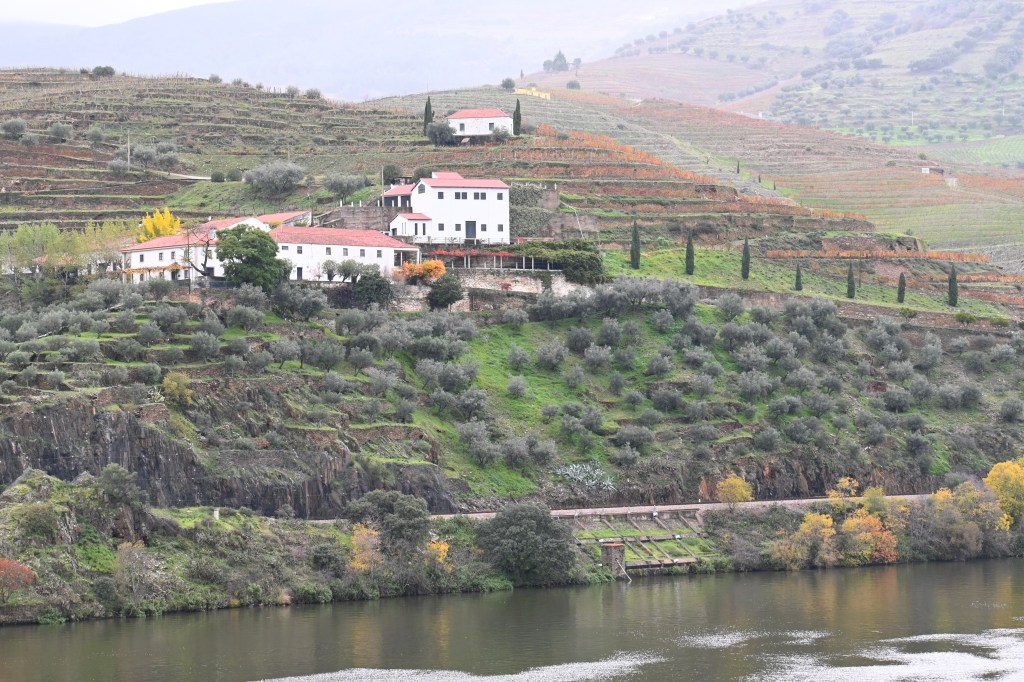
Once in Pinhão, we stopped to look around this town that wraps around the riverbank. A sign in town pointed us to a hike up the hill which rose up behind the few rows of buildings. The hike was a scramble over dirt and gravel paths, pass ancient looking stone walls.

We walked till we found a glorious sweeping view of the valley.

The rain held off long enough for us to reach Porto later that afternoon, where it proceeded to pour.
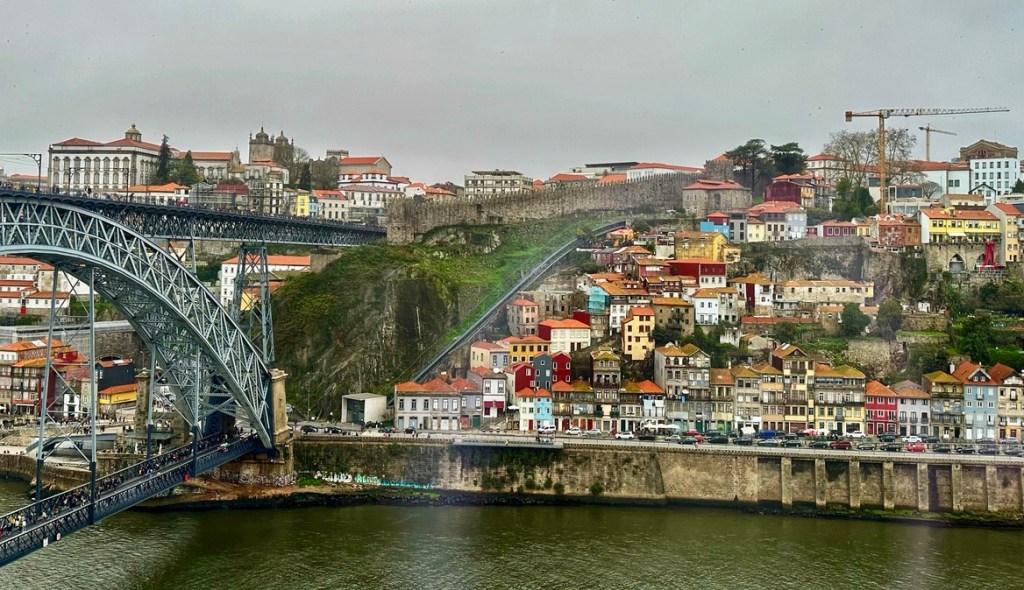
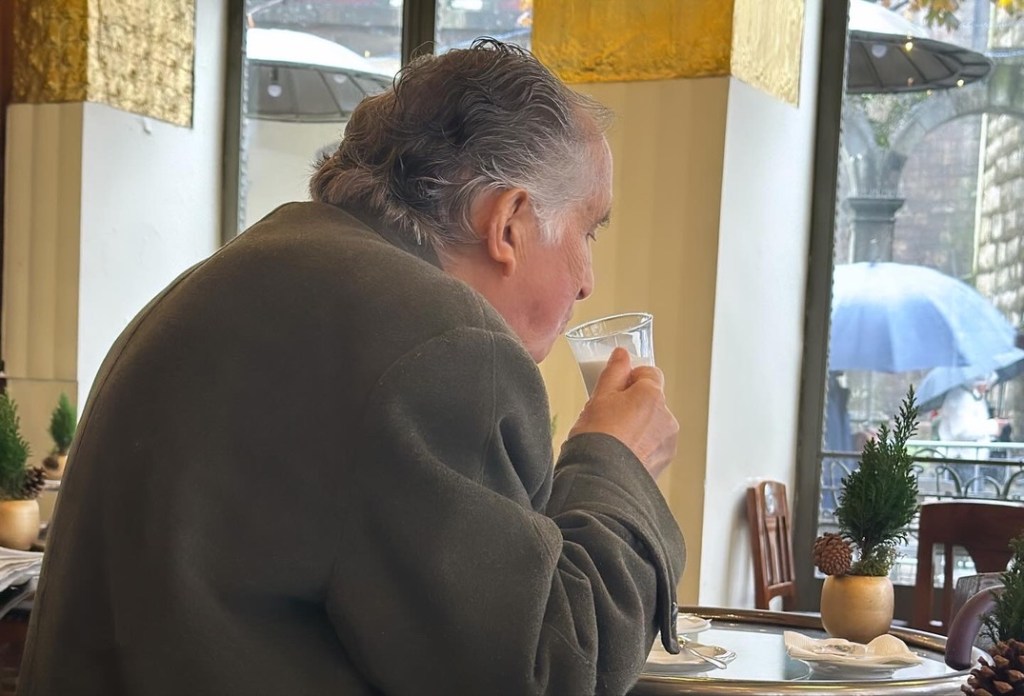
Happenstance driven by rain treated us again in Braga, a quiet city compared to boisterous Porto. On a gray rainy day, its medieval buildings can take on an air of gloom. But, as we found, the answer to gloom is a warmly lit café.

The rain didn’t seem to daunt the Bragans at all, who were out strolling and Christmas shopping. Under the roof of an arcade of the Castelo de Braga, a crowd of dancers were swirling gaily and singing loudly and clicking spoons to the music of accordion players.
Our trip to Portugal was a reminder that often in travel it is the small and seemingly insignificant things that you remember. Sure, I have stood in awe at bucket-list places and those have a place in travel too. But so does a street musician, a steam bowl of caldo verde, and a walk through an ancient vineyard.

 Old and On the Way
Tom and I loved our slow meander from Porto to Lisbon in 2022. We spent a day wandering a white Moorish hill town, explored the countryside, following suggestions of locals we met along the way.
I would love to visit the museum devoted to the hundreds of years the Jews practiced in secret. I’ve read bits of that history. But to my surprise, in several trips to Spain, I’ve never seen a reference to it or to other aspects of the Inquisition.
And tho we have visited Lisbon twice, I haven’t seen the tile museum. A return trip to Portugal would be grand.
LikeLiked by 1 person
Thanks for reading Sarah! And glad to give you some ideas for your next trip. Yes the Portuguese expelled the Jews too and worse. I often seek out Jewish history in places, not just because I’m Jewish (although obviously a big part of it) but also a lens onto history. Spain of course has many Jewish ghosts, Toledo being well worth a trip if you haven’t been there.
LikeLike
Like you, we also seek out Jewish history tours. While I’m not Jewish, Im interested in that history as a window into how a society treated minorities. Fascinating tours in Rome, Dubrovnik, Venice, Prague, Budapest.
But Spain has yet to grapple with its shameful history of expulsion & Inquisition (as far as I know). We spent 5 days in Toledo and finally, after much searching, found a guide who could explain some of its Jewish history, including its mind-boggling incorporation of Arabic writing & language. So much more to learn, so I’m excited to learn about the Portugal museum you located.
It’s not surprising Spain wants to bury that history, as we in the US try to bury slavery & its legacy. But we are starting to confront our history. Like in the African American museum in DC, brilliant new civil rights museums in Jackson Mississippi, Montgomery AL, others & in special exhibits focused on African-Americans in other museums, eg plantations. Yesterday in DC, the Woodrow Wilson House tour did not sugarcoat his racist policies & the museum shop featured many African American history books.
I love your blog & am inspired by your example of “how to do retirement.”
LikeLike
Como siempre, puedo viajar con vds sentada en mi butaca. Gracias.
LikeLiked by 1 person
Gracias por leer! Pero me encantaría viaja contigo a Cuba algún día.
LikeLike
So fantastic, thank you for sharing this. I think I’ll skip December since I get enough rain at home, but hitting the out of the way spots sounds perfect. Good adventure!! Love those beautiful plates of food.
LikeLiked by 1 person
Thanks for reading. And yeah, I probably wouldn’t have chosen December if not for the happenstance of cancelling the other trip. On the other hand, always cheery to see Christmas preparation!
LikeLiked by 1 person
What serendipity! The best kind of travel. Thanks for sharing this latest adventure!
LikeLiked by 1 person
thanks for reading– and yes I agree!!
LikeLike
Loved reading about our parallel adventures!
LikeLiked by 1 person
Thanks for reading!!
LikeLiked by 1 person
Your adventures are a lot more brave than mine-love your other blog
LikeLike