

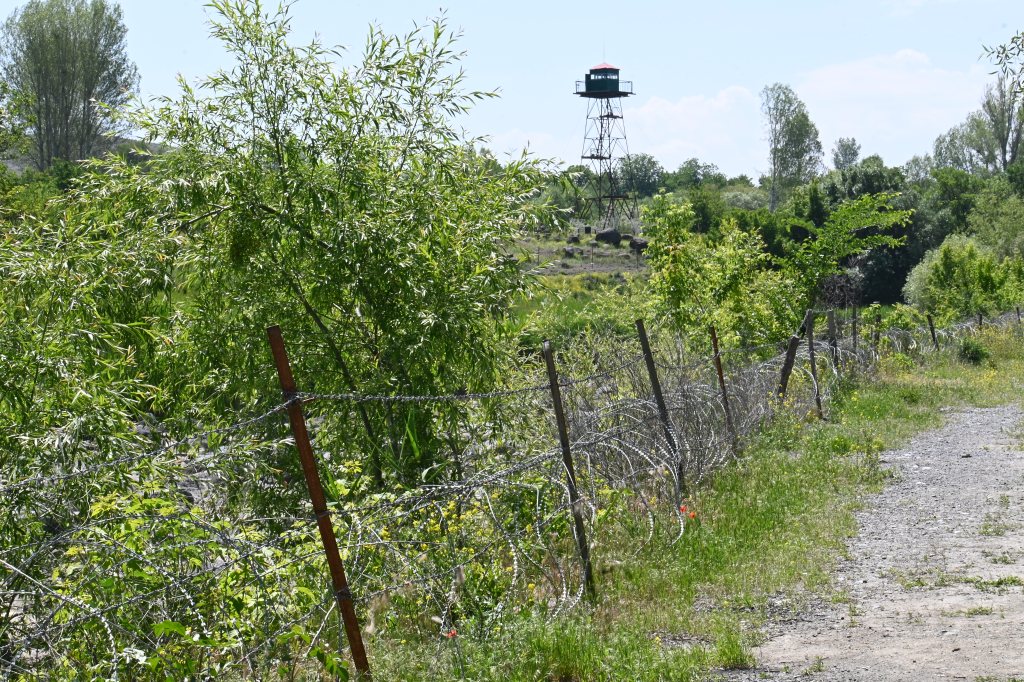
On a breezy and sunny afternoon last May, I found myself peering through my telephoto lens at an abandoned Soviet military installation on the other side of the Arpaçay River. The installation was in Armenia, a literal stone’s throw across the river, but as impenetrable from Turkiye as a moon landing. Earlier that day, our guide, Celil, had picked us up at the Kars Airport whisked us here, through seemingly uninhabited steppes, to the ancient city of Ani.

This part of the world—the edge of Central Asia—has fascinated me since a trip to Uzbekistan and Khazakstan in 2019. And after a 2023 trip to India, I realized that what I didn’t know about the waves of cultures that crisscrossed this center of the world, whether bringing silk to Europe from China or Islam to the Indus Valley. So, in planning a three-week trip in Türkiye, we took a chance on a region mostly overlooked by tourists—Eastern Anatolia (even my Turkish friend, Enes, was surprised we were heading there). In five days, we traveled from Kars to the Georgian Valleys along the border with Armenia to a narrow spit of land surrounded by Iran, Azerbaijan and Syria.
I had never even heard of the city of Kars before this trip until a friend recommended I read the book Snow, by Turkish Nobel Laureate Orhan Pamuk. I had read his memoir Istanbul,but Snow described a cold and somewhat bleak city full of tension between Muslim extremists and secular Turks. Fortunately, we were not visiting Kars in winter and instead found a city, that while not exactly picturesque, was lively and friendly.
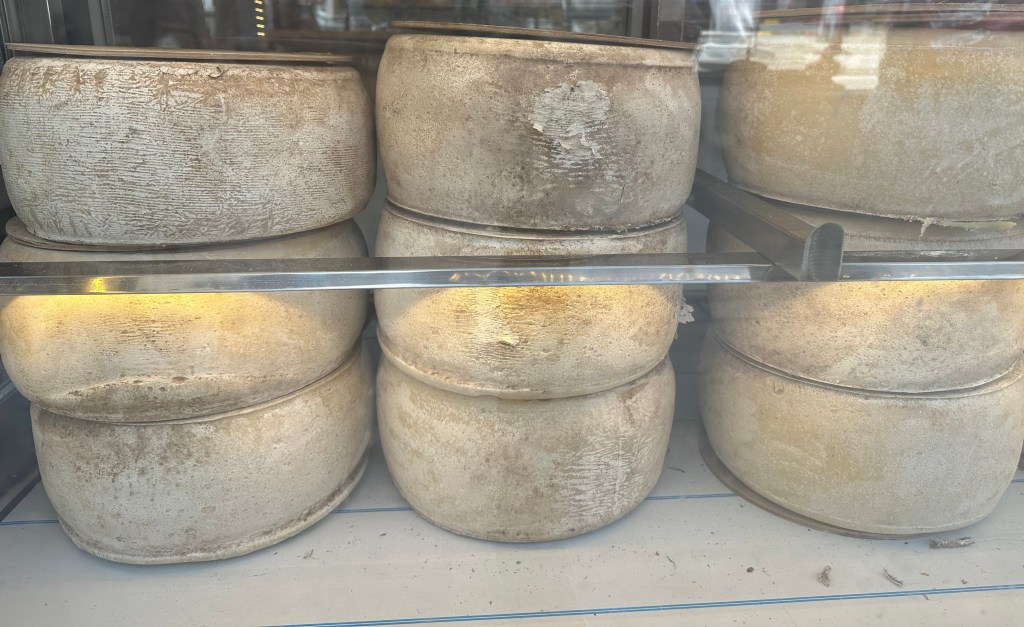
It is also famous in Türkiye for its cheese, particularly Kars Gruyere, which is excellent.
Undaunted, I searched for information about travel to the regions. With the exception of Lonely Planet, the region is mostly ignored or dealt with cursorily by guidebooks. But both Lonely Planet and Fodors led me to Celil, a guide who seemed to have the lock on private tours in the Kars region. Celil has no website but responded promptly to a WhatsApp inquiry and quickly sent me copies of pages from Lonely Planet. Our itinerary planning consisted of cryptic commentary on the places I suggested going (“The Black Sea coast is exposed to the influx of Arab tourists and other Turkish tourists. It is full of garbage and plastic waste of people everywhere and it is very expensive areas.”) and messages about other places (“The region called Georgian Valley is more quiet and magnificent place, away from the busy crowds of people in Trabzon and its surroundings.) Eventually, in snippets of WhatsApp messages and the occasional phone call, and with little else to guide me, I had an itinerary. We purchased plane tickets from Istanbul to Kars and we were off.

Even looking up the name “Eastern Anatolia” gives you a sense of the profound and lasting conflicts that have ravaged this region for a millennium and have yet to abate. The Wikipedia entry for the region claims that even the phrase “Eastern Anatolia” erases Armenian claims to the land, while Celil often insisted that “there never was a country called Armenia until the 20th century”. Celil seemed to lay most of the blame for the conflict in the region on Russians– not just the current Putin regime, but centuries of Russian imperialism. This is more than just a case of competing narratives—this is lived experience.
Ani is a stunning site, vast hills framed by views of the Caucasus Mountains. It was fortified city settled 1200 years BCE, fortified by the Persians in the 6th century BCE,
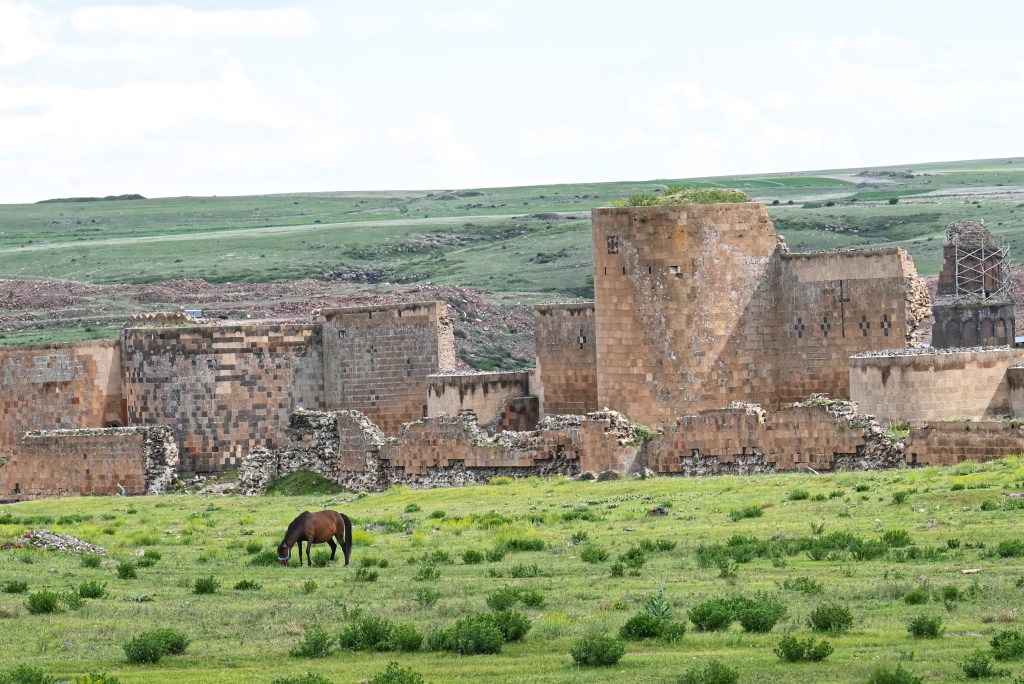
but made into a great urban center by the Armenian kingdom in the 10th and 11th centuries until sacked by Mongols and colonized by Seljuks and Ottomans and many more. Much is rubble, but even the rubble is interesting, with bits of ornately carved lintels and columns just lying on the ground.
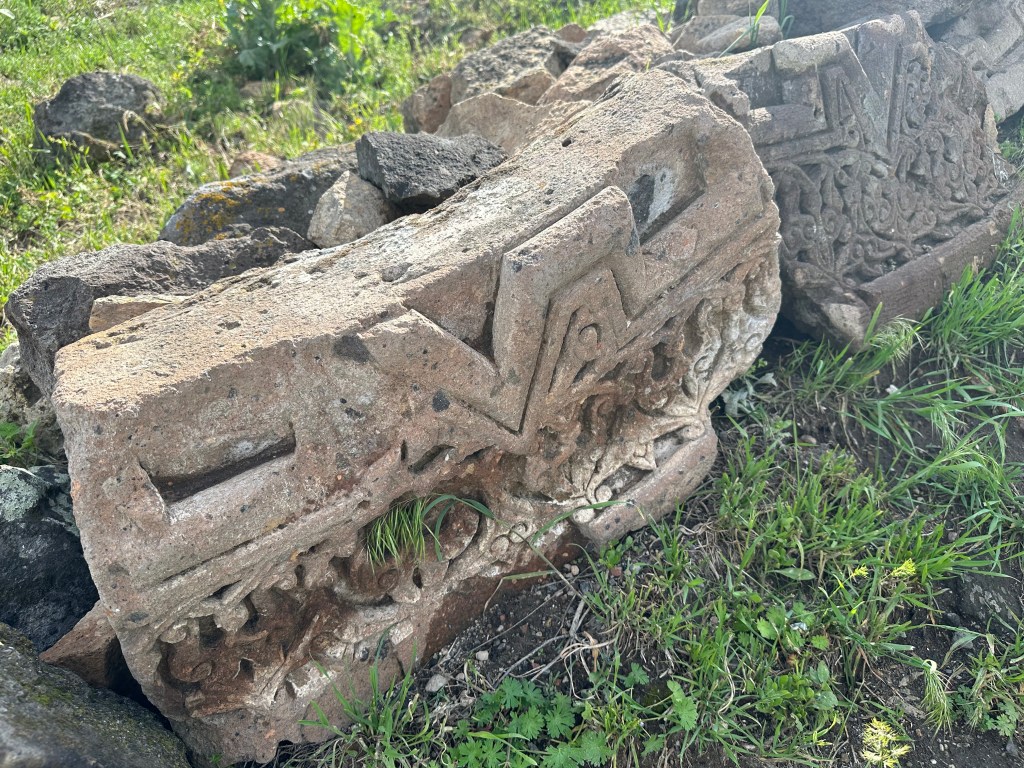
Fortunately some structures remain: the first of several churches we would see from the 10th and 11th centuries, an 11th century Shaddadid mosque, an 10th century Armenian cathedral and the remnants of buildings and defensive walls that tell the stories of successive invasions, treacheries and dynasties.

The mosque was one of the better-preserved buildings on the site. I appreciated how the sanctuary had been restored and carpeted so Muslims could pray. We were to see the same care taken the next day to maintain worship space when we visited Ishak Pasha Palace.

The next day’s drive to the Ottoman Ishak Pasha Palace brought us again across starkly beautiful plains and valleys studded with rugged mountains.

For a good part of the drive, we had in our view the snow-capped peak of Mount Ararat (Ağrı Dağı in Turkish). Whatever one thinks of literal interpretations of the Bible, the fact is that this mountain has for many centuries been considered the place identified in Genesis 8:4 where Noah’s ark finally came to rest after the Flood and where eventually Noah and his crew emerged to repopulate the world. This is indeed sacred ground and a powerful reminder of the centrality of this party of the world to the Abrahamic traditions.
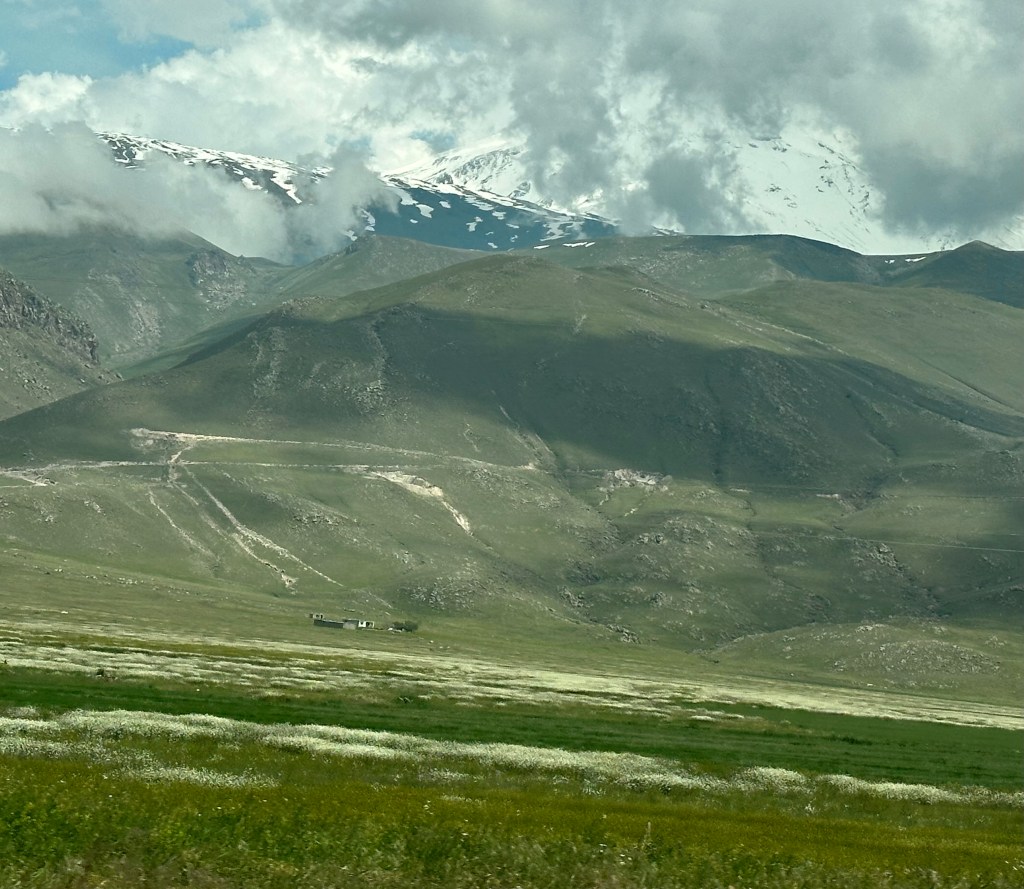
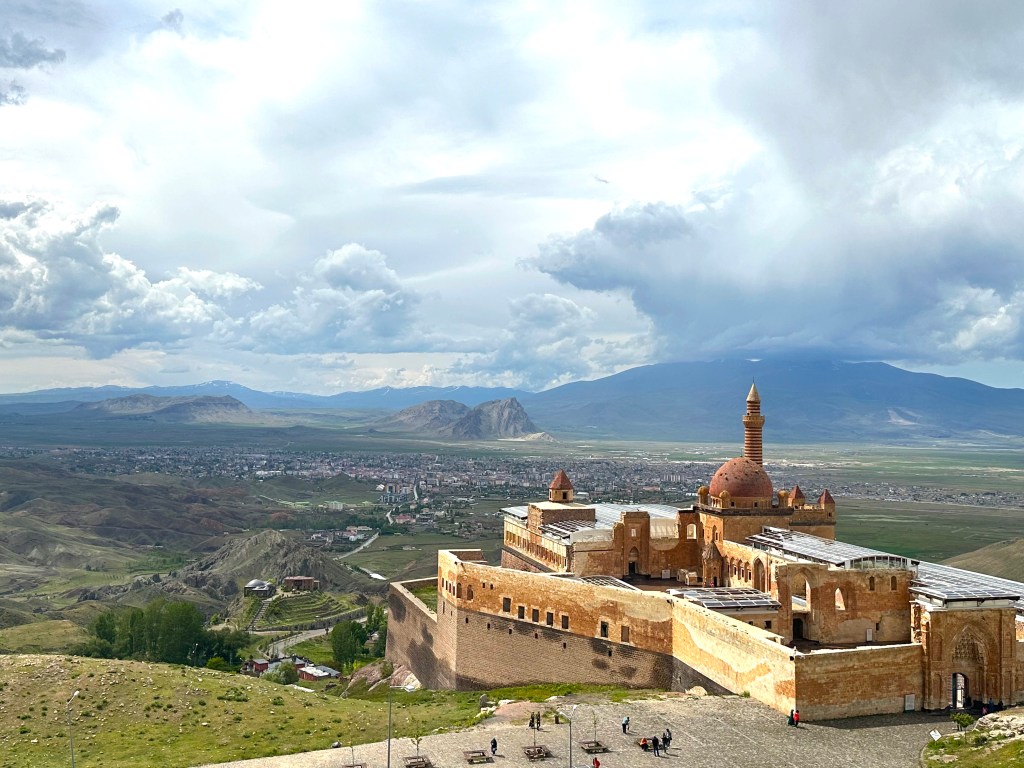
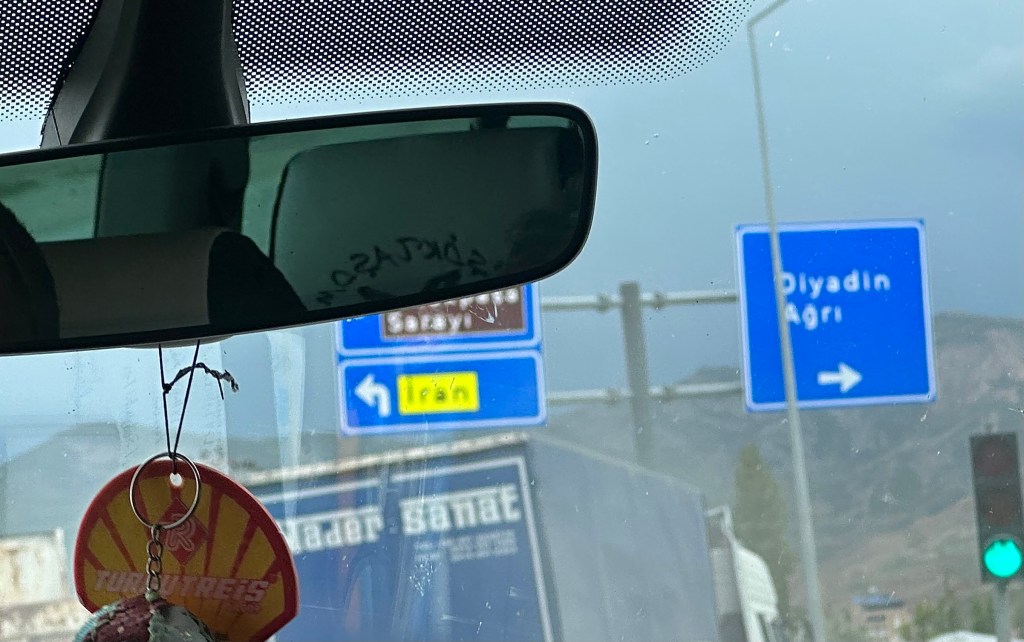
Ishak Pasha Palace, an Ottoman palace of the 17th and 18th centuries (practically modern by Turkish standards), is not far from the Iranian border near a town called Doğubayazıt.


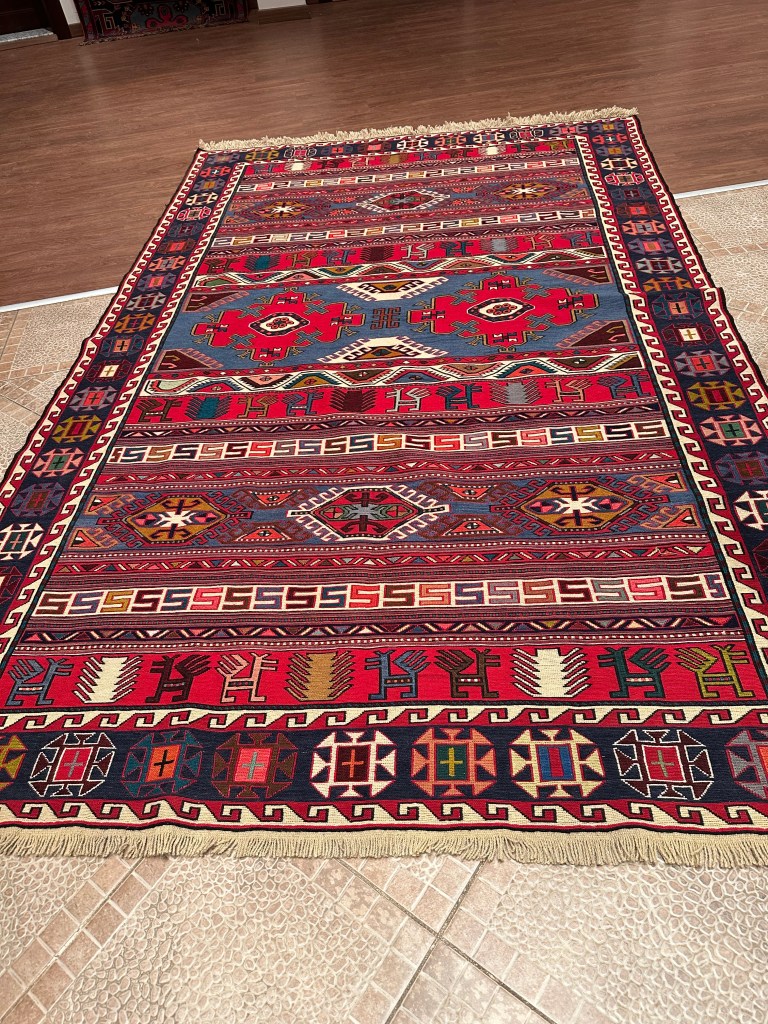
The Palace and the town were important stops on the Silk Route, and Doğubayazıt was briefly the capital of a self-declared free Kurdish state. It was in Doğubayazıt that I bought my one and only Turkish rug, hand-knotted, I was told, by a collective of Kurdish women who live on the Iranian border. How much of what I paid to the dealer at Ararat Carpets is seen by these Kurdish women, I will never know, but the carpets there were dazzling.
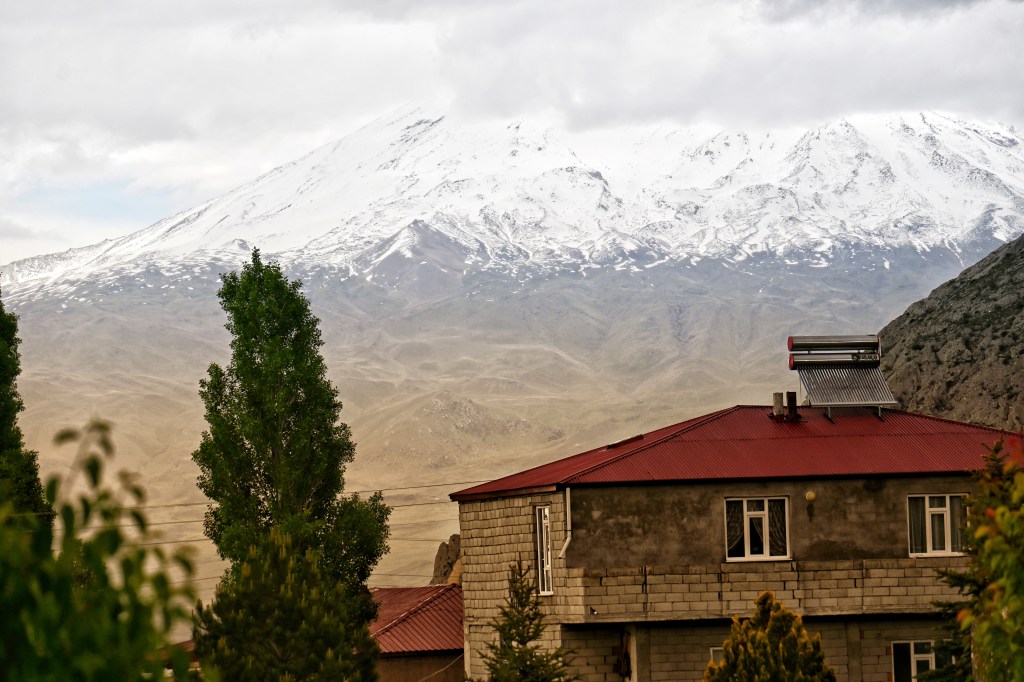

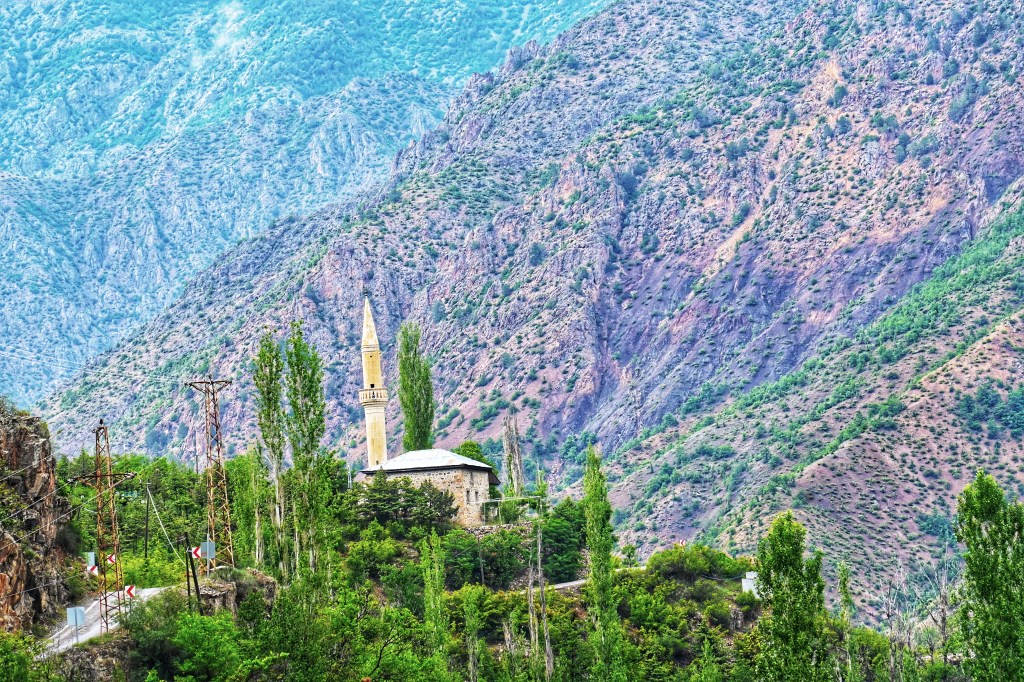
After two day trips from Kars, we set off on a three-day, two night drive toward the north, this time heading toward the border with Georgia, in a region appropriately called Georgian Valleys. This is a ruggedly beautiful region with steep rocky mountains layered with undulating green steppes.
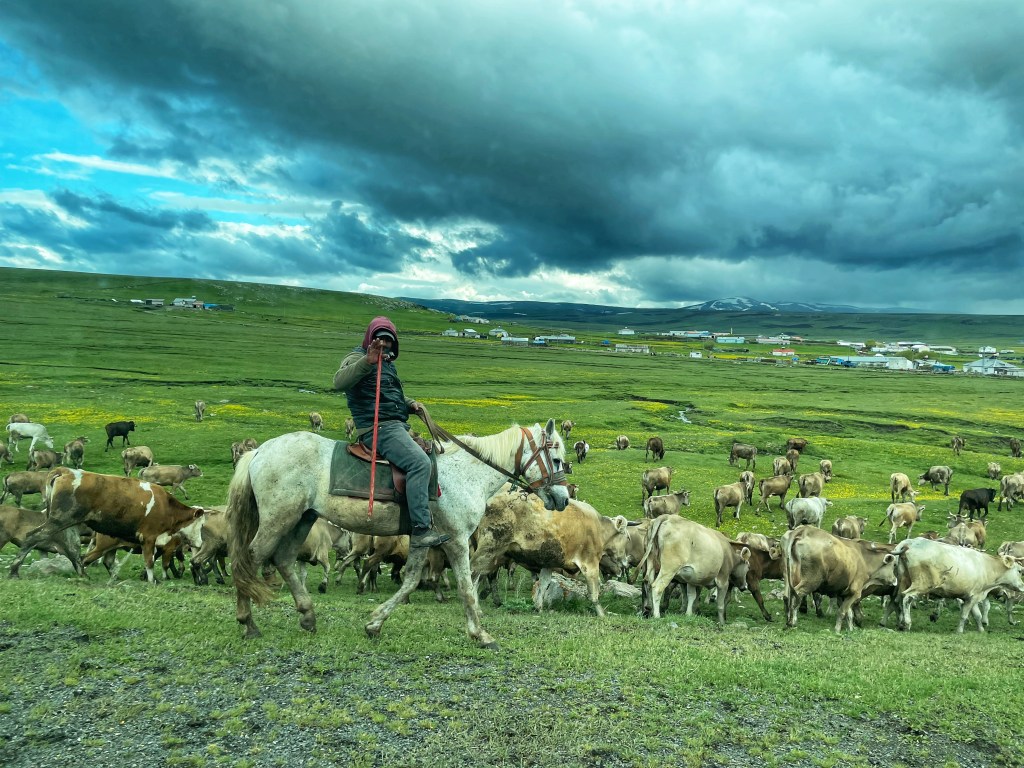
A friend who lives in Istanbul had told me that she had never seen green in nature like the green of this region. She was right—the landscape was at times shimmering with vibrant, glowing greens set against craggy grey cliffs.


Often Celil would expound upon the geologic importance of the region because of the meeting of the Anatolian and Arabian tectonic plates (in other words, we were wandering around on a colossal fault line).

But indeed, the rocky, unvegetated slopes with sharp crevices did seem like openings deep into the Earth.
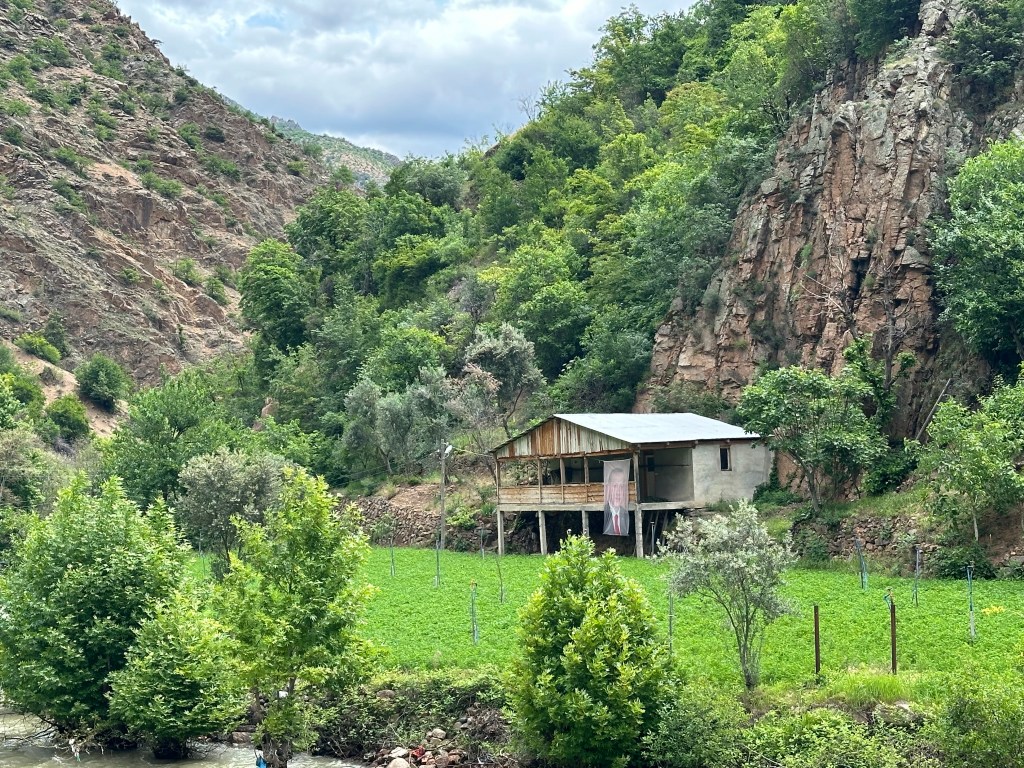
The rockiness was so extensive and so unyielding that one day, driving from Artvin to Ishan, we went through 46 tunnels in 40 kilometers. We wondered how travelers of the past made it through these mountains before dynamite.

Apart from the stunning natural beauty, the draw of this region are the many Georgian churches and castles which dot the area, sometimes in tiny villages, sometimes standing sentry on a mountain pass.
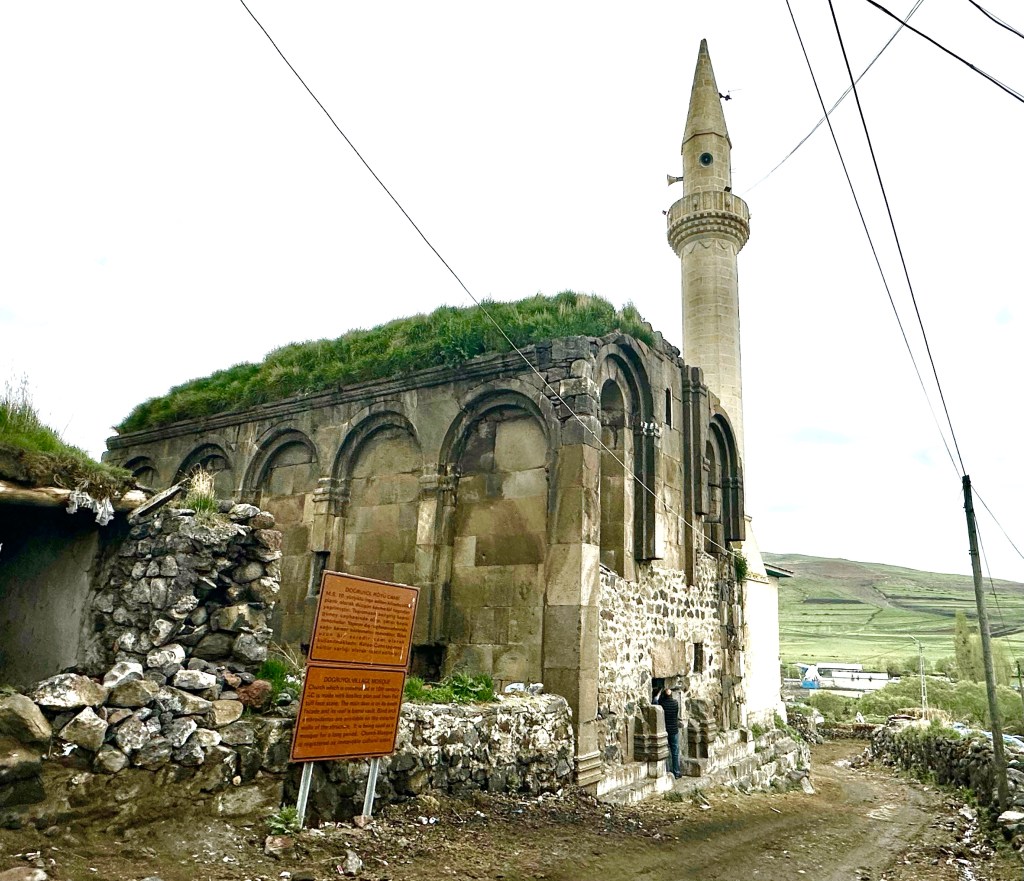
The Georgian Orthodox Church, along with the Armenian Apostolic Church, is one of the oldest Christian traditions in the world, dating from the 4th century. The Kingdom of Georgia began to spread out from the Caucasus in the 8th century and eventually included this part of Eastern Anatolia.
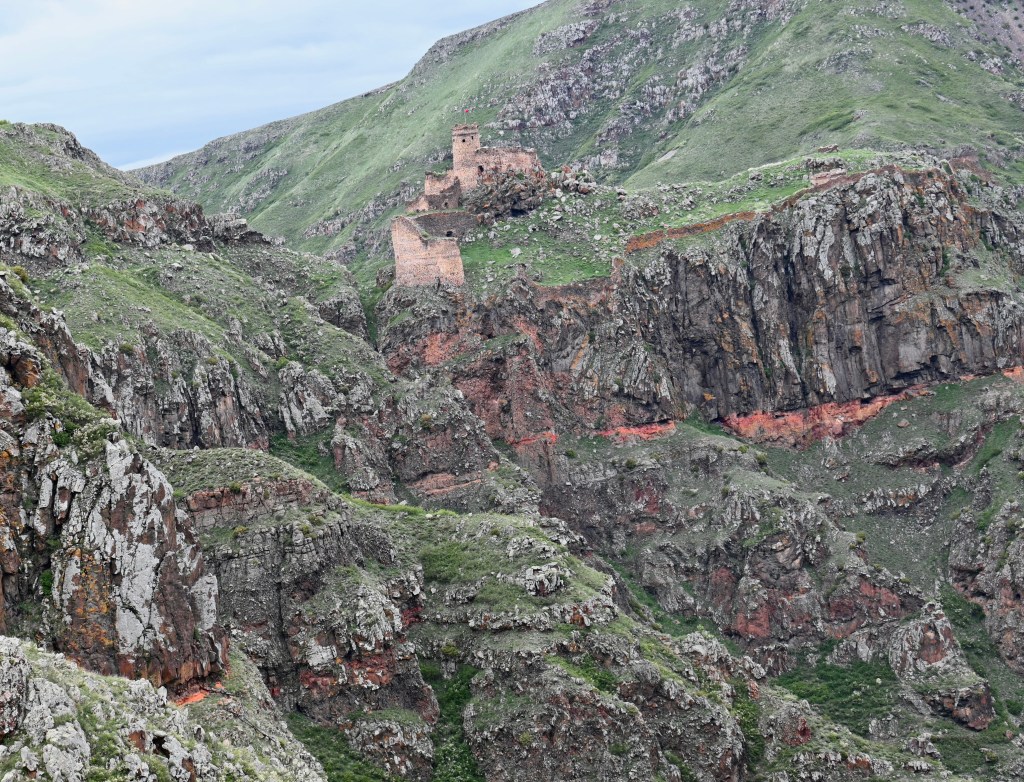
The churches themselves have a grave solidity and it is not hard to see why they have survived for 1200 years. Though one could find them on one’s own, we were grateful for the guidance of Celil, for the places are not always marked well. Indeed, in this region, the only other tourists we encountered were a busload of Georgians seeking to learn more about their own heritage.
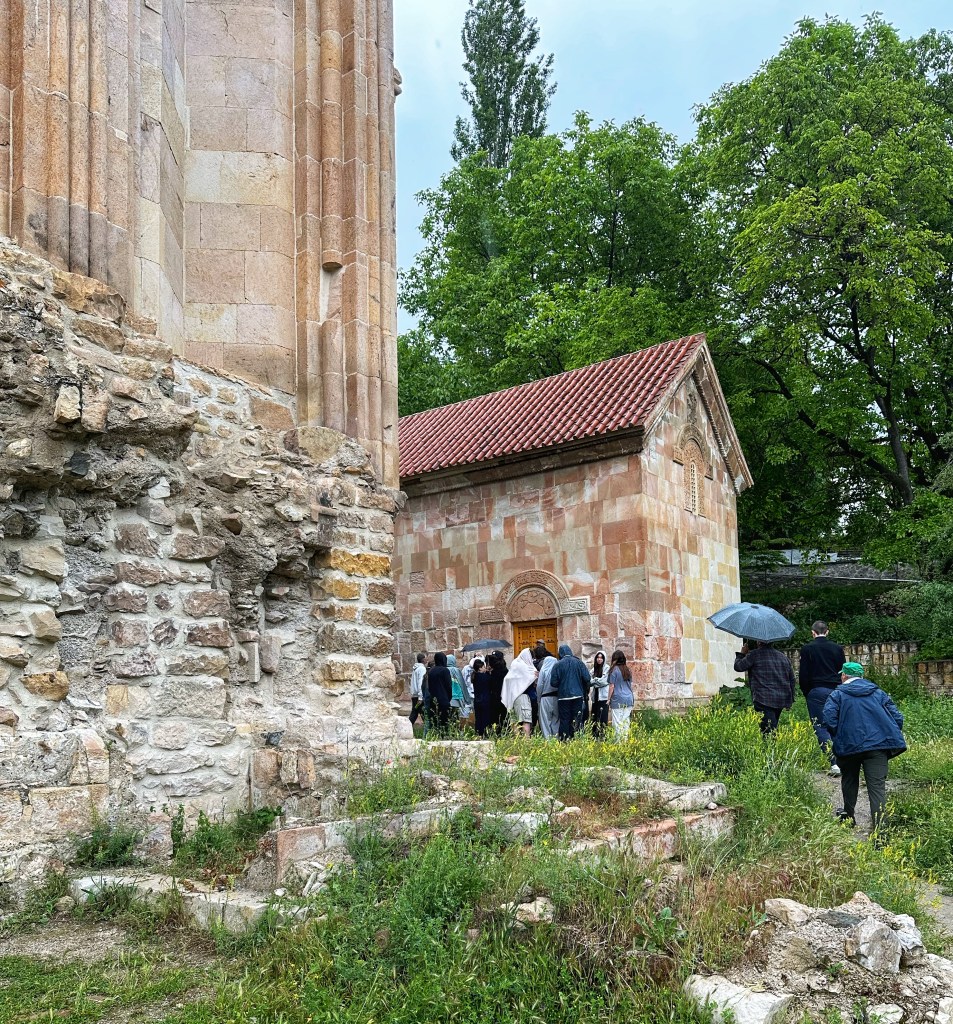
We encountered the Georgians a couple of times – first at one of the best preserved churches in the town of Ishan. While a well-known example of Georgian churches, the road up to Ishan wound through the mountains, eventually turning to dirt, with a few white knuckle moments. Pete and I were certain that without Celil, we would have turned back without seeing it. “We are going to a miracle place,” said Celil, “you will be surprising.” This town once held a caravanserai, one of the hundreds of roadside inns that populated the Silk Road for centuries.

In Ishan, under a steady rain, I was reminded of the Turkish attitude toward inclement weather: stop and have a cup of tea. Tea, as I saw throughout Turkiye, is more than a hot drink, it is an indispensible social ritual.

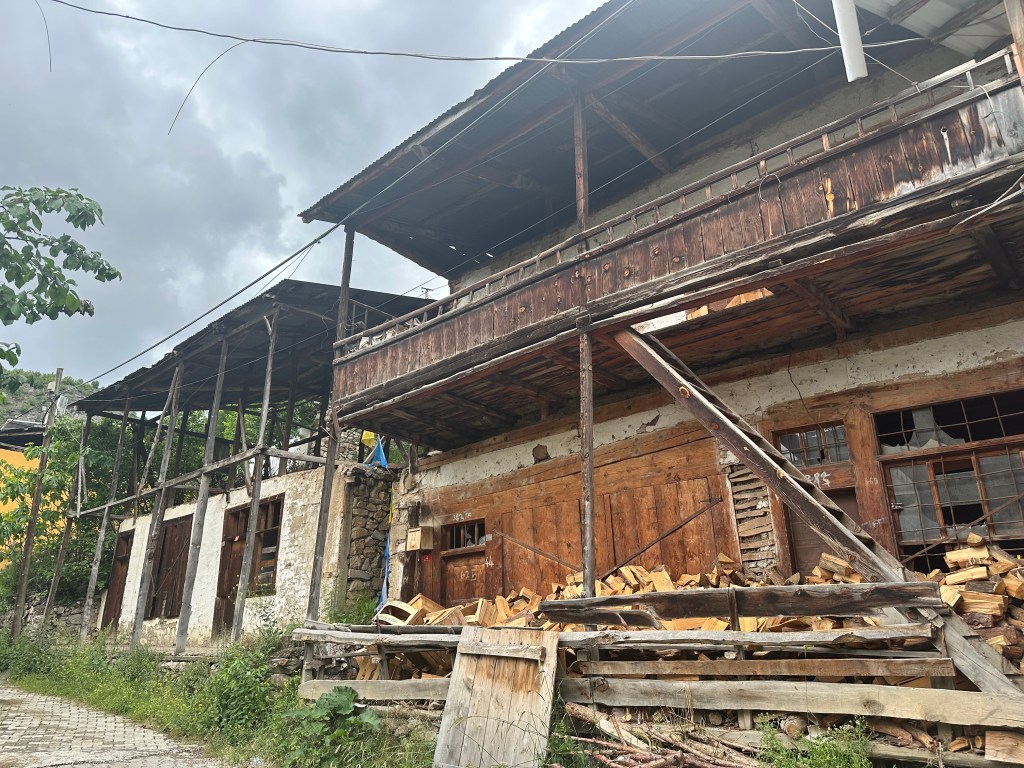
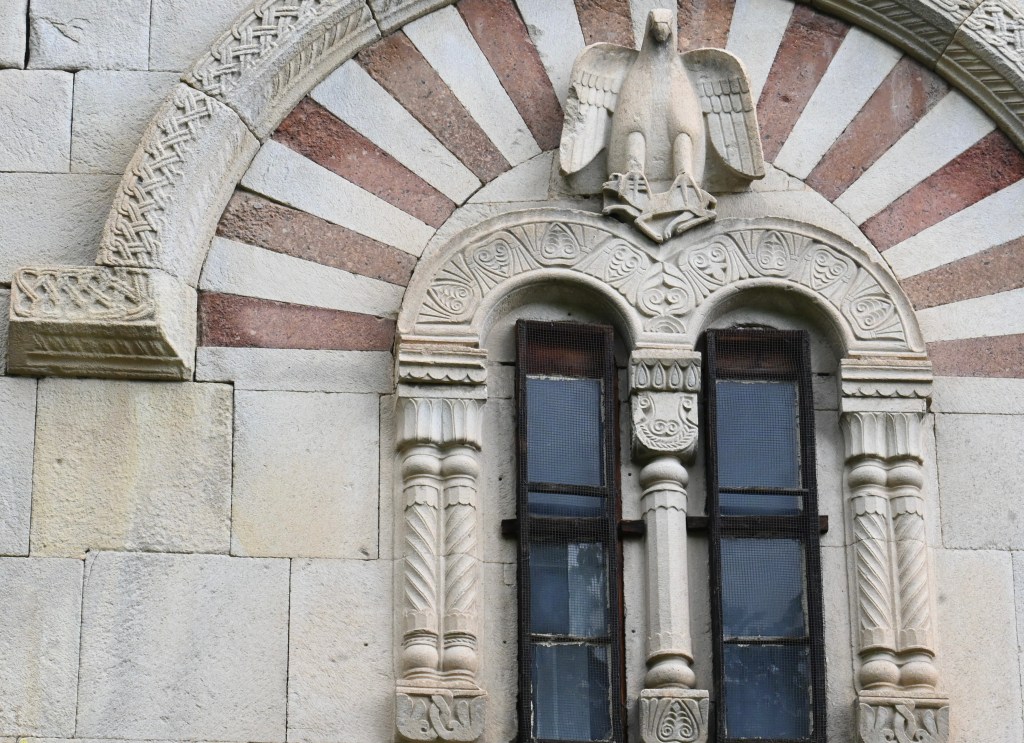
We stopped in the humble town of Çamlıyamaç to see its 11th century church, not as well preserved but still imposing. When we arrived, the men were seating in a row, waiting for midday prayers in the adjacent mosque. We had time to stroll a bit, taking in the now ramshackle wooden structures, with their bold horizontal covered front porches, that are so emblematic of the Ottoman era.
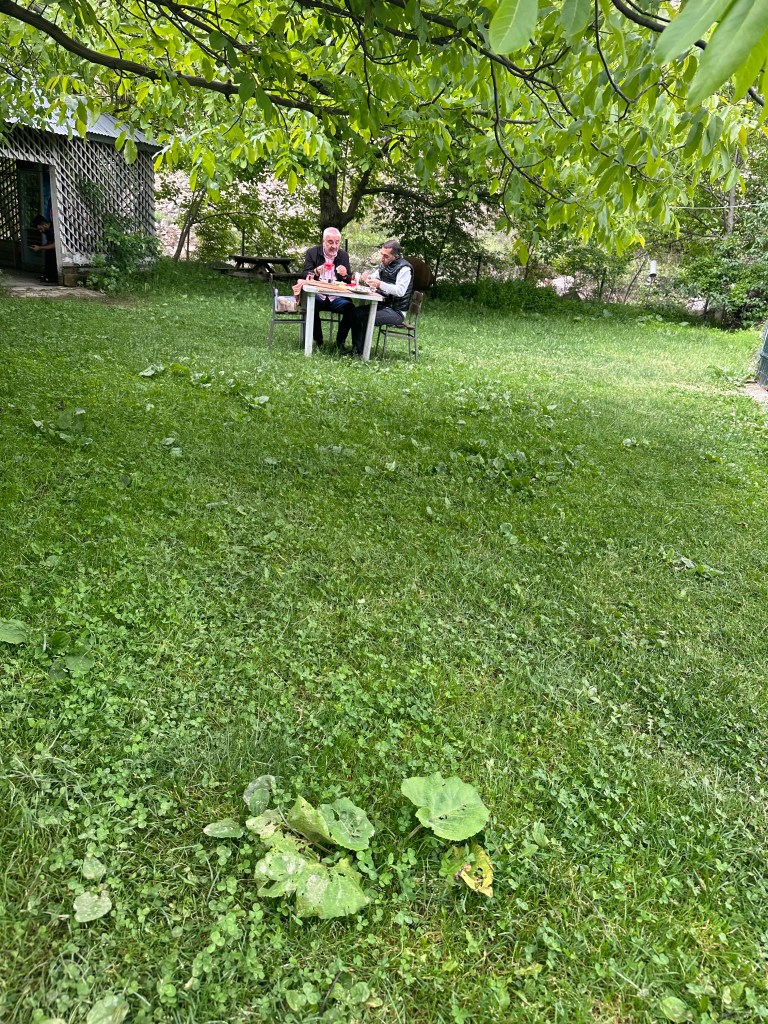
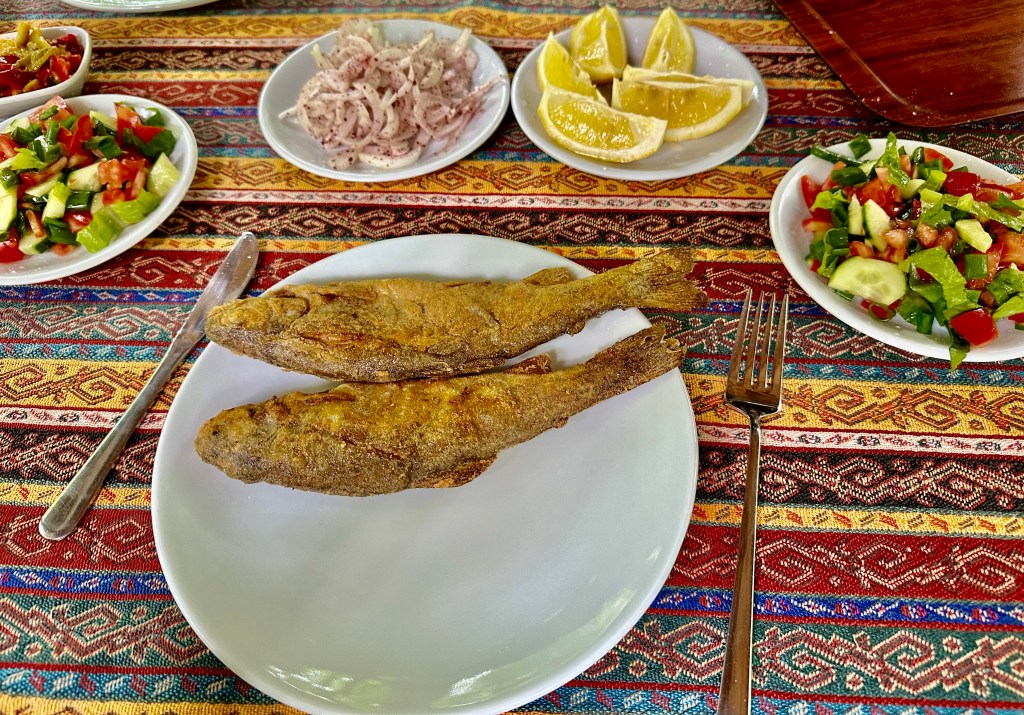
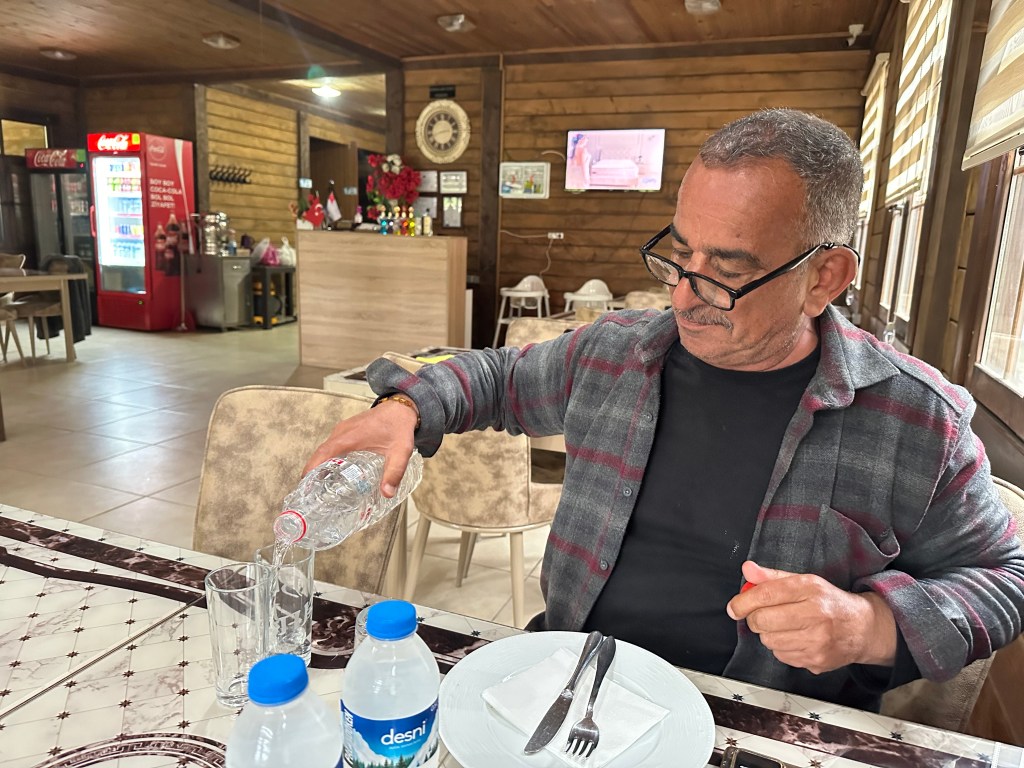
Celil also led us to restaurants we likely would never have found: one built in a tree-house like structure next to a rushing stream and another, hardly a restaurant at all but a collection of outdoor table to which a young man, and then a woman, appeared to serve us fresh trout, grilled over an open flame, accompanied, as always, by fresh salad and bread, and of course, tea.
I began to feel accustomed to the vastness and emptiness of the place. But of course, it is not really empty, though you might not always know what you are seeing. What looked like a group of abandoned wooden huts was, as Celil told us, a “summer village”: a place where sheep and goat herders live for the summer while their flocks graze on the nearby steps.

A slightly overgrown ancient-looking cemetery had strange tall black “caps” on top of the gravestones. These, said Celil, belonged to the Molokans. “Molokans??”, I asked, yet another group I had never heard of before this trip, but who, it turns out, were a sect of fundamentalist spiritualist Christians who were considered heretics by the Orthodox Church, some of whom fled Russia and ended up here.

Celil was an enthusiastic and unflagging booster of this region. Our conversations were often interspersed with comments like “Isn’t this beautiful?”, “This is magnificent part of Turkey”. He relished pointing out details of carvings on ancient churches.
Like any guide, he had his own ideas about places to stay and go and, since there is little in guidebooks about the region, and no assurance that the inns and restaurants you read about will still exist, we placed ourselves in Celil’s experienced hands.
Only once were we disappointed in the quality of lodging, but given that we were in a sparsely populated area with even fewer tourists, that’s not so bad.

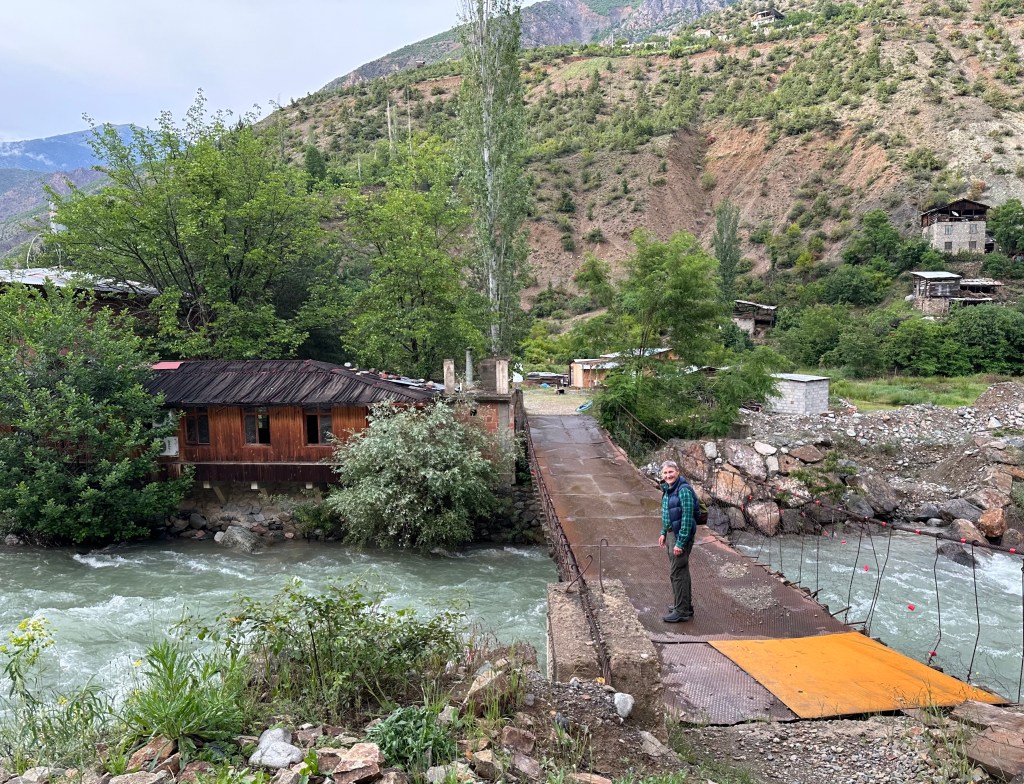
And it turned out that even the sort of crummy room was situated in a spectacular setting, in a narrow and lush valley. Pete and I took an evening stroll to a tiny village, perched on the edge of a river. We walked through a cemetery and by a mosque and down to a footbridge on the water’s edge.


Not long after we returned home to New York, I heard from my Turkish friend Enes. He was excited to tell me that he and his parents were planning a trip to this region, inspired in part by my travels there. He had been quite surprised when I told him of our plans. Imagine how delighted I was to receive this text and photo: “Today in Ani was amazing! Your recommendation for Ani was spot-on. We wouldn’t have considered adding Kars to our trip without it.”


Wow! What an amazing trip. Even though I heard you describe the sights, reading your descriptions accompanied by the beautiful photos really adds so much more depth. Thanks for sharing!!
LikeLike
Thanks for reading!❤️
LikeLike
Very interesting trip. Loved the photos and look forward to seeing that beautiful rug someday .
LikeLike
Thank you for taking the time to read it. I do yoga on the rug now!
LikeLike
Amazing travel log. Such a wide and varied world.
Thanks for the glimpse into it!
LikeLike
Wow, I’m so glad you wound back to posting about this May adventure. I don’t know what’s more amazing, this mysterious region or your intrepid approach to travel. Thanks for sharing it all!
LikeLike
Thank you Nancy for taking the time to read!
LikeLike