
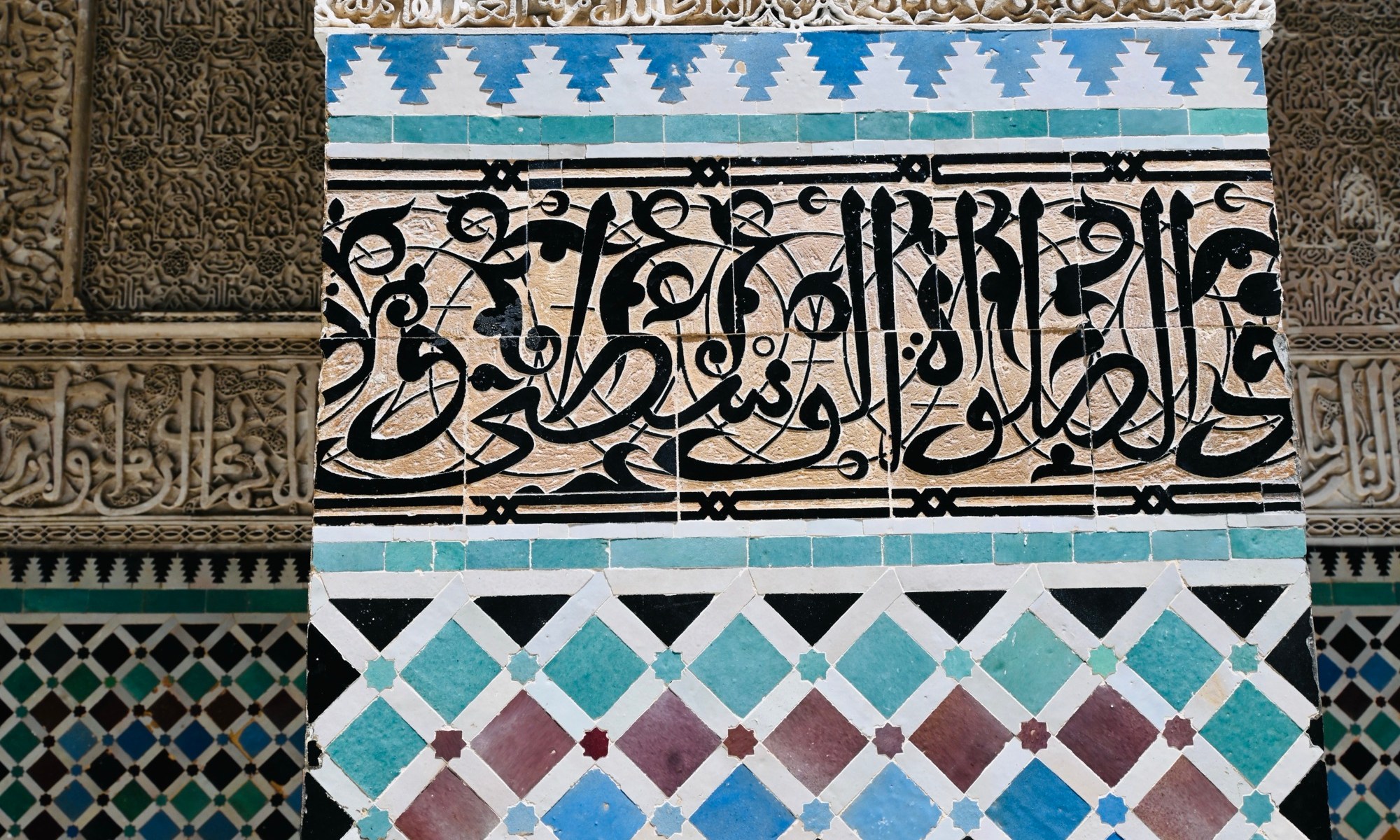
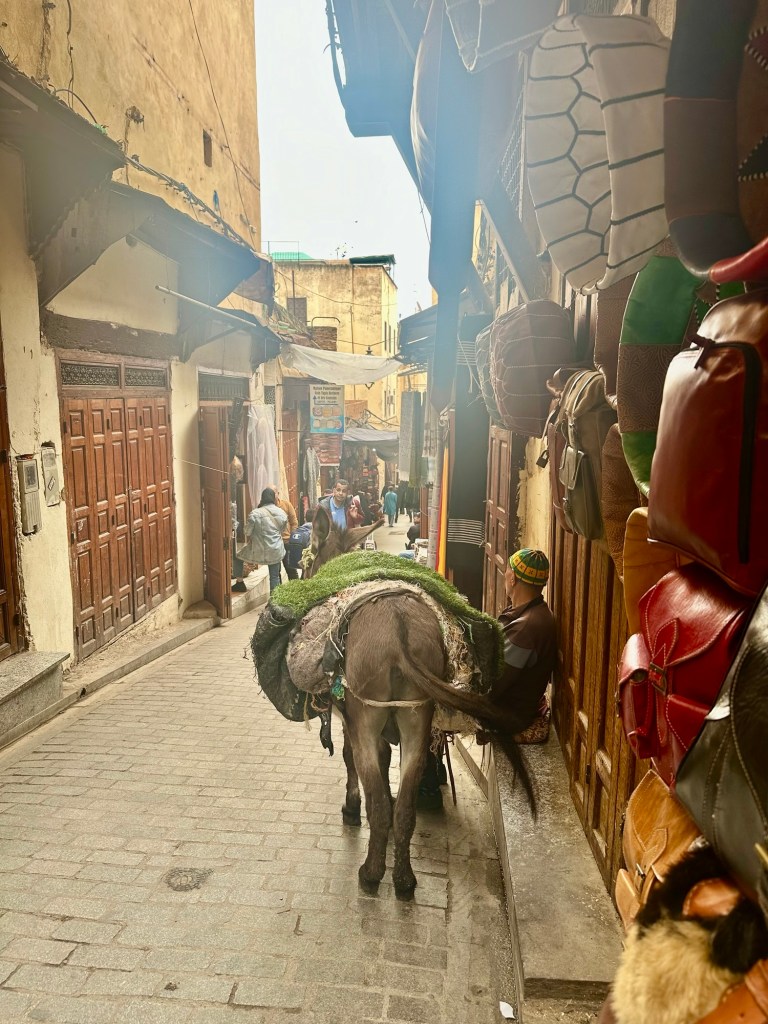
Fes is confounding, challenging, fascinating and should be on your next itinerary to Morocco. Fes, at least the Medina (Old City) which is the main attraction, is a place where the balance between modernity and tradition seems to tip heavily toward the past, where the labyrinthine and narrow alleyways disorient the unfamiliar tourist, and the high, thick stone walls seem to vibrate with the souls of the departed.
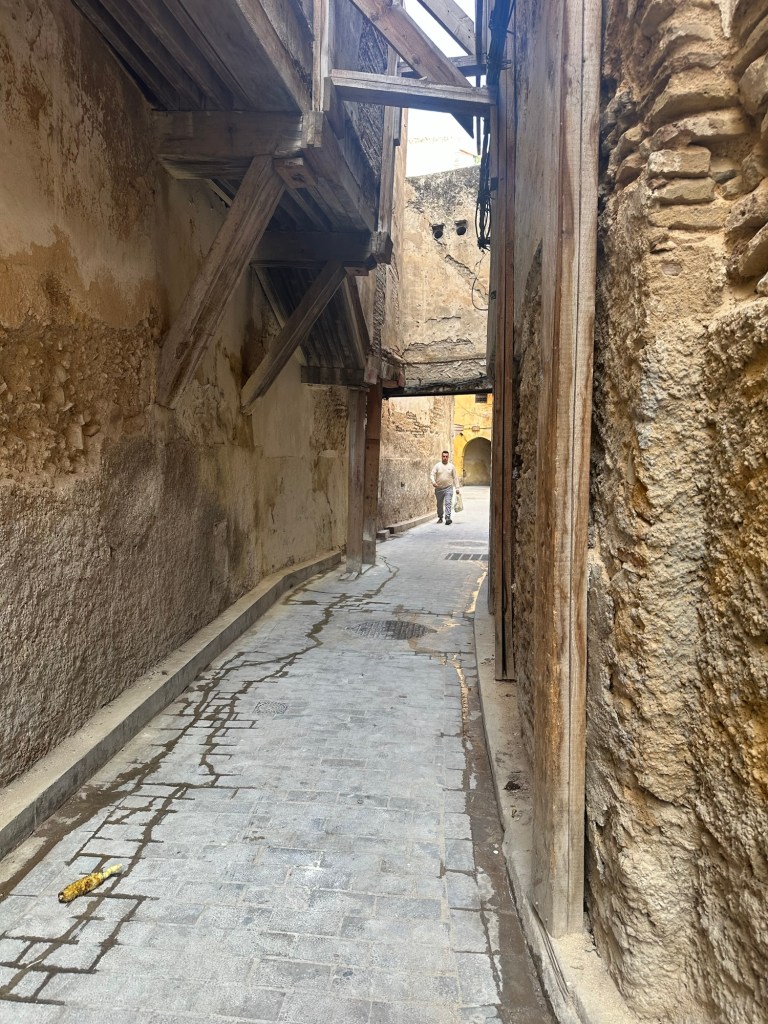
I liked Fes more than Marrakech, which of course means nothing to anyone reading this who has never been to Marrakech. Marrakech looms large in the Western imagination as the glamorous Morocco. Fes appears as the stodgy but wise great-aunt.

The primary appeal of both places for most tourists are the Medinas- and the souks (markets) that line the ancient streets. Marrakech’s souks seemed chaotic and crowded and filled with tourist-oriented souvenirs. We were constantly dodging motorcycles and elbowing tourists.

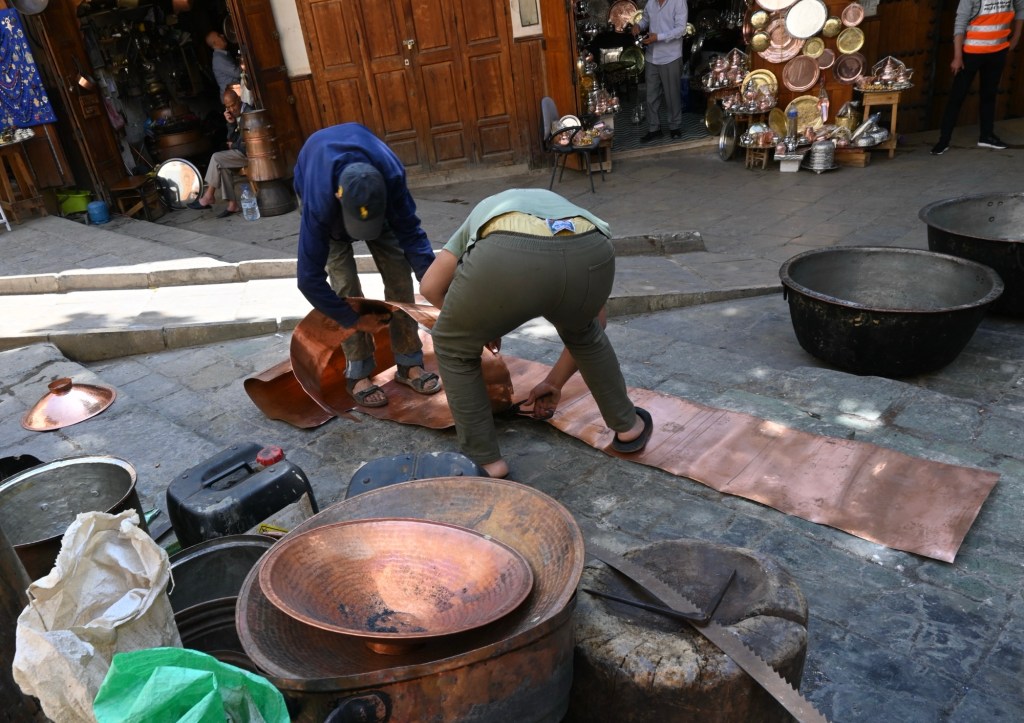
Fes no doubt has its share of Indian pashminas and Chinese knock-offs. But walking through it felt a different experience. In the Fes Medina are many more artisans, people still wielding the tools of generations before— wood cutters, tanners, cobblers, tailors, embroiderers, weavers, leather-workers.

We first entered the Medina from our hotel, the Riad Fes Maya, a charming hotel in a gorgeously ornate restored 13th century riad in the style of Al-Andalus.
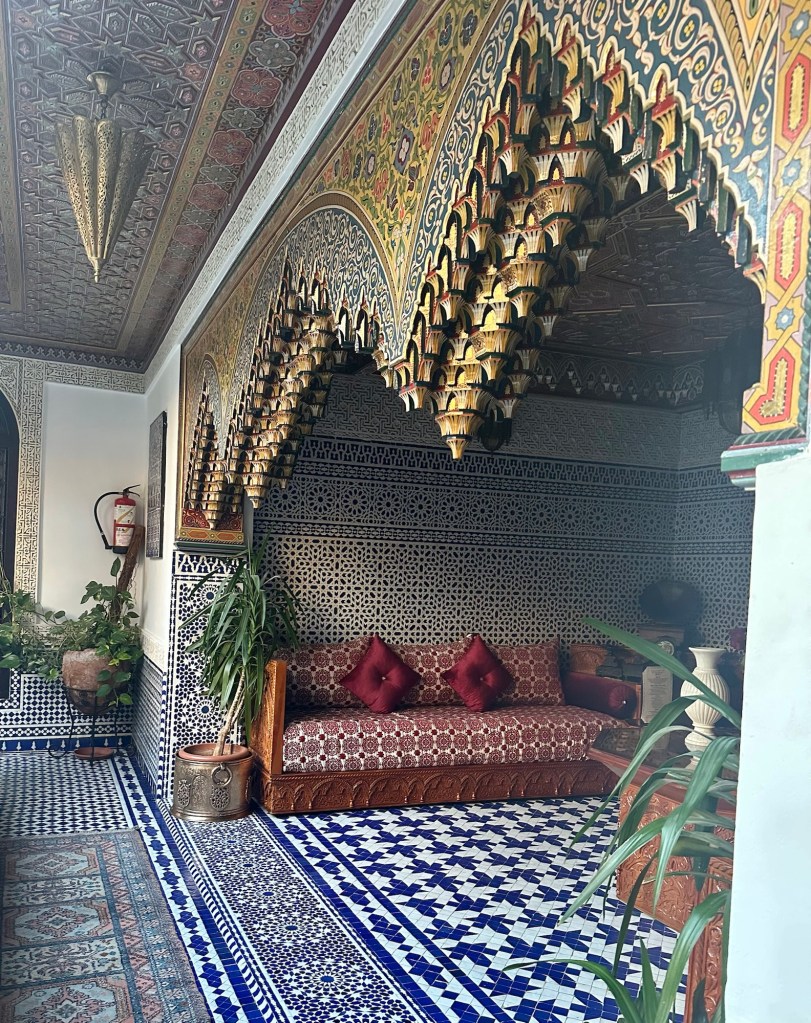
Here the alleyways are at their narrowest and cast in shadow from the stone walls that abut each side.

I felt almost immediately transported into a medieval town, closed off from the outside world. In some parts of the Medina, the alleyways widen and the shops boast renovated carved wooden facades. Every turn seemed to take us deeper into a mysterious ancient world.
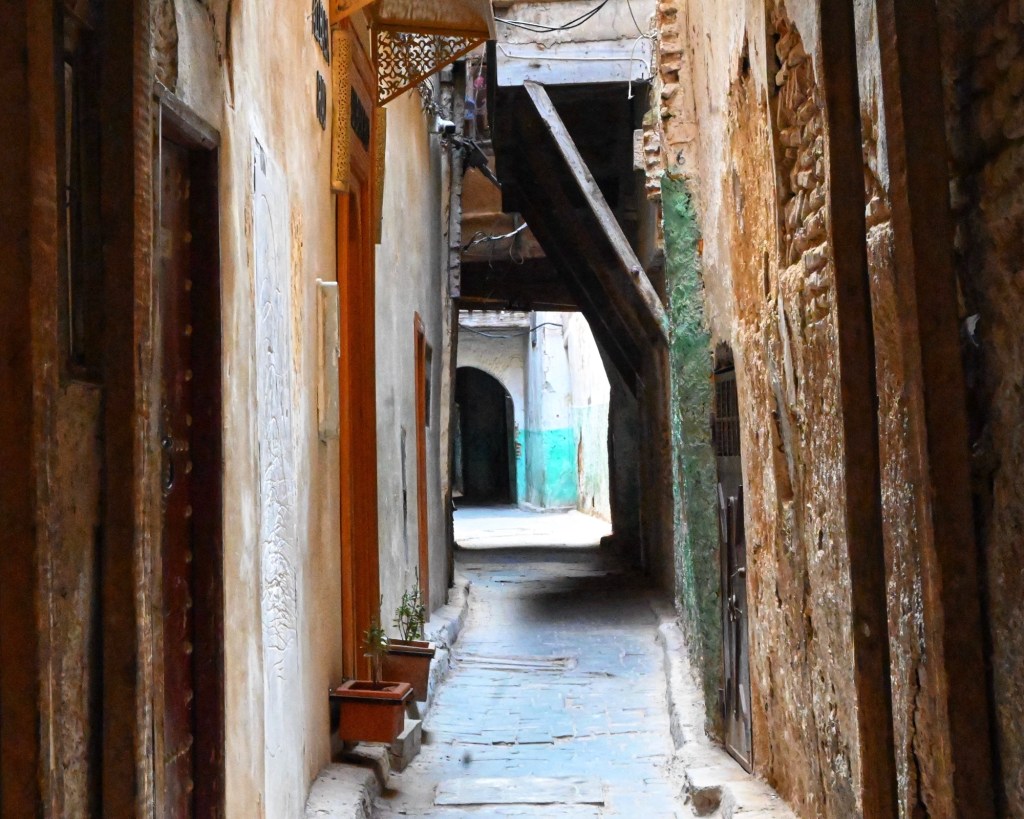
On our first morning, on the advice of many guidebooks, we decided to explore the Medina with a guide. While I am usually fan of semi-aimless wanderings, in Fes, a guide helped to initiate and ground us. Following Jamal, our guide, I was at first almost overwhelmed by this transport through the centuries.

The Fes Medina feels inhabited, like a real living neighborhood. Jamal, our guide, told us that the residents today of the Medina are poor, often migrants from the country, that people with means have long left for the Nouvelle Ville (the newer French-built part of the city) and beyond. The women are almost all in long dark robes with head coverings. Children play soccer and run through the alleyways. Women carry armfuls of bread loaves home.

Fes is home to the oldest university in the world- the University of Al Qarawwiyin, founded in 859. Originally founded as a mosque, it became an important center of learning in the Muslim world.
Throughout Morocco, our guides reiterated that mosques were not only places of worship, but also social and community centers. In Morocco, non-Muslims are not allowed in any mosques other than the new Hassan V Mosque in Casablanca so we did not see the interior of this imposing mosque.

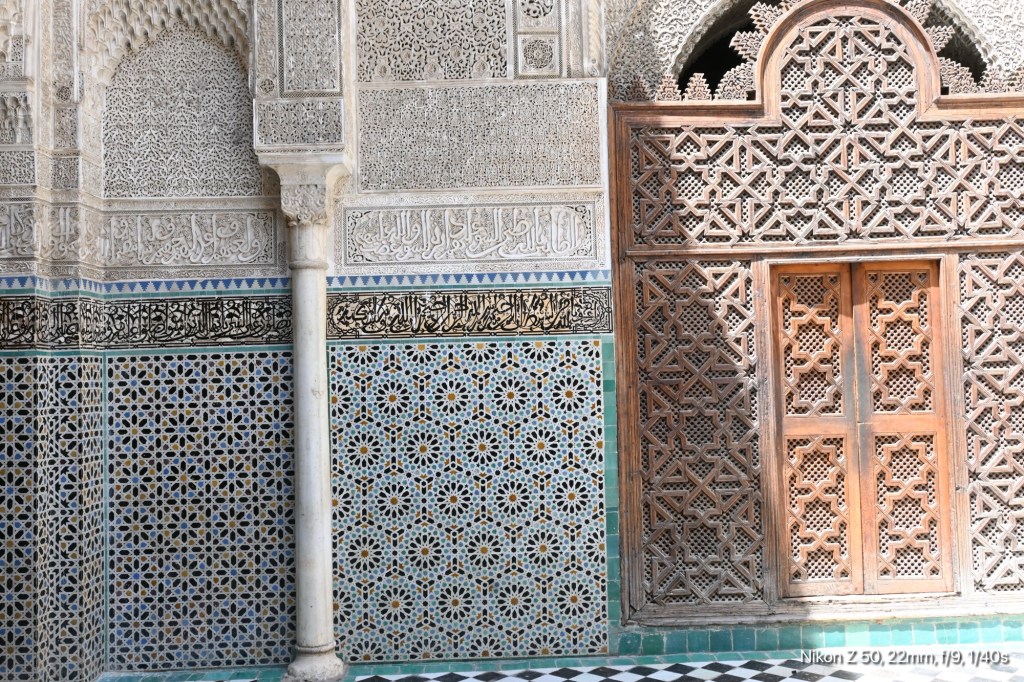
We were able to visit the El Atarine Madrasa, built in 1323 by the Marinid Sultan Uthman Abu Said. Madrasas are Islamic schools and the El Atarine is a beautiful example of the elegant and ornately decorated Islamic architecture of the time.
Jamal led us to the Chouara Tannery, which has been treating and dyeing leather pretty much in the same way since at least the 12th century. Here the tanners stand in vats of pigeon feces, quicklime, urine and dye in order to produce the colorful leather bags, shoes, jackets, and wallets sold in the adjacent shop, which is packed with tourists.

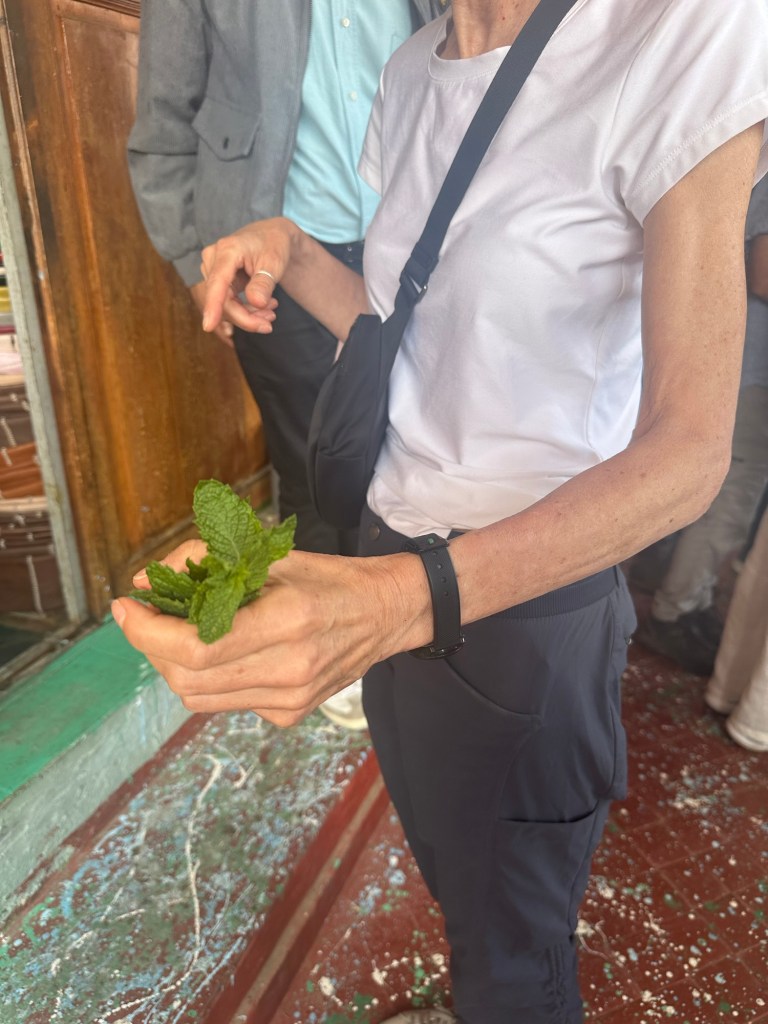
The shop hands each visitor a huge bunch of fresh mint, so that when you get overwhelmed by the stench of the tanning leather, you can sniff mint instead.
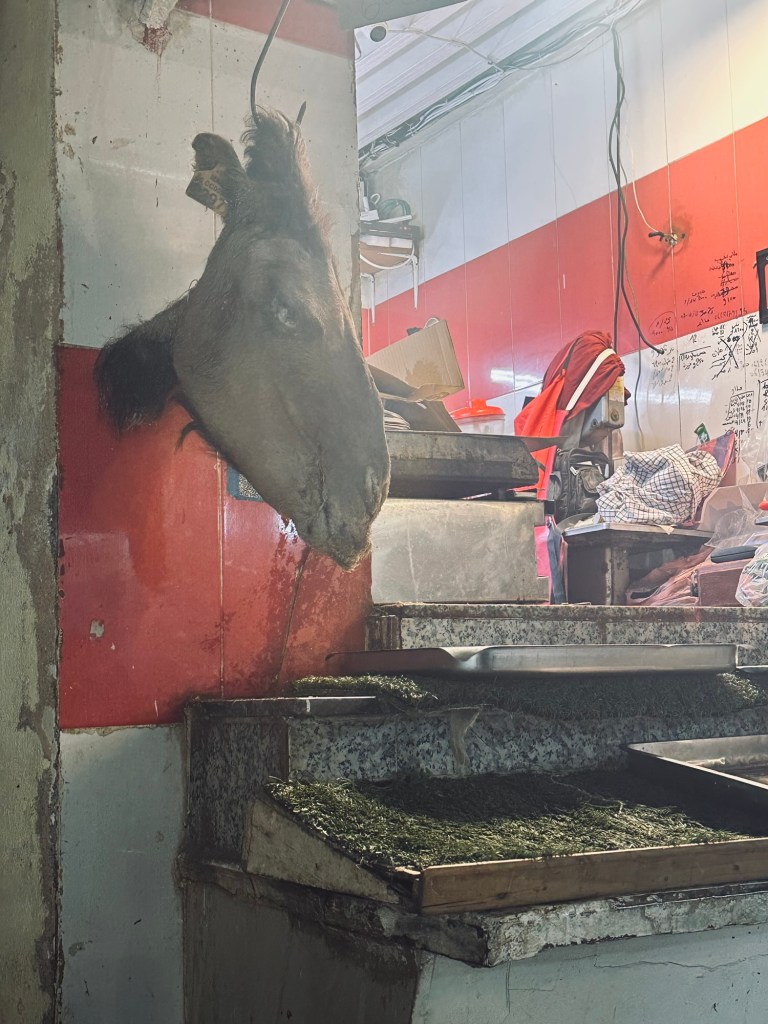
We walked through the food section of the souk: fruits and vegetables, breads, pastries, dates and apricots, and then the food I would not try— camels heads and feet, goat carcasses hanging in butcher shops, flies buzzing around.
Later in the day, without Jamal, we braved the Medina on our own. Quickly we learned that a guide is helpful not only for getting from Point A to Point B, but also to insulate you from the cadres of mostly young men who, once they realize you don’t know how to get from Point A to Point B, will offer their services.

The offer, we eventually learned the hard way, usually begins with a question, “where you going?”, then is followed with an insistence that the direction you were headed is “closed” and you need to follow them. It takes only the merest indication of acquiescence in this for the young man to append himself to you. And make no mistake, there will be a cost for this “help”. You will pay him money or in one instance, you will shop in his “mother’s” spice shop. By our second day, we had learned to look straight ahead and ignore them.
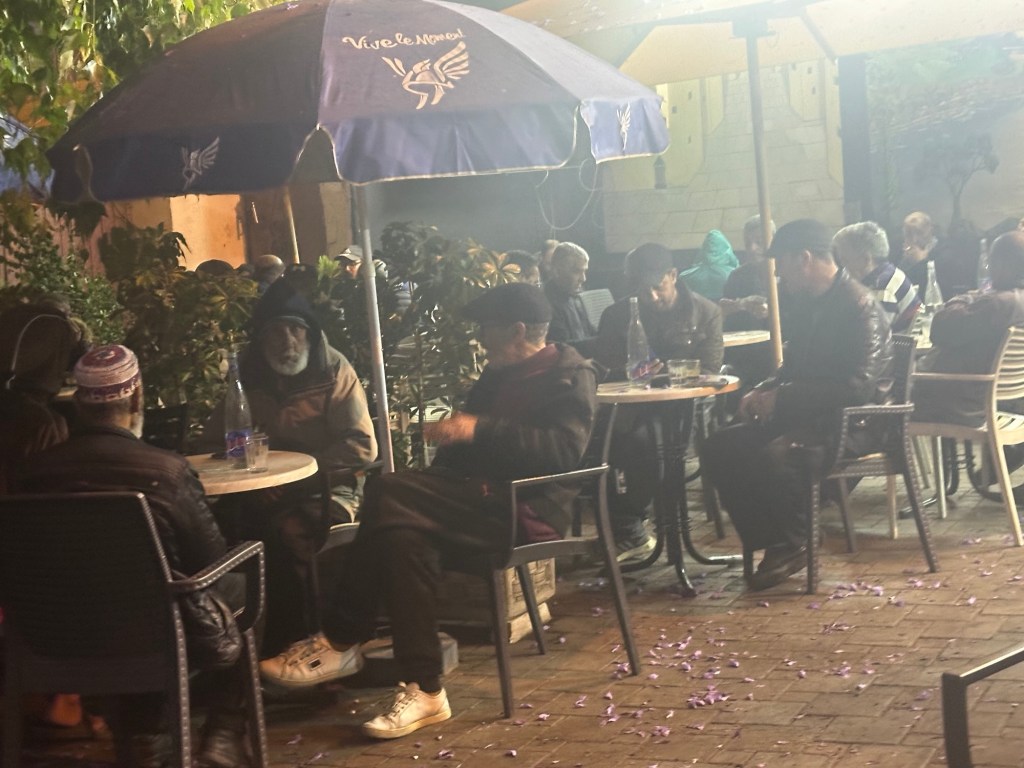
And getting from Point A to Point B is not straightforward: Google Maps was not made for 12th century rabbit warrens.

The next day we were ready to explore on our own the Mellah, the section of the Medina that had been the Jewish Quarter since the 15th century. Jews had lived in Fes for at least 500 years before that but had been more integrated into the Medina neighborhoods.
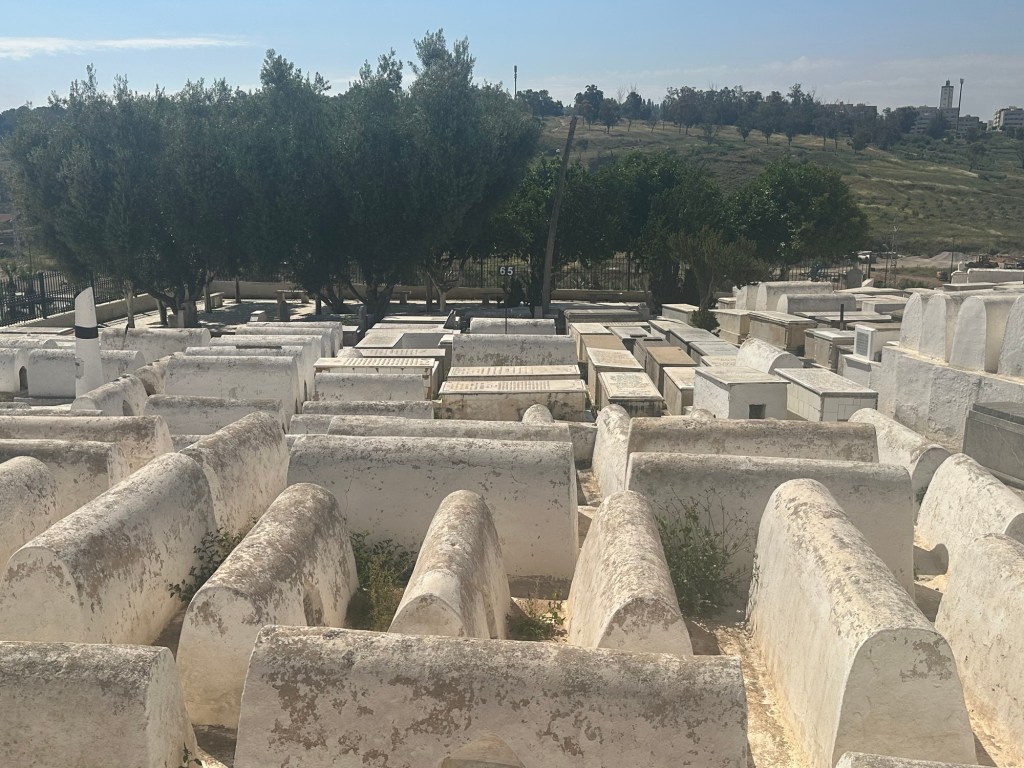
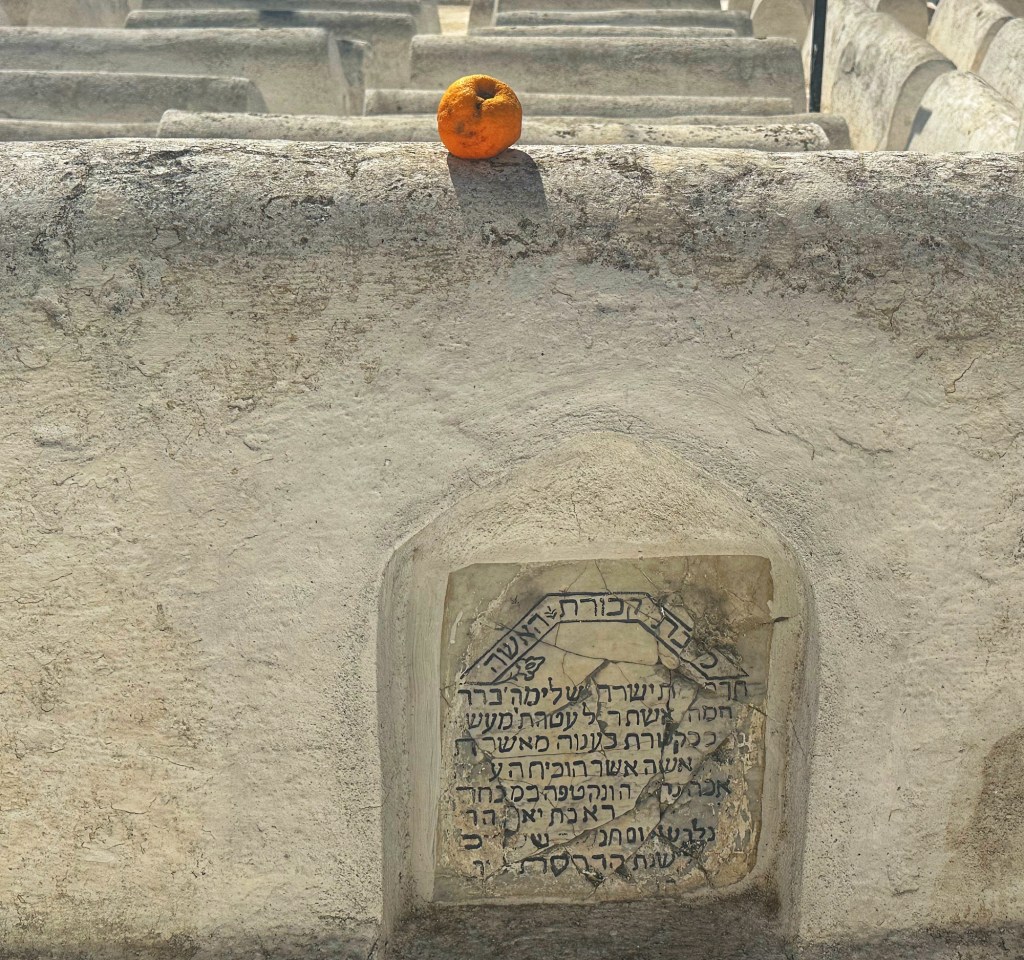
The current Jewish cemetery, a vast expanse of white cylindrical stone tombs, was only created in the late 19th century to make room for the expansion of the royal palace.
Still, the inscriptions, the descriptions of the community, the lineages dating back to Maimonides, the great 11th century Jewish philosopher who lived for a time in Fes, all of it evokes.
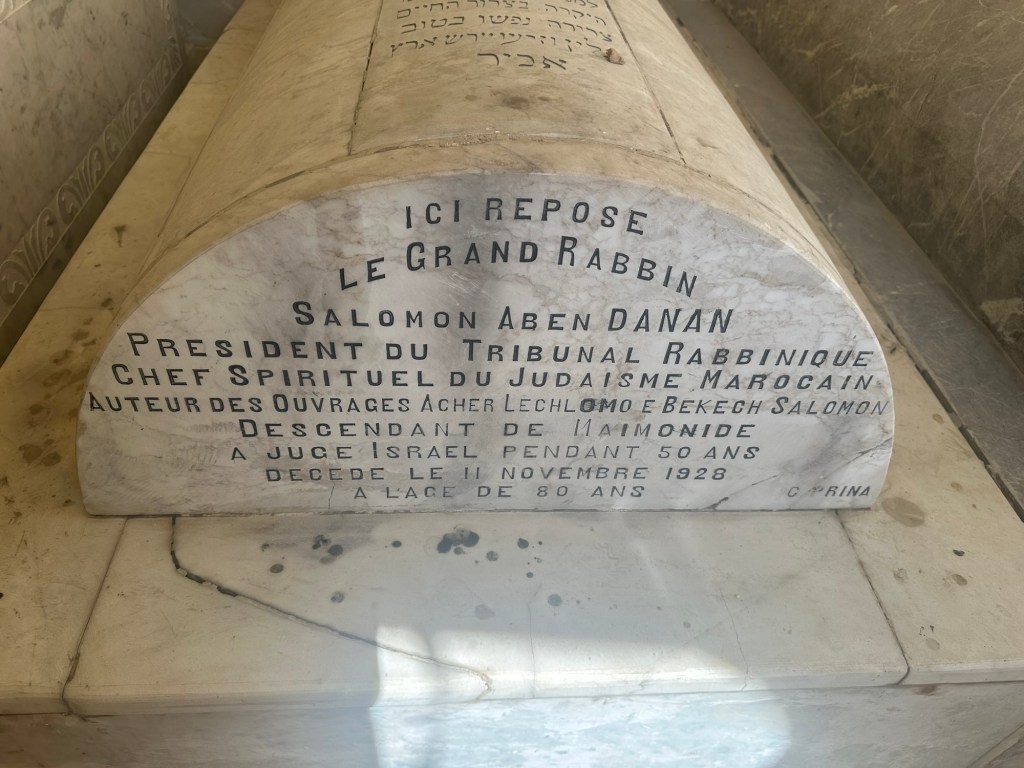

The Mellah also has two synagogues: we visited the 17th century Ibn Dana Synagogue, built in the style of the Sephardic Jews who came here after their expulsion from Spain and Portugal.
We learned of a kind of cultural conflict that existed between these Sephardic Jews, known as Megorashim and the Berber Jews who had been here centuries before,known as Toshavim. In our travels in the Berber, or Amazigh lands, both in Morocco and later in Tunisia, we would hear a lot about the basically indigenous Jewish communities there which no longer exist.
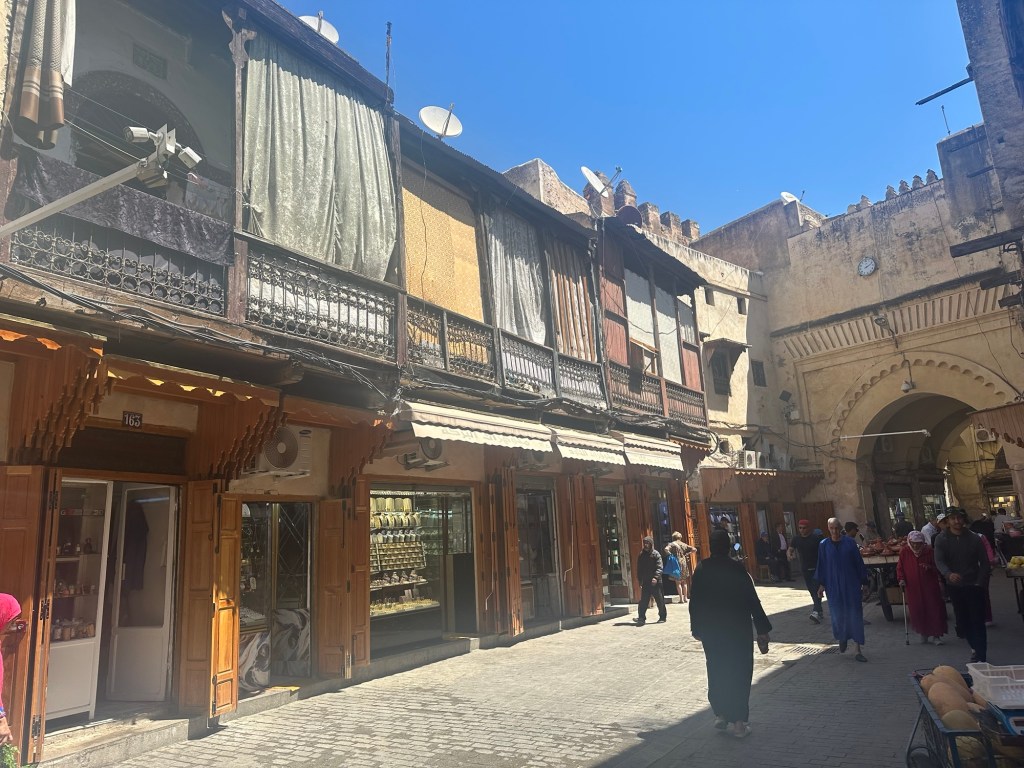
The Mellah has its own souk, which is architecturally very different than the medieval labyrinth. We saw smaller, carved-wood facades that to me evoked Ottoman structures I had seen in Türkiye (though the Ottomans never were able to conquer Morocco).

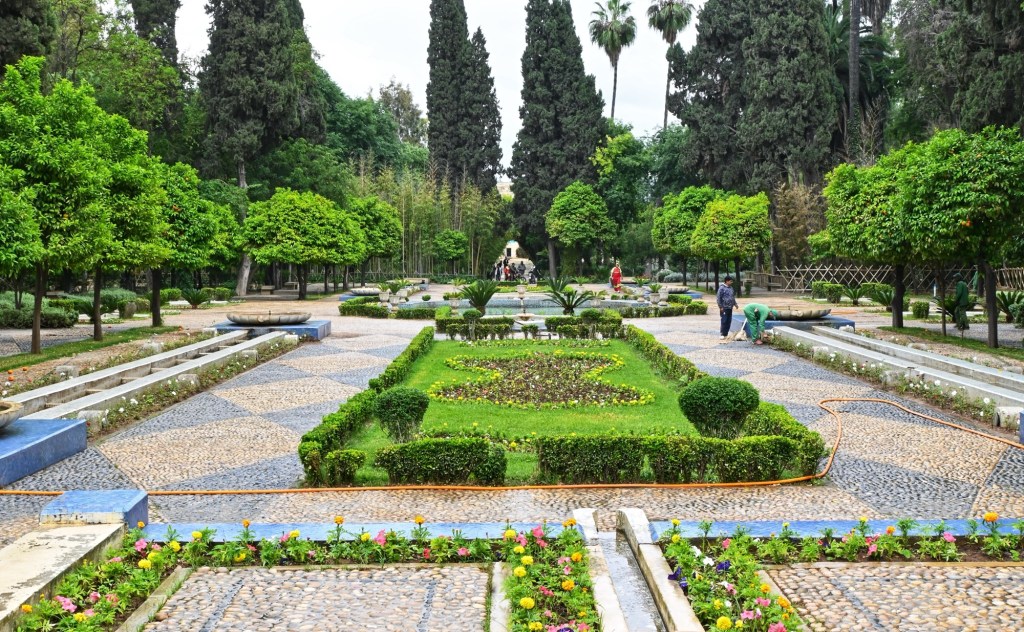
On our final day in Fes, we ventured outside the Medina. Just outside the walls of the Medina are two sites that nourished my slightly weary tourist soul: the Jnane Sbil Garden and the Museum of Islamic Arts. They are a short walk from each other. The garden is everything an urban garden should be: lush, welcoming, shaded and varied. The day we arrived they were setting up for the World Festival of Sacred Music, which alas, we would miss.

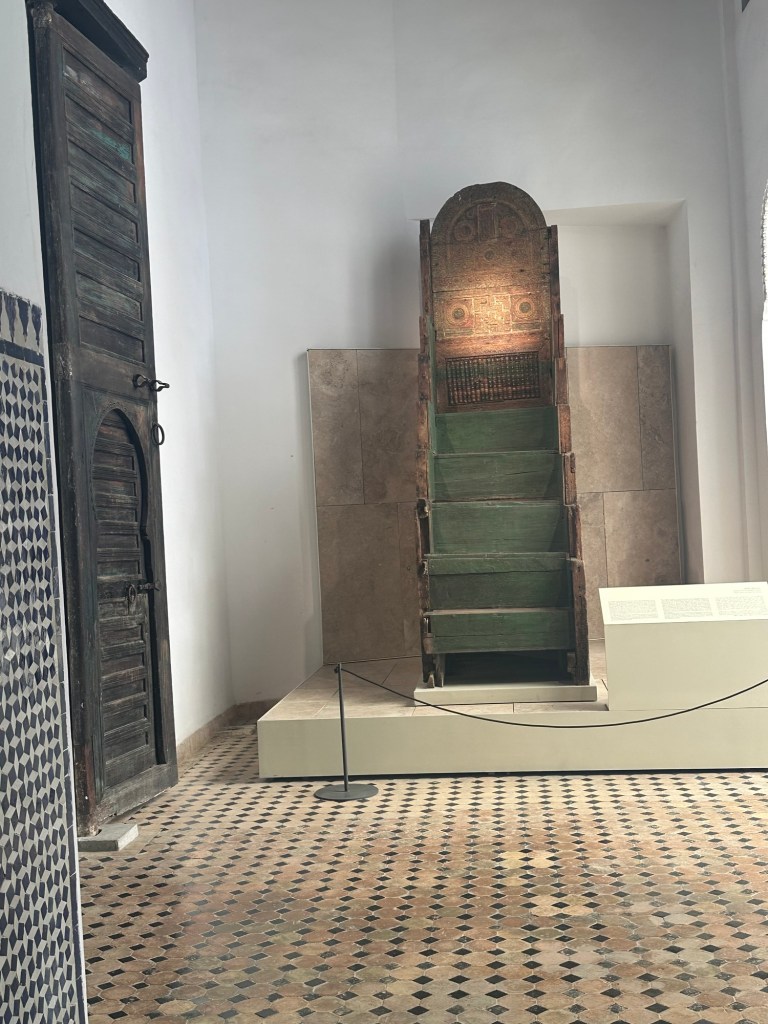
The Museum of Islamic Arts housed in the gorgeous 19th century Alouite Dar Batha Palace not only offered another quiet respite but contained an outstanding collection that told the history of Morocco.
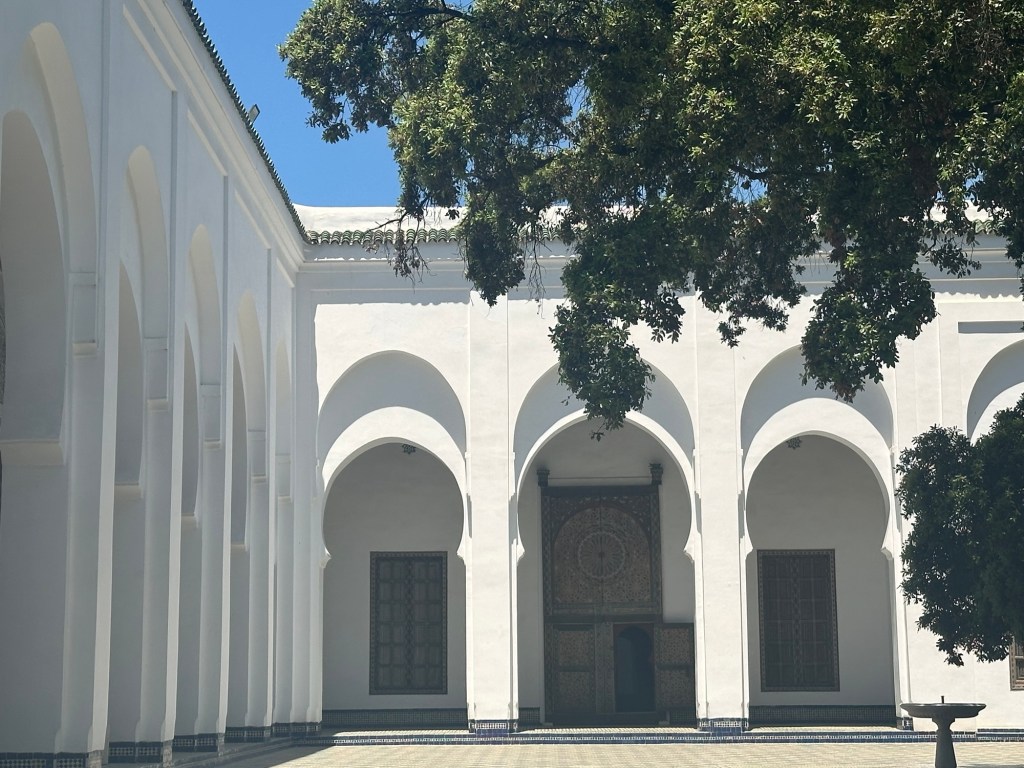
It not only had religious artifacts, but the whole scope of the material culture of the region: architecture, textiles, carpets, furniture, jewelry and more. It was a wonderful place to wrap up not only Fes, but for us the final stop immersing ourselves in the complex and layered history of Morocco.


Oh my, this was wonderful. I suppose it’s easier to describe a place that is so full of sensory detail. I mean, you don’t have to say much about camel heads and pigeon shit to get the whole thing across. Still, this is some great travel writing!
I was wondering how you found the Medina compared to the suk in Jerusalem. Your descriptions brought back memories of that one.
Thanks for bringing Morocco to me!
LikeLike