
I awoke this morning to a thick grey mist covering the abundantly green valley below me. A thunderstorm had roared through last night, leaving everything glistening in the muted sunshine.
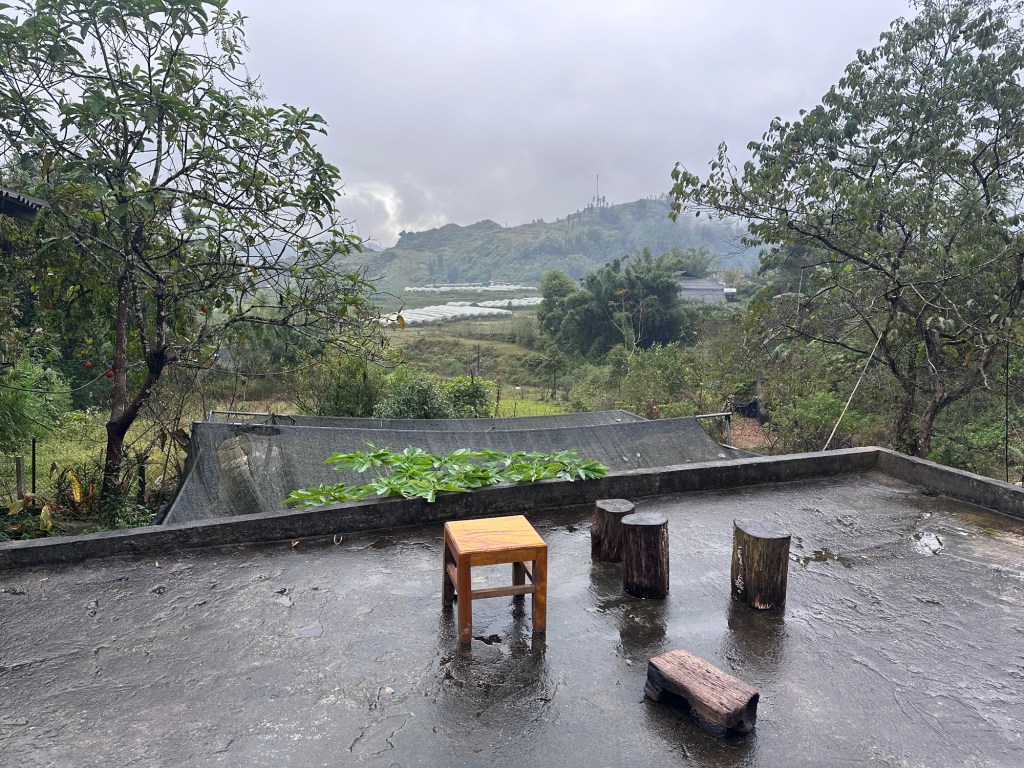
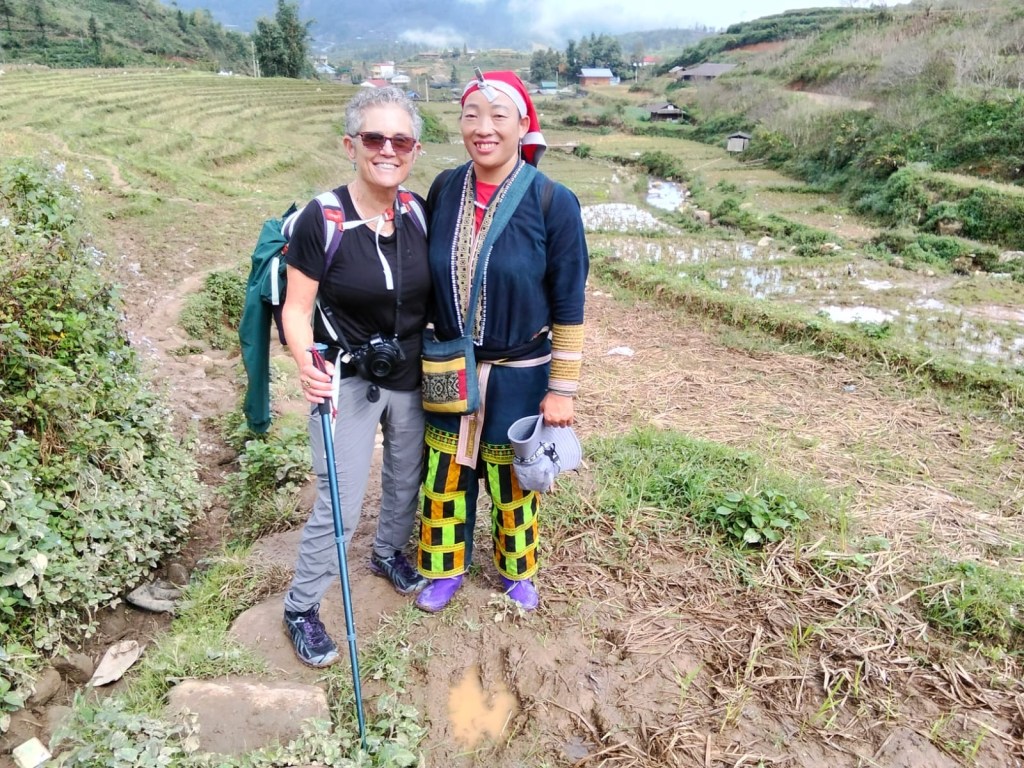
I was in the village of Tà Phin, about seven miles out of Sa Pa, in the mountains of northern Vietnam. We had walked to our homestay from Sa Pa, with our gracious and beautiful guide May, a member of the Red Dao community that calls these valleys home.
I found May through a woman-owned social enterprise organization based in Sa Pa, Sapa O’Chau. There are many companies that offer trekking in the Sa Pa region, but I was drawn to one that focused on supporting women. And indeed, in my two days in the community, I felt that I was in a world of women.
One can choose from numerous trekking options, and we chose a 2-day, one night excursion with a village homestay. I have always been drawn to learning about artisan communities, and my experience with the Red Dao women did not disappoint.
May met us at the office and I expected to get loaded in a van and driven somewhere to start a hike. “Let’s go”, said May and started walking down the urban streets of Sa Pa. What? We are walking to the village from here?
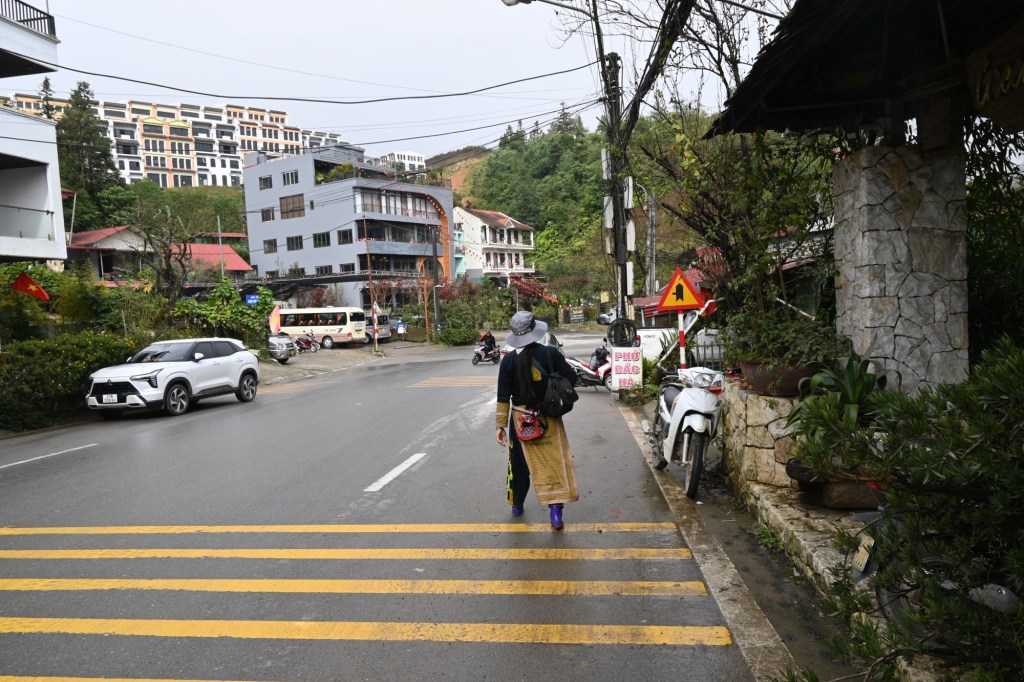
But in one turn off the busy main road we were suddenly in another landscape. The pavement became broken, the surroundings became verdant.
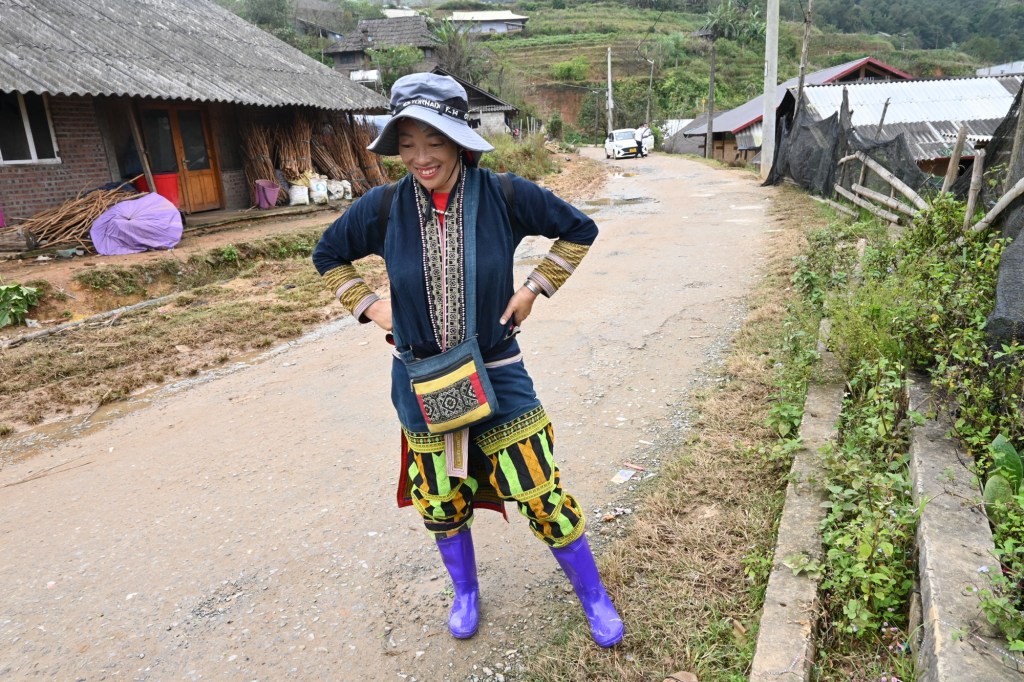
We descended into a lush green valley. We followed May across muddy rice paddies (the “adventure” part of the trek).
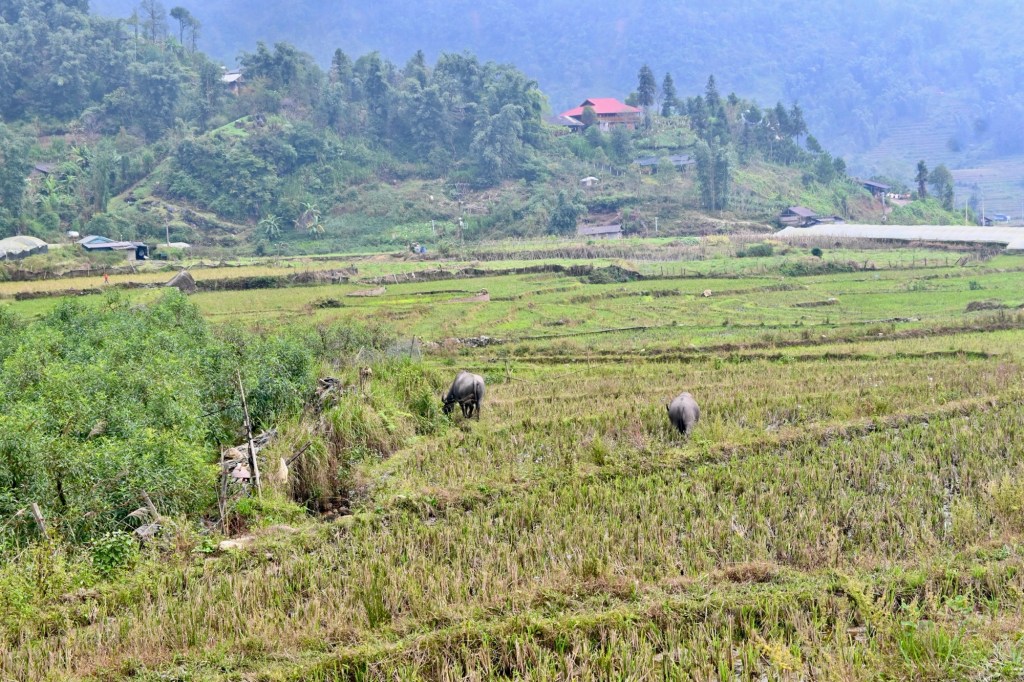
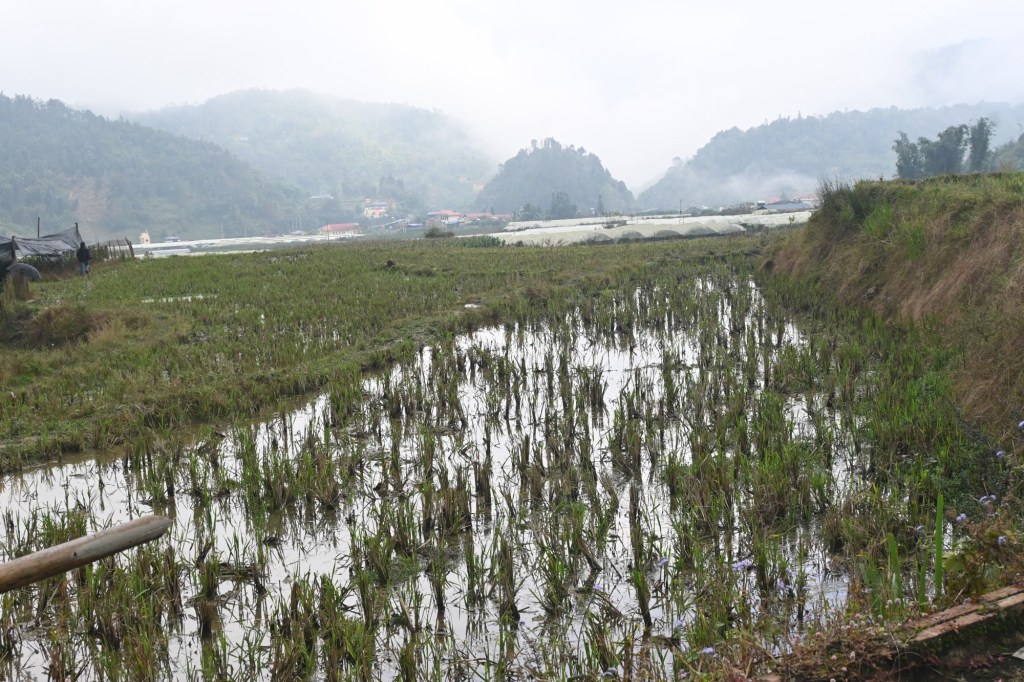
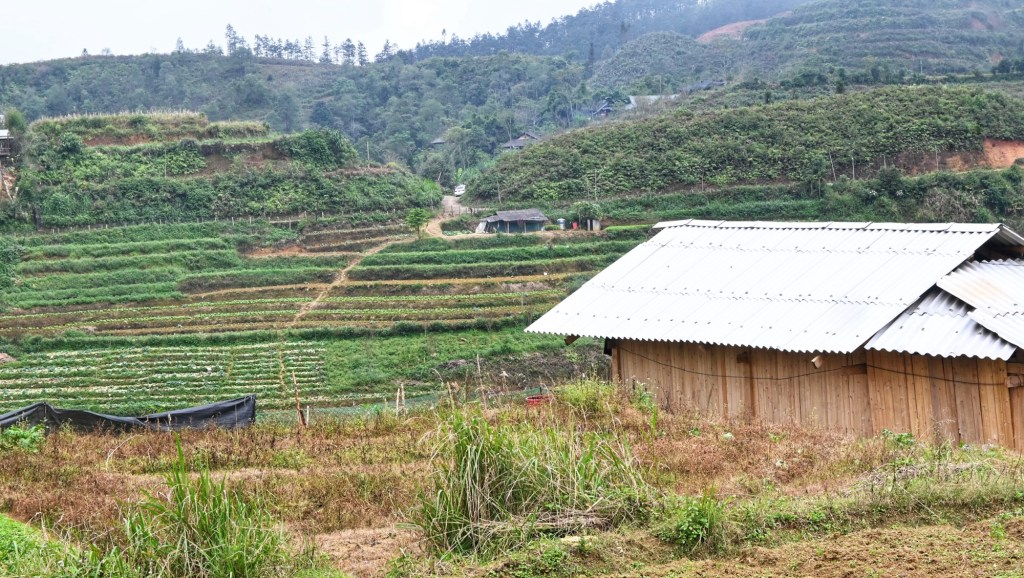
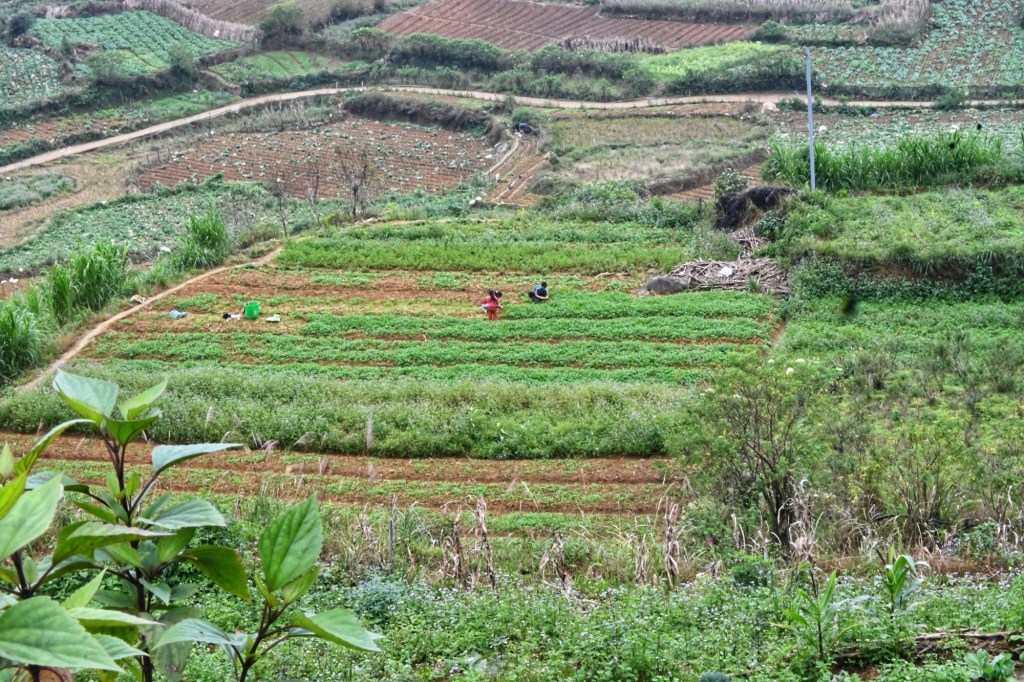
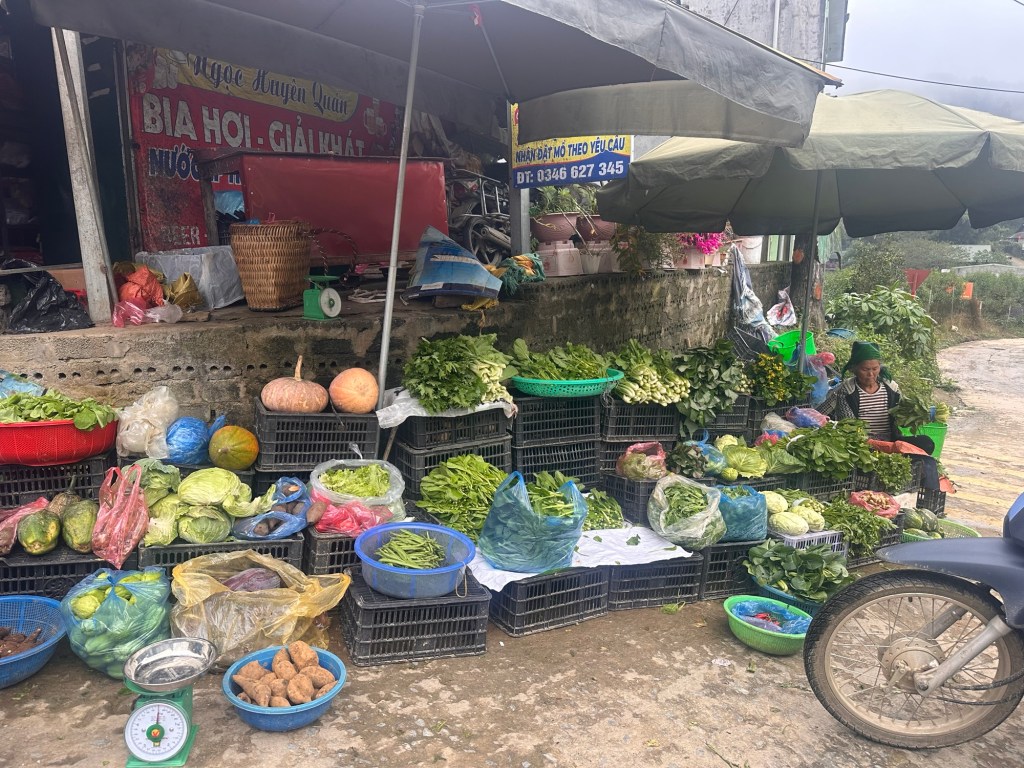
Before long we were surrounded by terraced hills and cultivated fields filled with neat rows of cabbage, artichokes, bok choy, spinach, chayote hanging from wooden racks, greenhouses with enormous tomato plants.
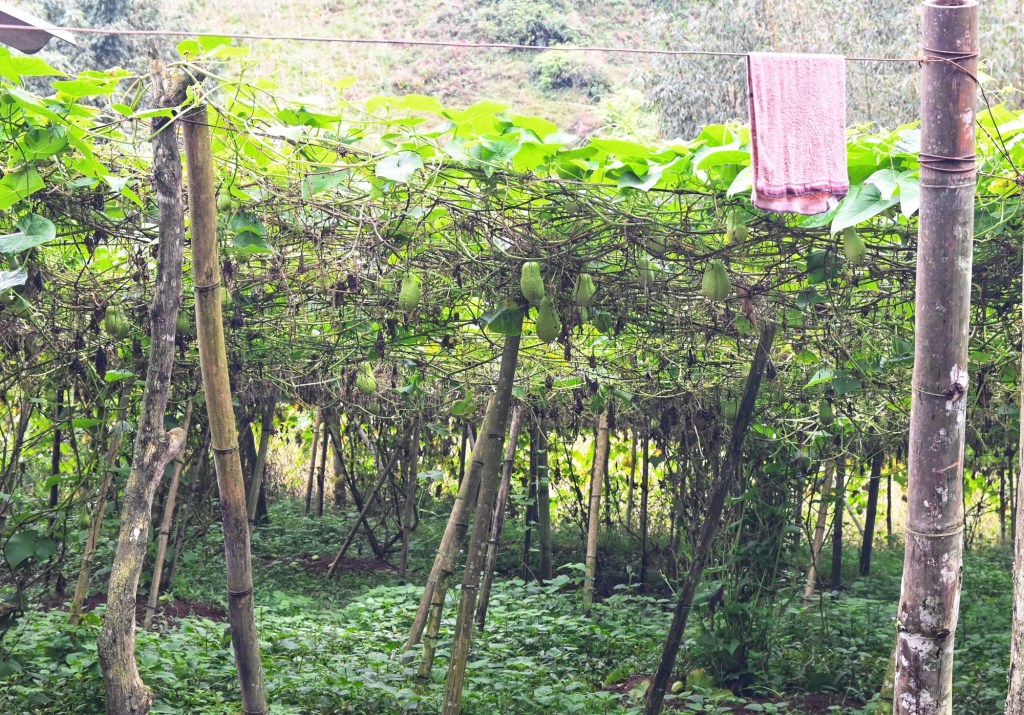
The land was bursting with life and sustenance.
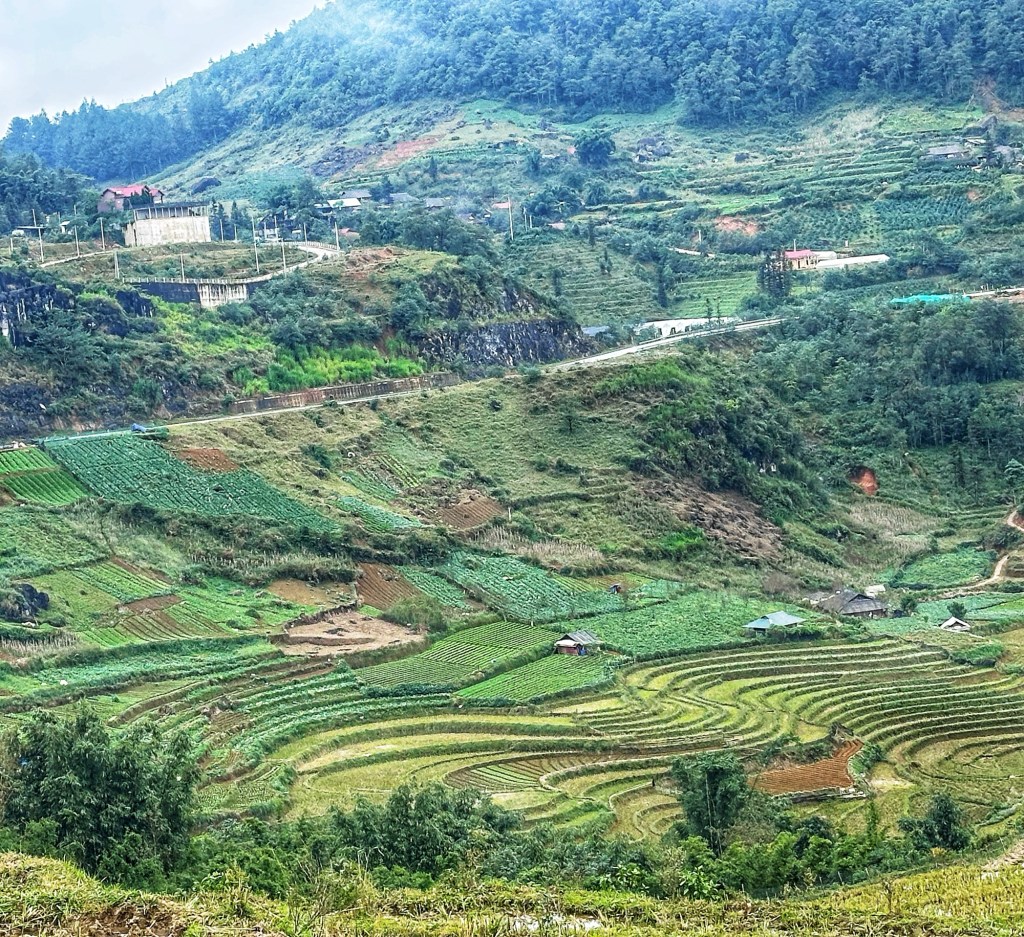
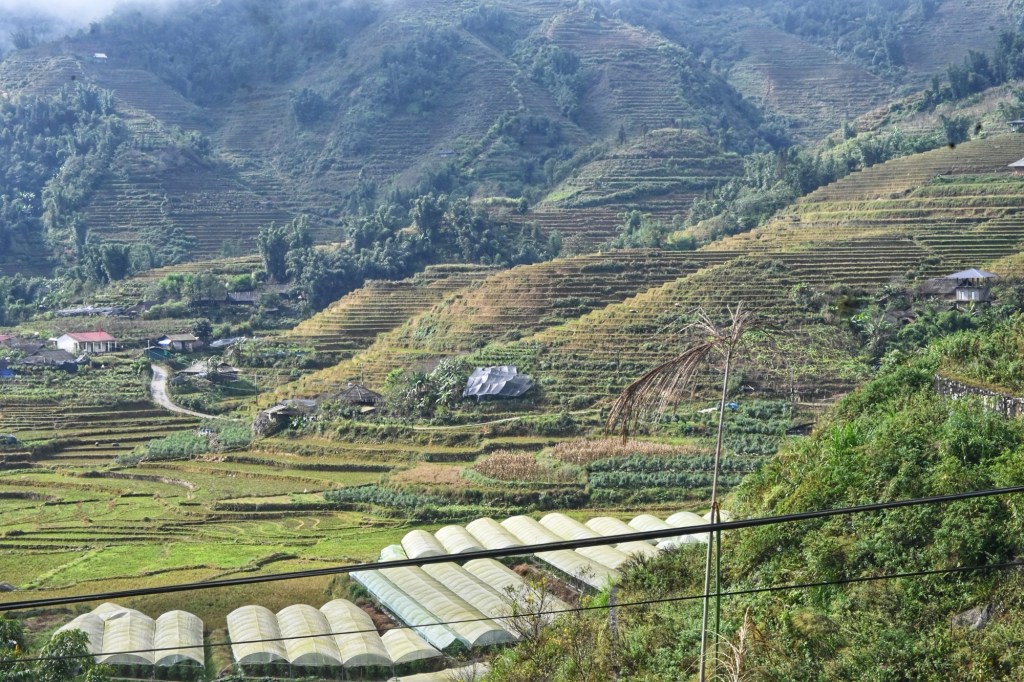
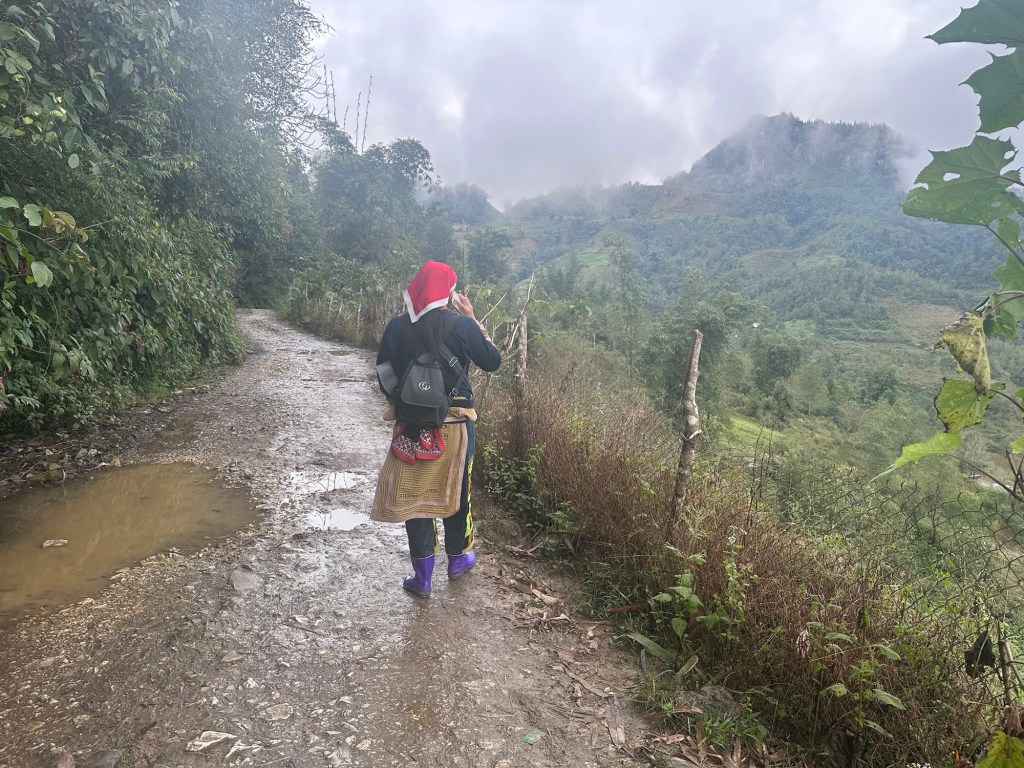
All the while, May was patient with our pace across the rocky and often slippery roads. Little by little, she shared anecdotes of life in her community—from the annual harvest gatherings to her cousin who was bit by a python and barely survived to the jilted lovers who committed suicide by eating poisonous plants.
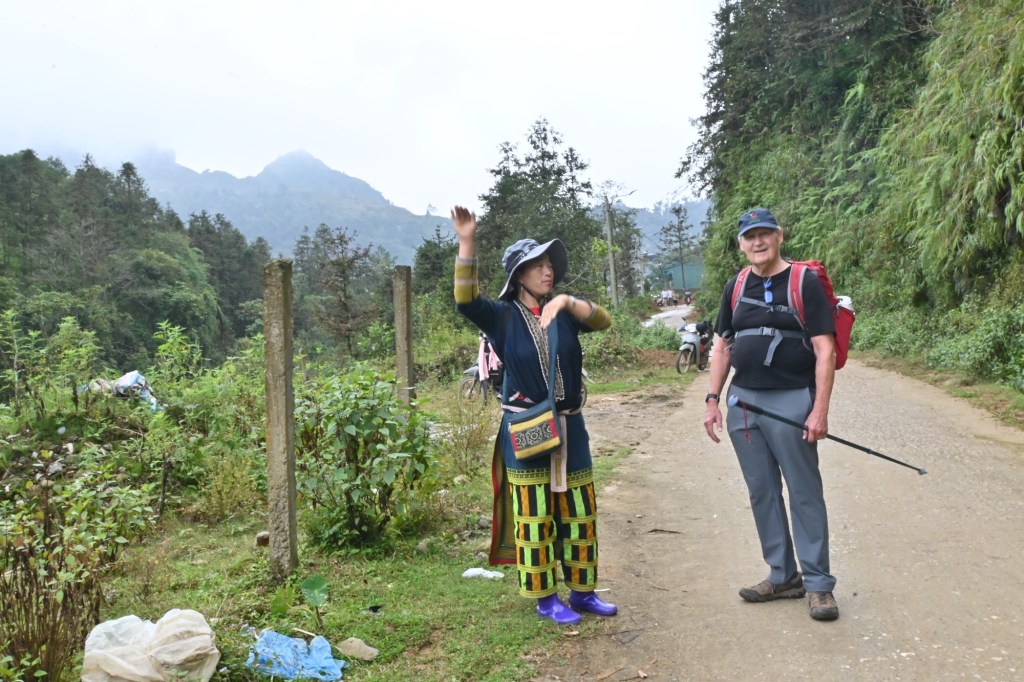
The Red Dao are one of the two communities who have lived in this region for about 400 years, the other being the Black Hmong. Both originally migrated from China, the border of which is about 20 miles to the north. The communities both amiably side by side but maintain their own identities with distinct languages. May often referred to “the Vietnamese” as a completely separate people, with a language that some of the elders of her community did not speak.
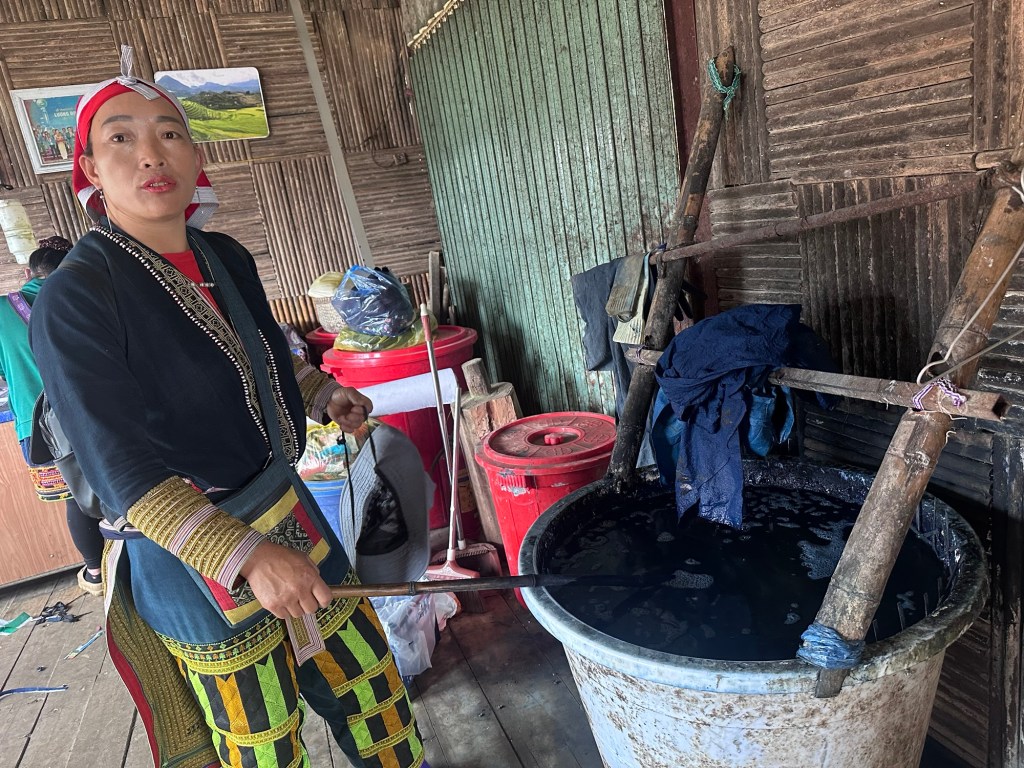
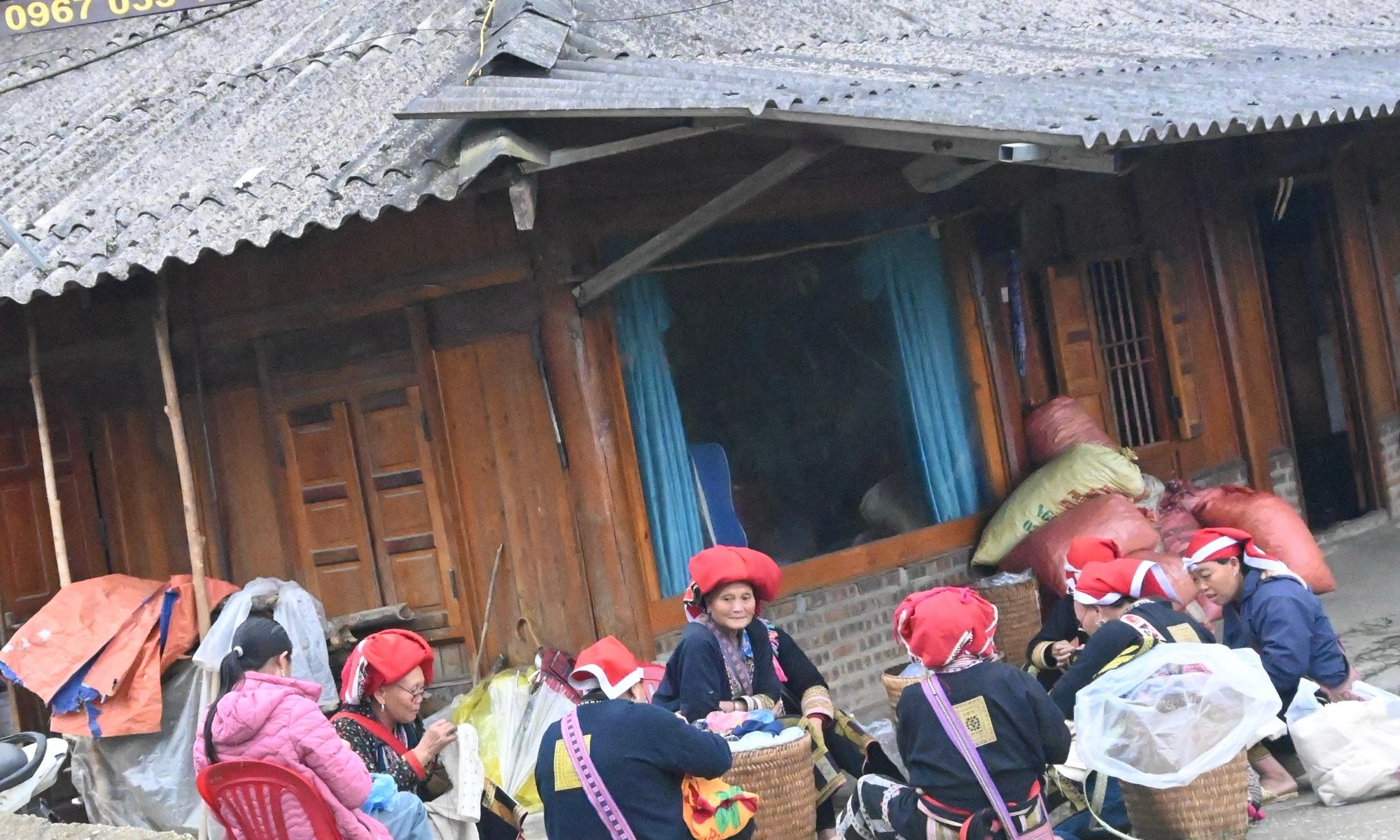
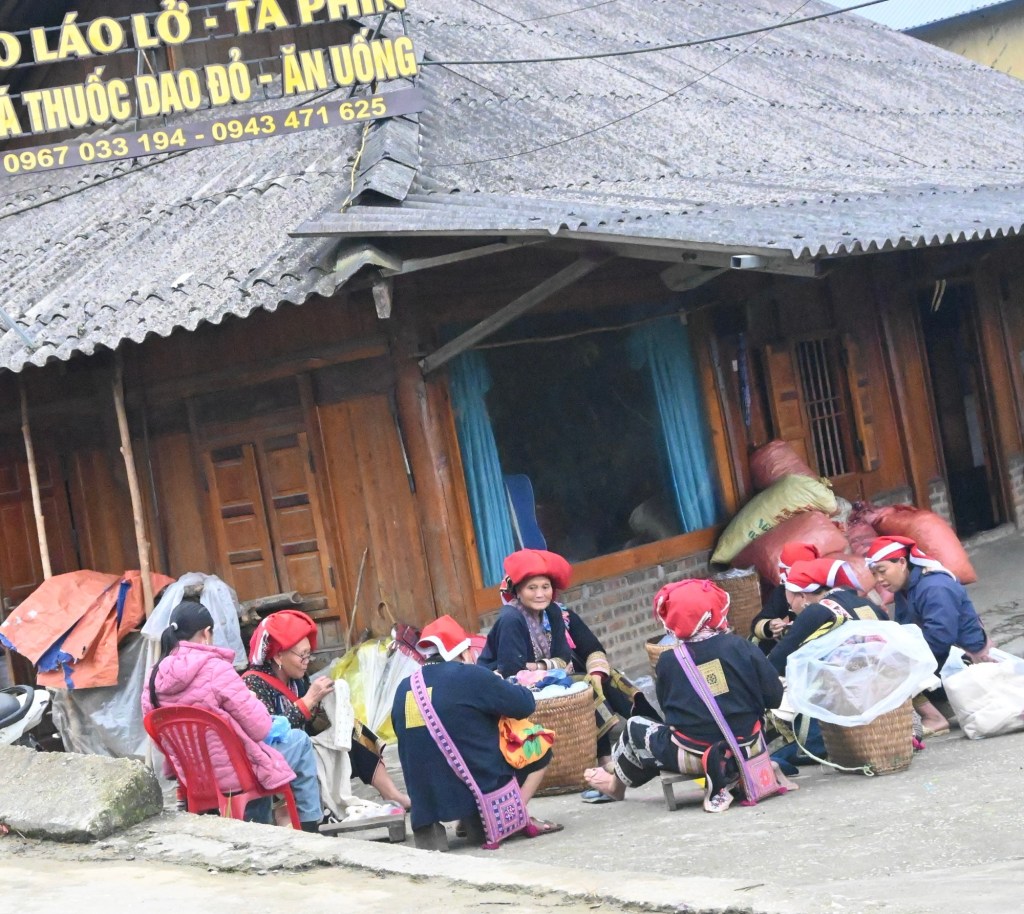
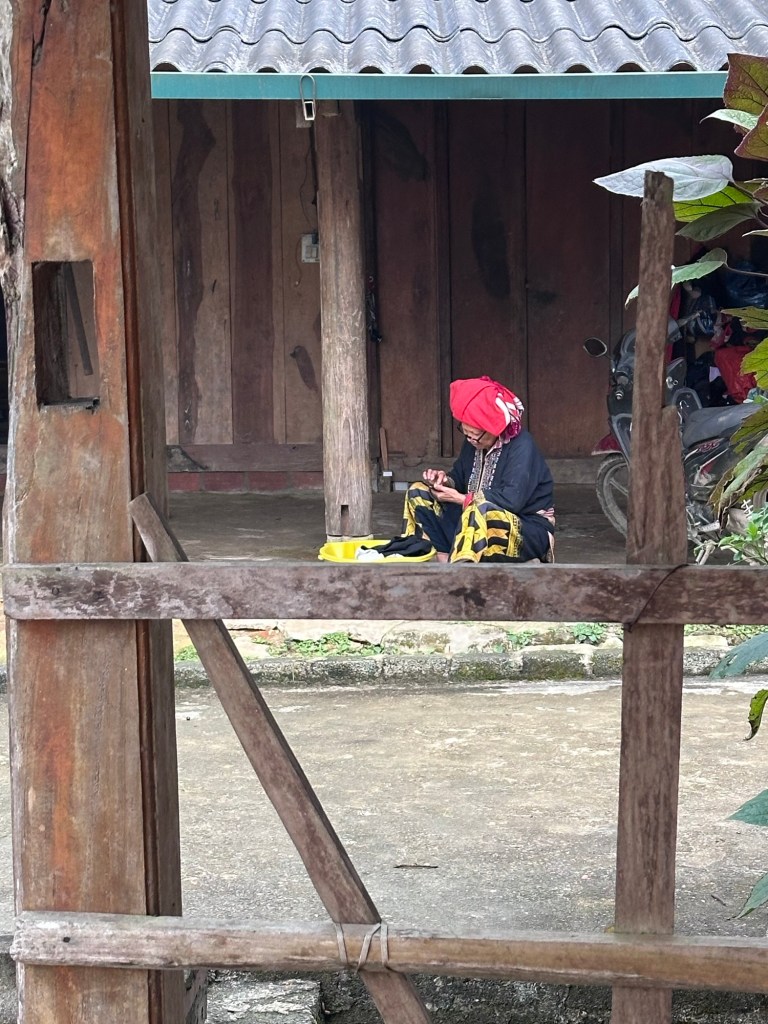
The “red” in “Red Dao” refers to the red headscarves that most of the women wear, while the “black” in “Black Hmong” similarly refers to the headdresses of the women. May described the Red Dao as Buddhist, but a home-based, personal Buddhism—we saw no temples or altars here—while many of the Black Hmong are Catholic.
As we hiked through the hills and valleys our first day, two Red Dao women attached themselves to us, following us along our muddy path. May said she did not know them as they were from another village, but neither did she ask them to leave. When we stopped for a drink break, the two women squatted down next to us, opening up the baskets they had been carrying on their backs to show us embroidered bags and wall hangings for sale.
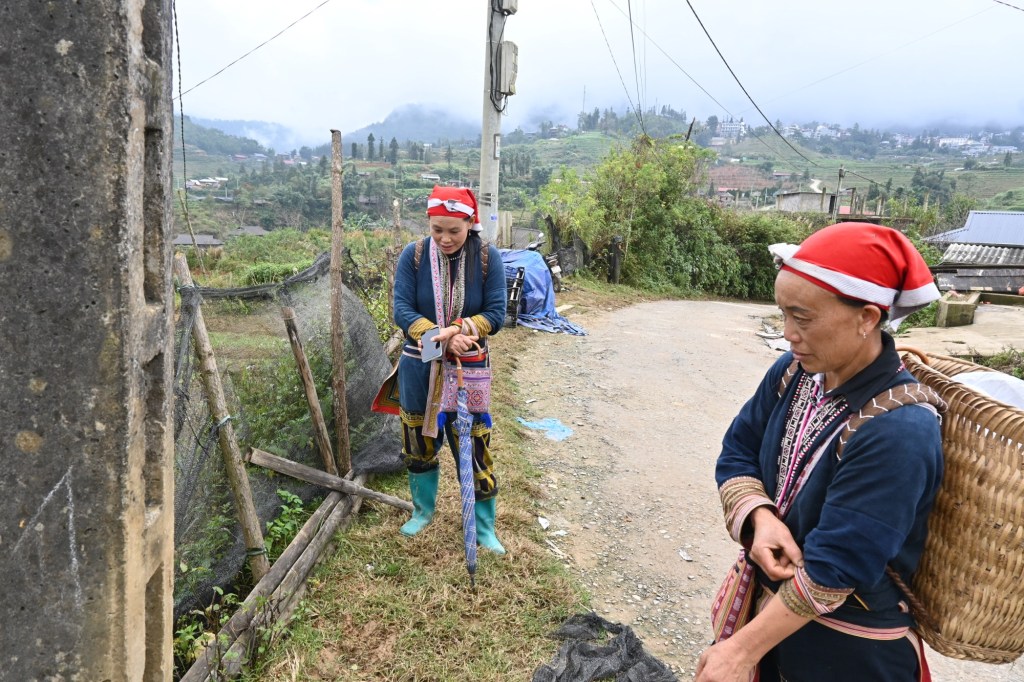
I had been expecting this. I did not think they had been traipsing along with us for miles for the halting few words of English we exchanged, pleasant as they were. And I didn’t mind. I have seen this dynamic in other places- a traditional handicraft offered directly to tourists like me. I love textiles and I was happy to buy a couple of intricately embroidered pieces. The two women cheerfully pocketed my cash and, having accomplished their mission, took off on a couple of motorcycles that magically appeared at our rest stop. I would purchase more hand-embroidered items- a table runner, gold-threaded pants like the Red Dao women wear, an indigo-dyed shirt with silver buttons- from our homestay host, Ly Quay, May’s cousin.
These objects, to me, remain a connection to this artistry the women continue to keep alive.
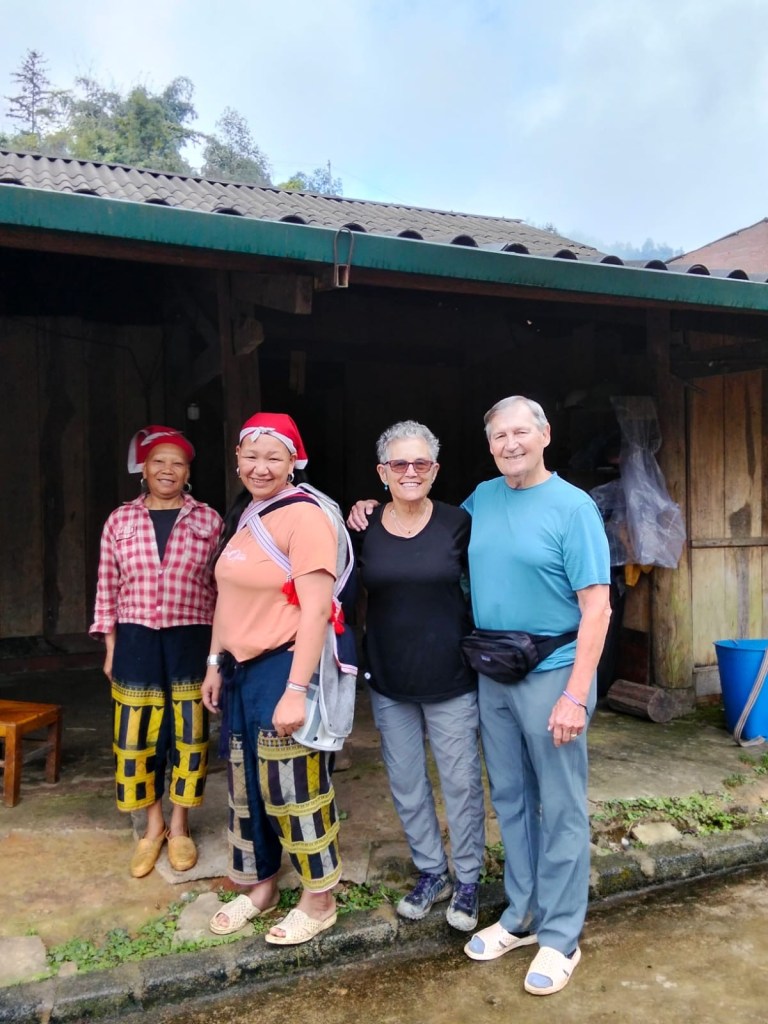
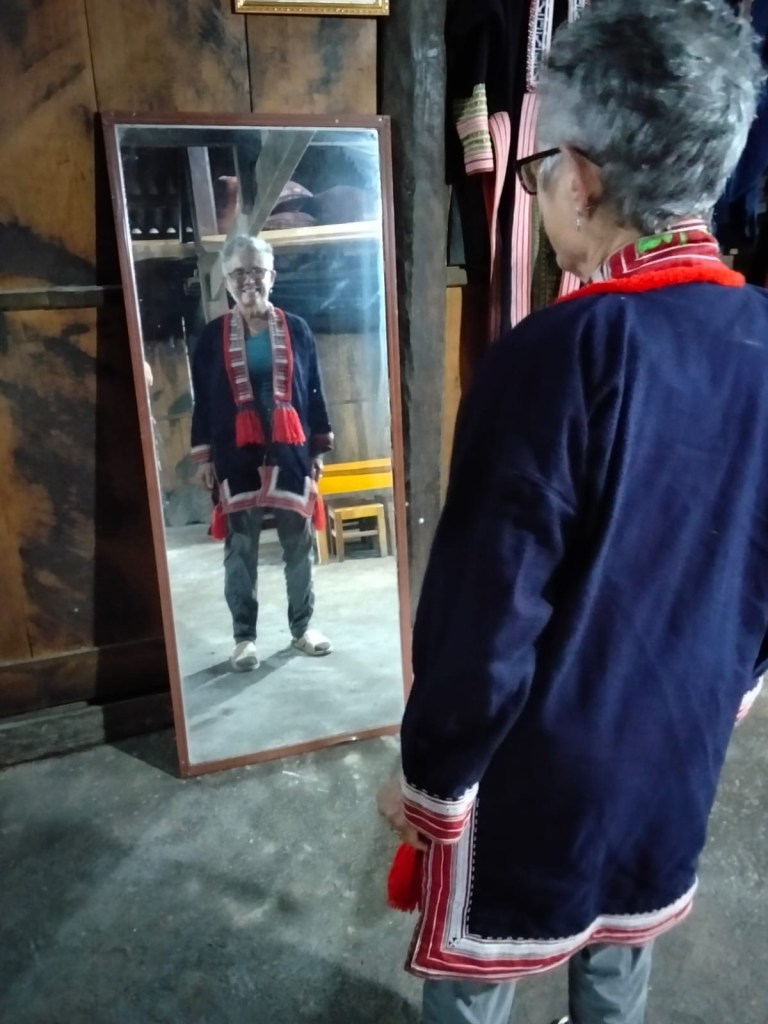
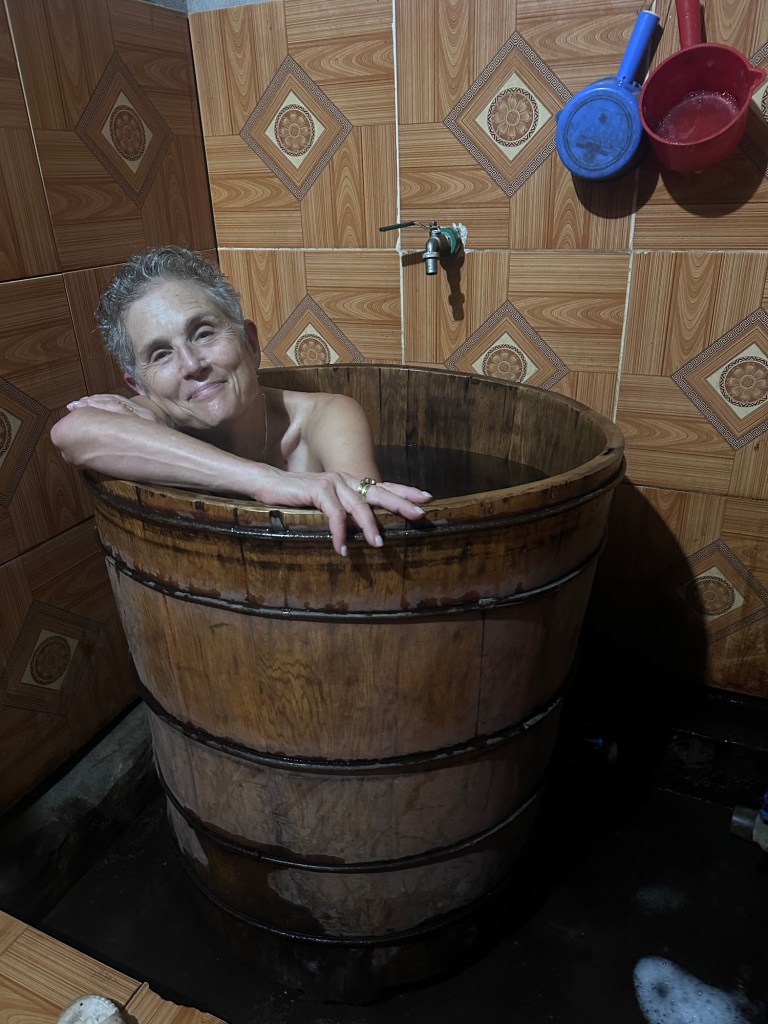
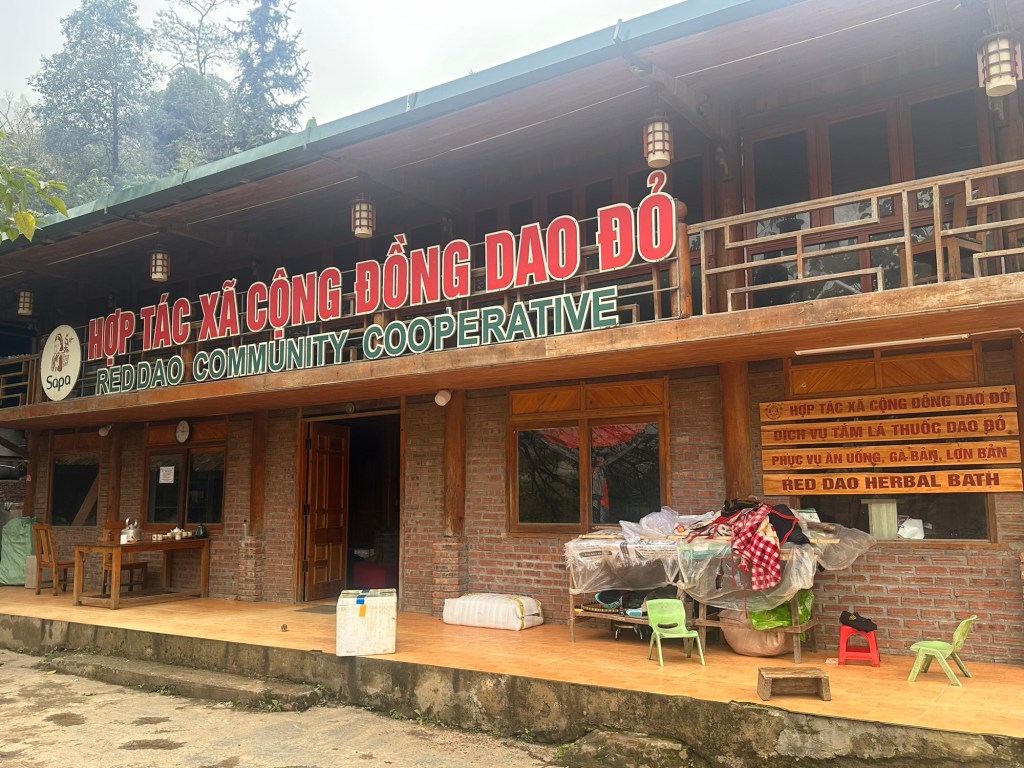
Ly Quay gave us a simple room in a wood-frame house she and her husband built for tourists like us. We lounged in a hammock on a balcony overlooking the valley. And in the evening we were treated to a Red Dao tradition— baths in steaming herb-infused hot water to soak away the joint pain and muscle fatigue of a ten-mile walk.
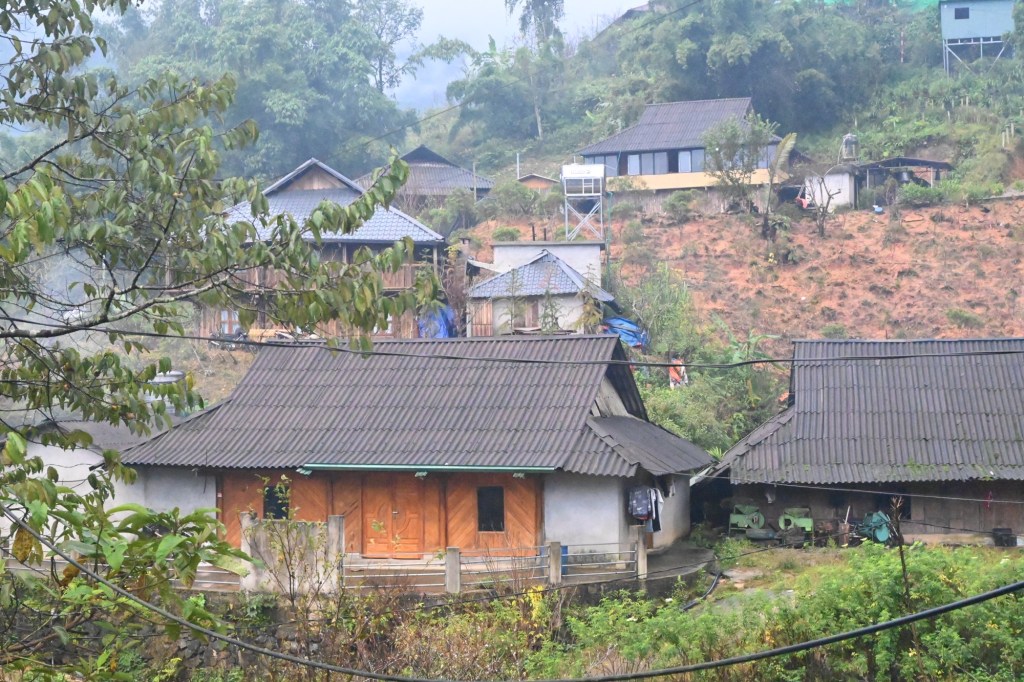
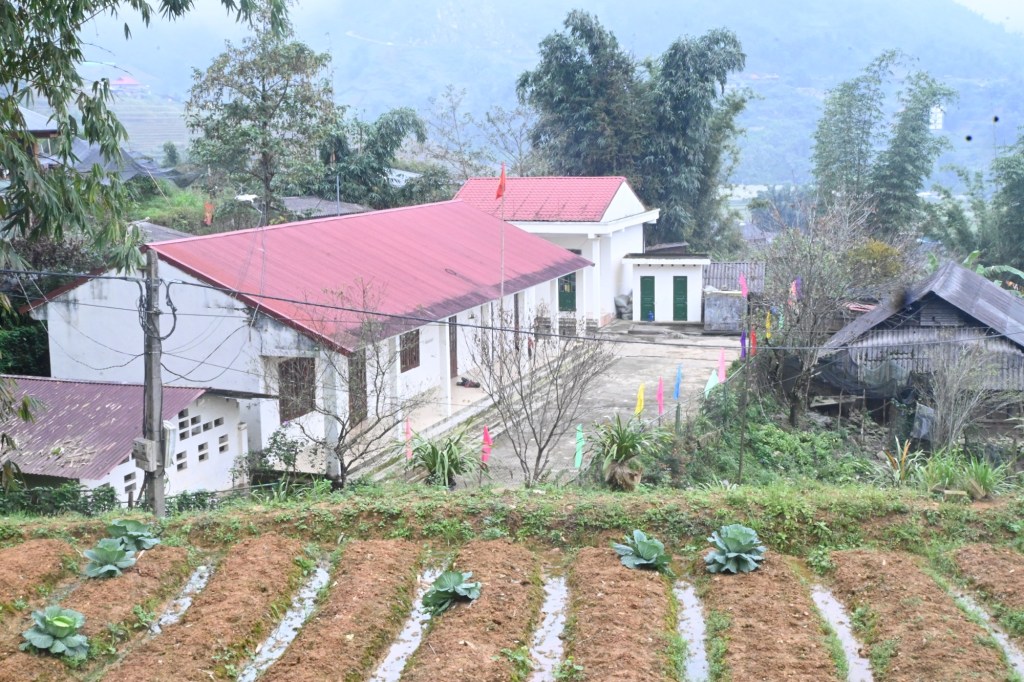
We ate dinner with Ly Quay’s family in the traditional wooden barn-like home in which they cooked, ate and slept. Like most of the homes in the village, it has a steep, pitched metal roof and a covered patio under which clothing could dry and people can work.
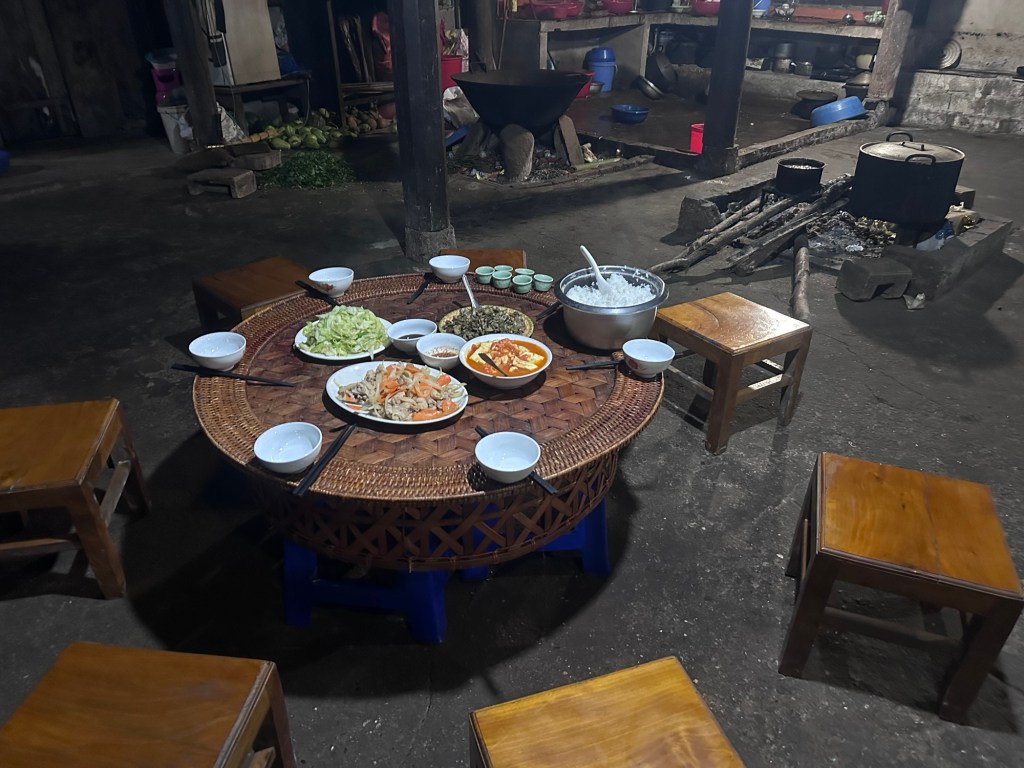
That night after dinner, Ly’s husband began fashioning woven straw hats for a coming-of-age ceremony two months hence. In the second floor rafters, 100-pound bags of rice are stored, enough to feed family and visitors for month and months.
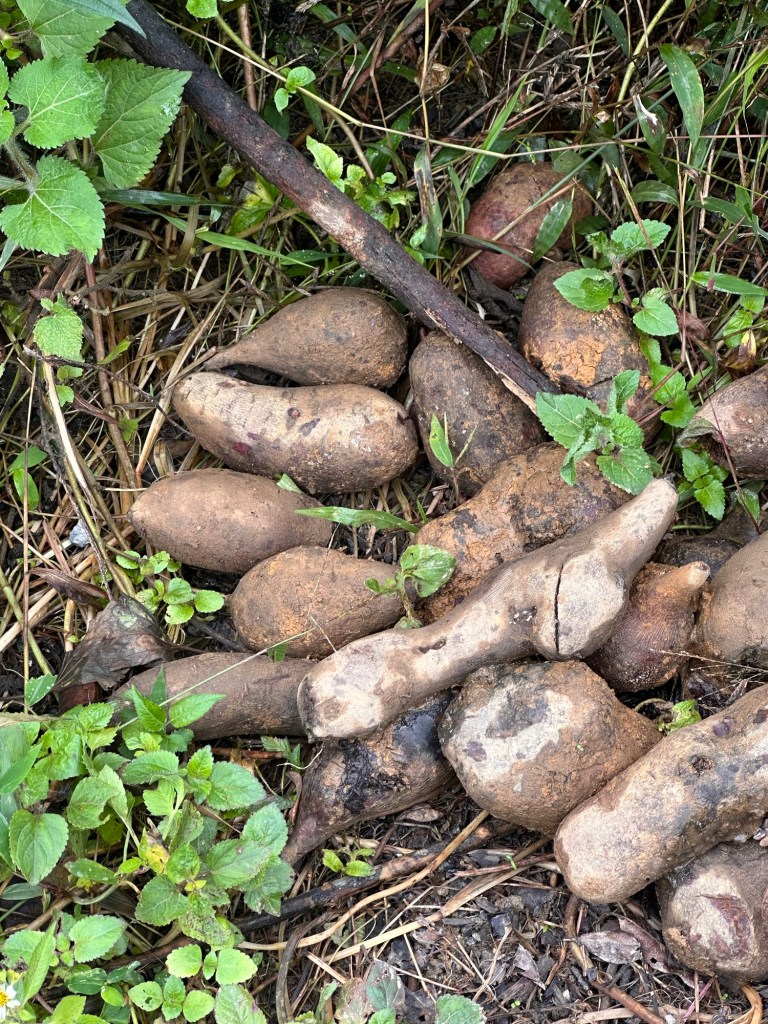
The Red Dao seem nearly food self-sufficient- the incredibly fertile valley yields the rice and all the vegetables we ate during our two days— stir-fried cabbage and ferns, fried eggs, carrots, onions, tomatoes— as well as the pork and chicken and rice, rice and more rice. We tasted a sharp liquor distilled from rice.
It seems that this wholeness allows them to maintain a traditional way of life, despite the ubiquitous presence of the modern world— cell phones, tourists. We were told that of all the crops, only the cabbages are sold out of the community because the are easy to load into huge plastic bags and truck down to markets in Hanoi.
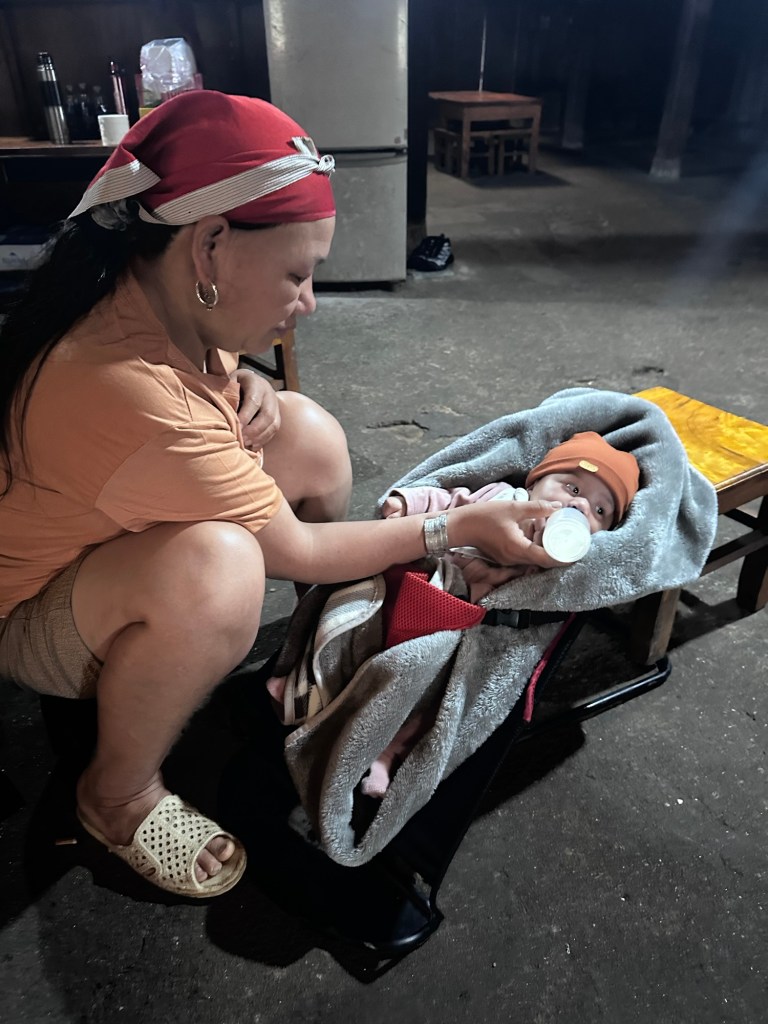
The young people go to school in the village but may leave for university in Hanoi or farther. May herself has only been to Hanoi twice (its about a 6 hour drive) and found it unpleasantly hot and frenetic. After walking with her in her tranquil mountain valley, I can understand why.
The second day we set off from the homestay to ascend the small mountain above.
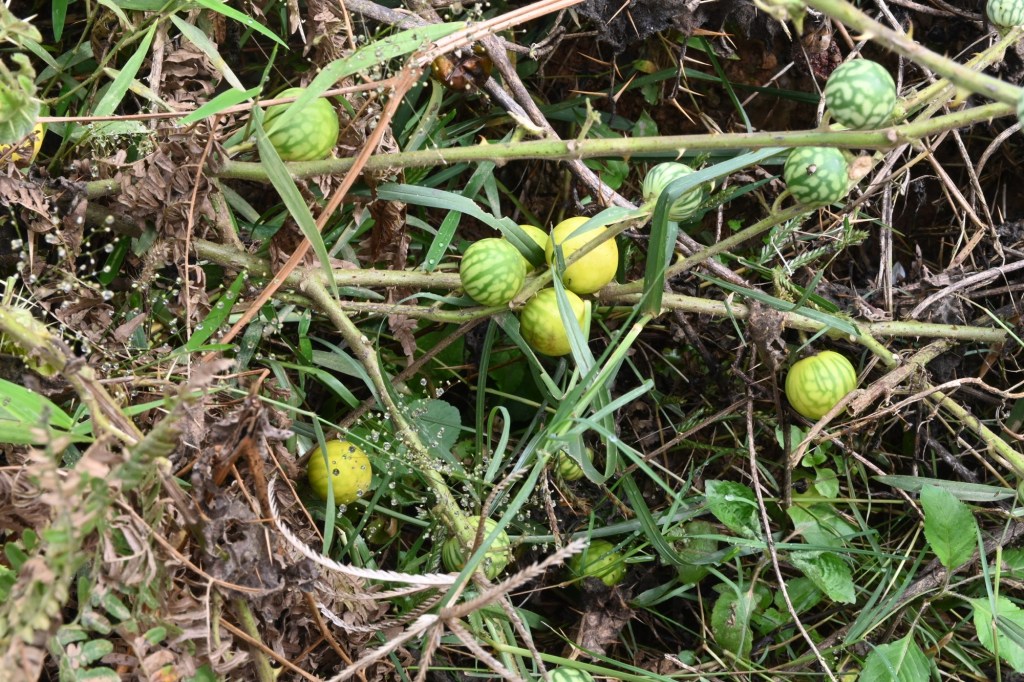
This walk took us on a dirt road through dense jungle. Perched on a steep hillside are hundreds of columns on which large pots of orchids grow.
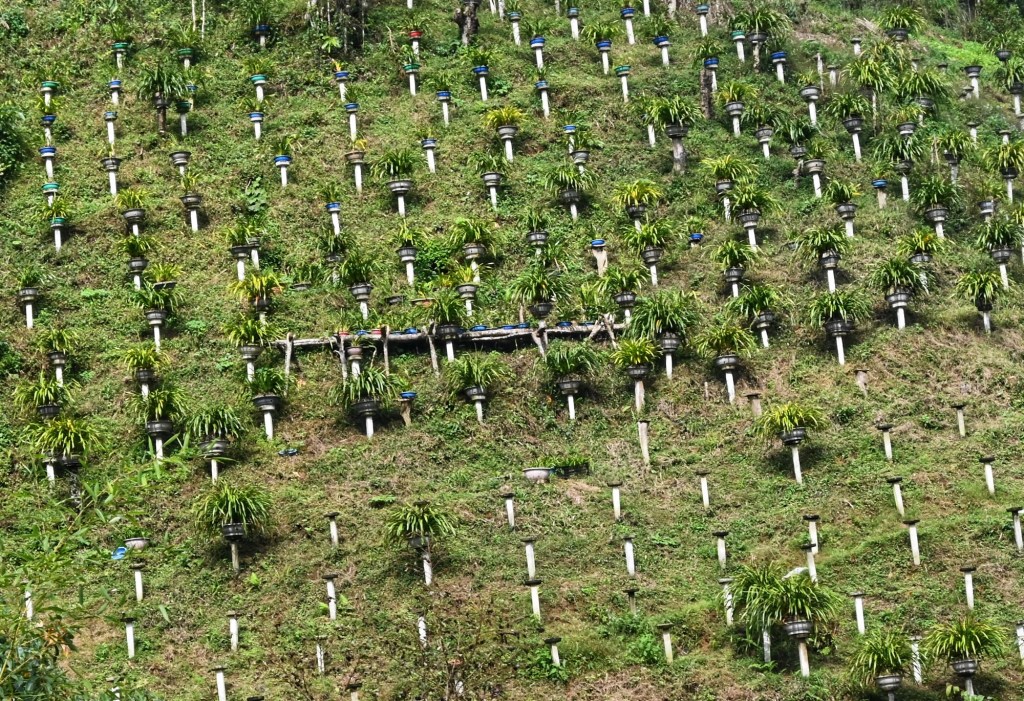
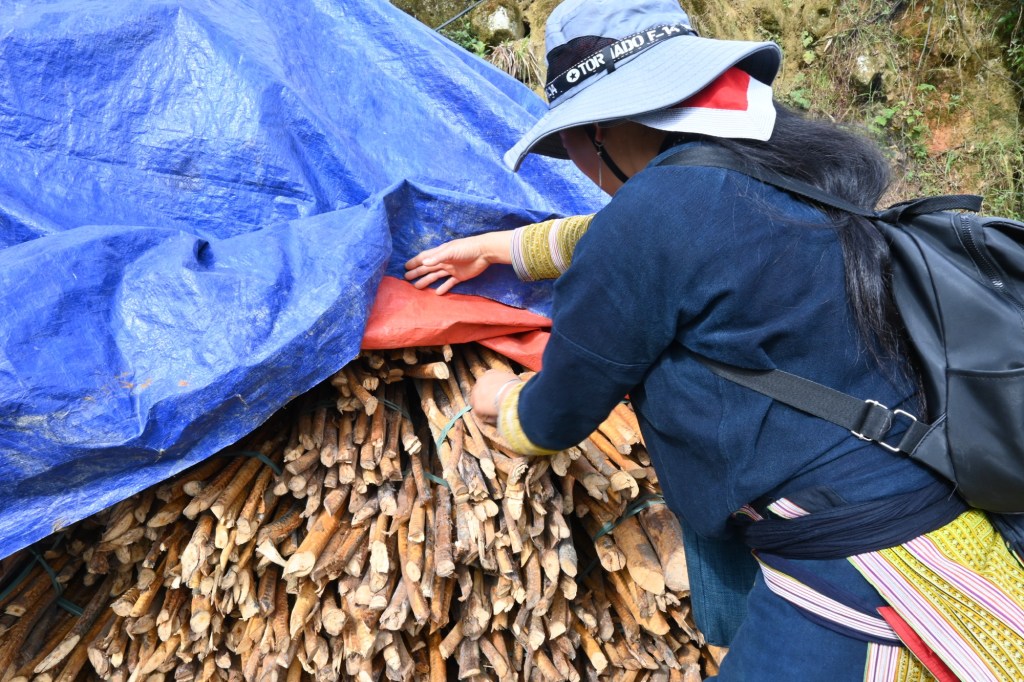
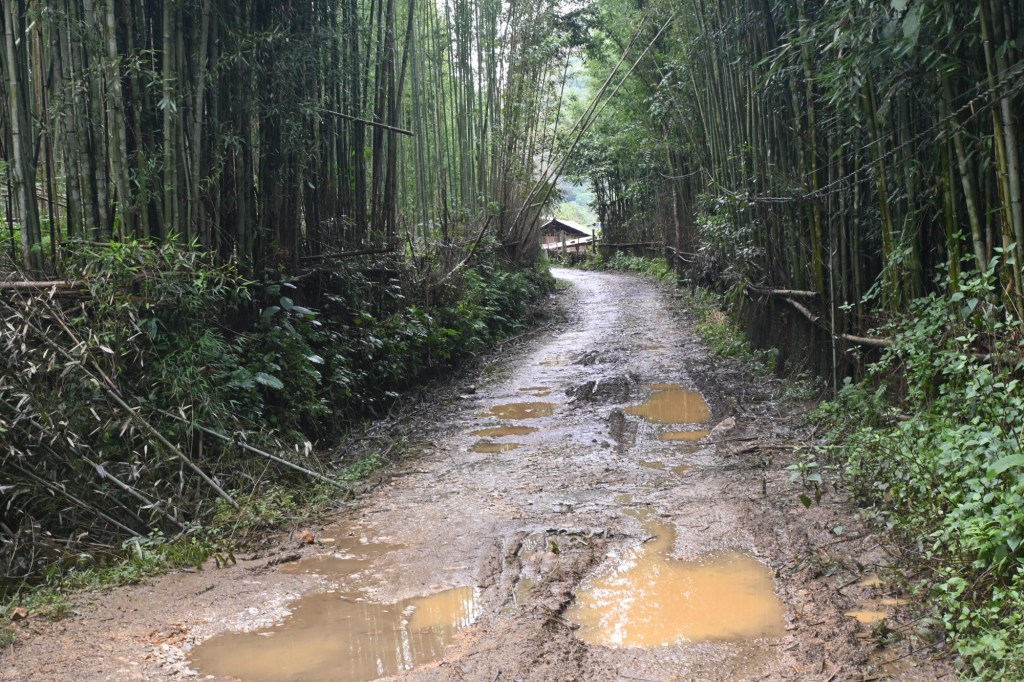
The orchids are later divided and brought all over the north for New Years celebrations — “Vietnamese people love flowers”, said May. We saw forests of bamboo and men cutting the rigid cylindrical stalks which will be used for firewood and for steaming sticky rice inside. The forecasted rain never came but a damp mist hovered over the valley.
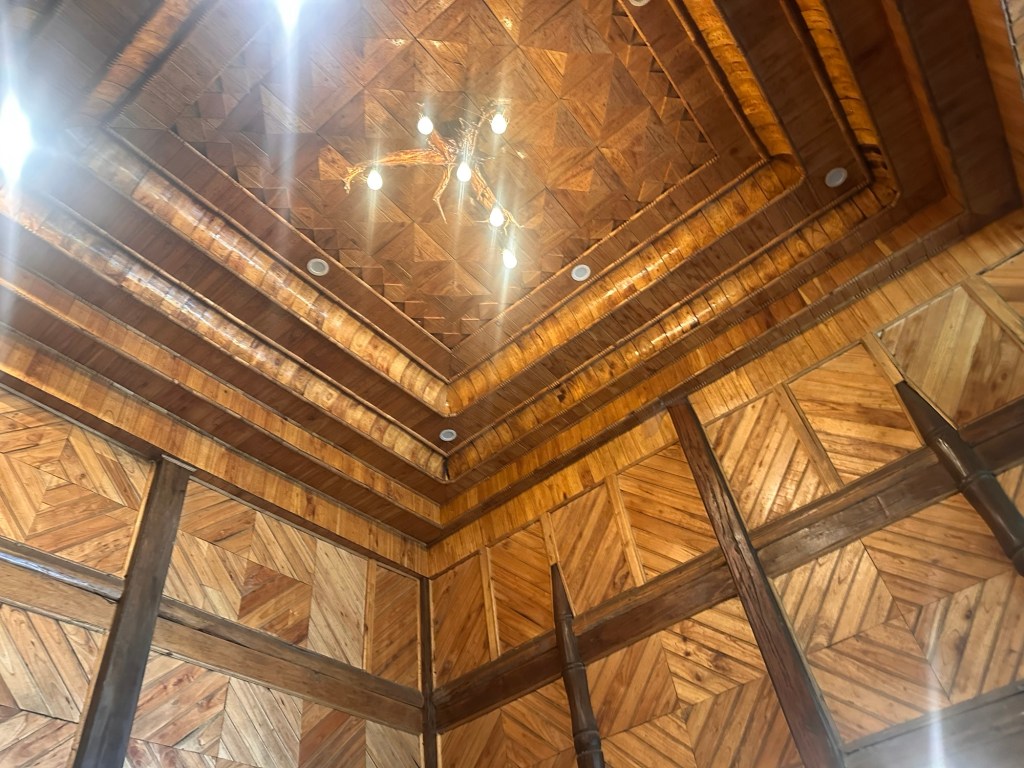
We ended our two days with a late lunch in the home May and her husband had built, the inside paneled with polished chestnut-colored wood..
As in Ly’s house, the cooking was done in large iron pans over an open fireplace, where bright red chile peppers were arrayed to dry. Over the two days, we saw a few tourists along the roads, in the café where we stopped for lunch the first day. All trekkers like us in in small groups of two or three, each with a local guide.
For me, this was a calm and welcoming way to be introduced to a community I had known little about. I had a sense that the Red Dao people were doing their best to make tourism work for them, to help them sustain their community and way of life, not destroy it.


Your written account makes it easy for me to believe you were actually there. Love the pictures, too. My mind is still seeing you in your Zoom square, ready to write, tho. Thank you for sharing some of the life these women are in. Beautiful ❤️🔥
Connie
LikeLike
fabulous, Sharon. Thanks for sharing the richness of your Vietnamese experience in such detail!
LikeLike
are you bringing a soaking tub home?
LikeLiked by 1 person
What an amazing journey, beautiful writing, and photos. I want to go with you on your next trip! xoxo
LikeLike
Absolutely wonderful; I can feel your love for the countryside. Beautiful landscapes and details, but the photo I like best is you in the tub. So beautiful!!!
LikeLike