

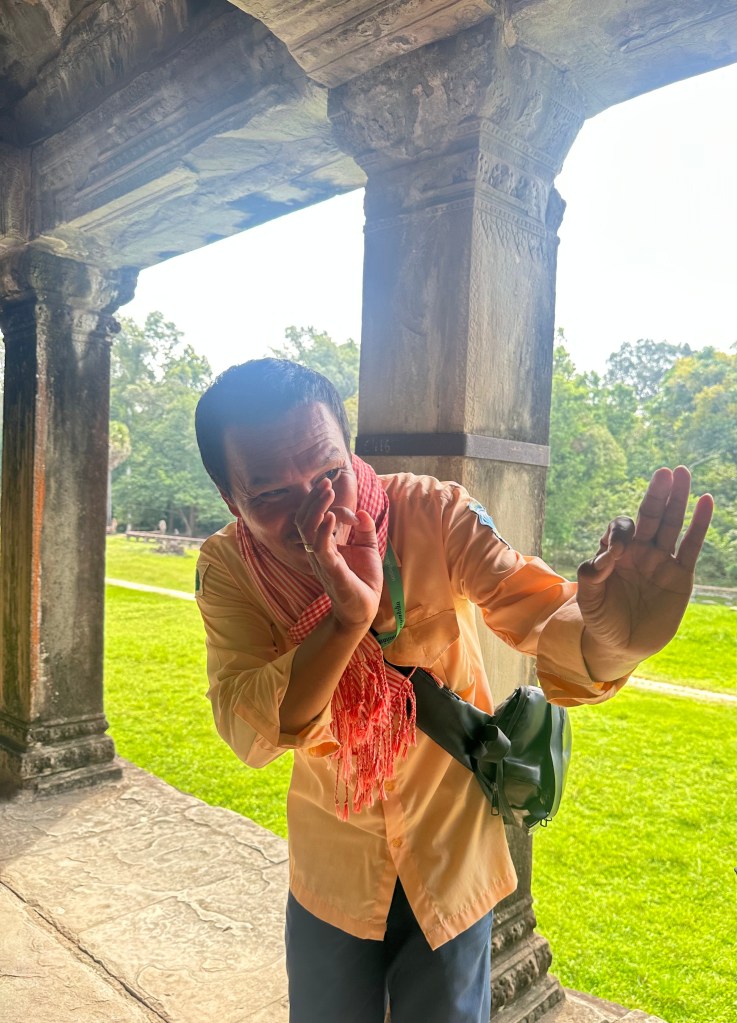
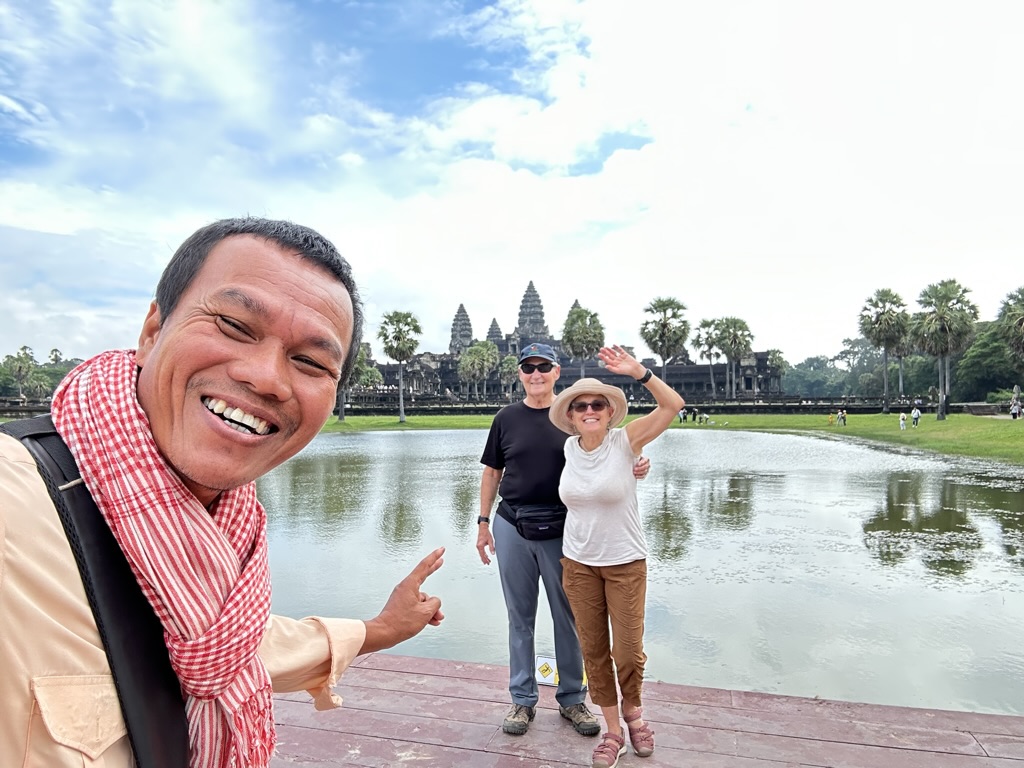
I recognized Bun immediately at the Siem Reap Airport—his eyes creased and mouth wide in his perpetual smile, the red Cambodian woven scarf around his neck, his face beaming with energy.
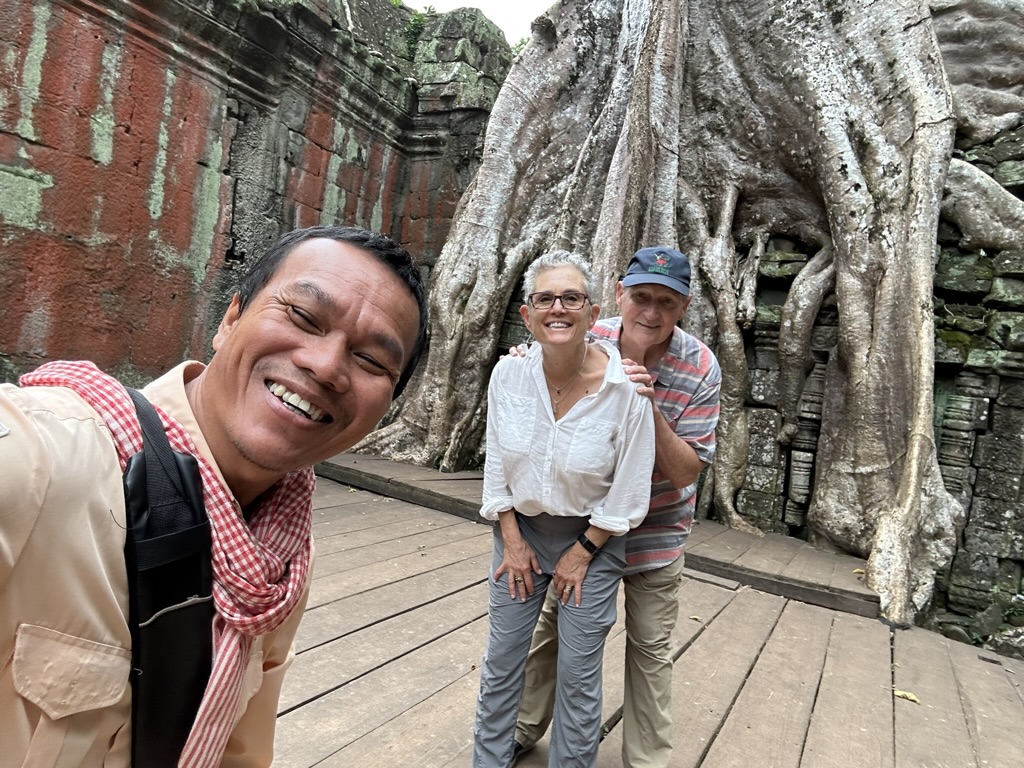
I had seen Bun only on his YouTube videos: Bun handing out food after the monsoon floods, Bun tending to a neighbor’s garden, Bun raising money for a local school. My friend Scott had met Bun twenty years ago when Bun was just starting out as a guide. “Bun will take care of you guys,” assured Scott before we left. He was right. In the three days we spent at Bun’s home, with his family, and following him around the temples and waterways of Siem Reap, we came to understand the depth of his wisdom, kindness and hospitality.
Bun and his wife open the second floor of their Siem Reap house as a homestay. The two-story wood and stucco house sits on a rutted dirt road at the edge of Siem Reap.
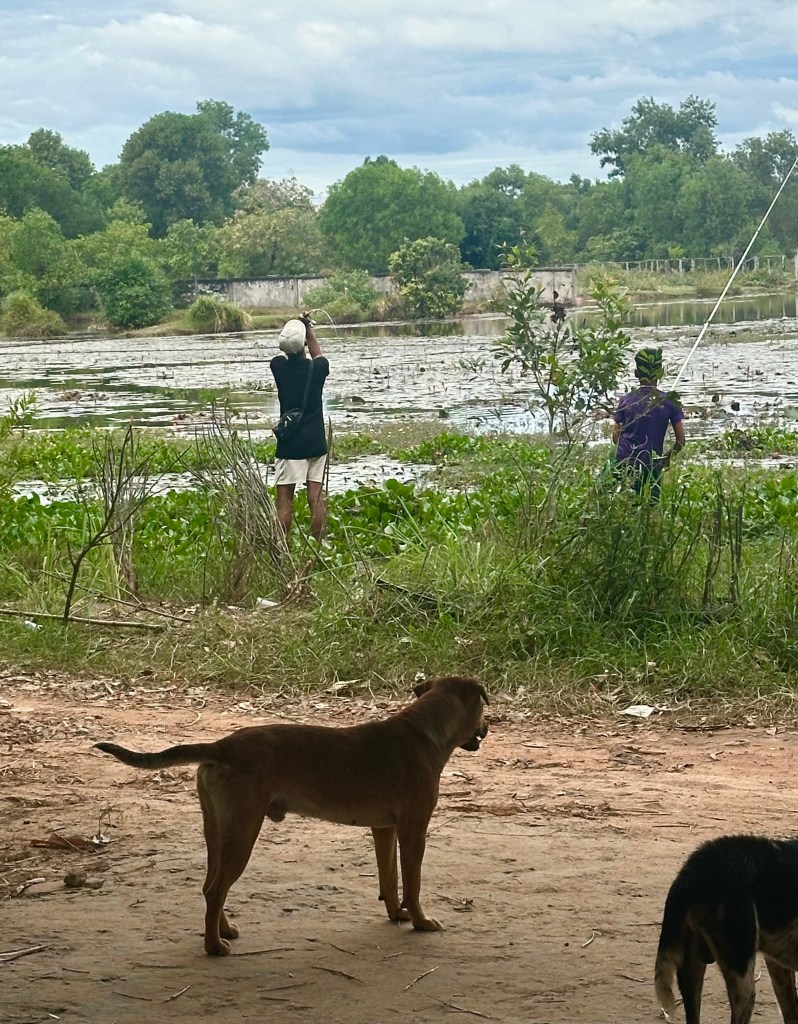
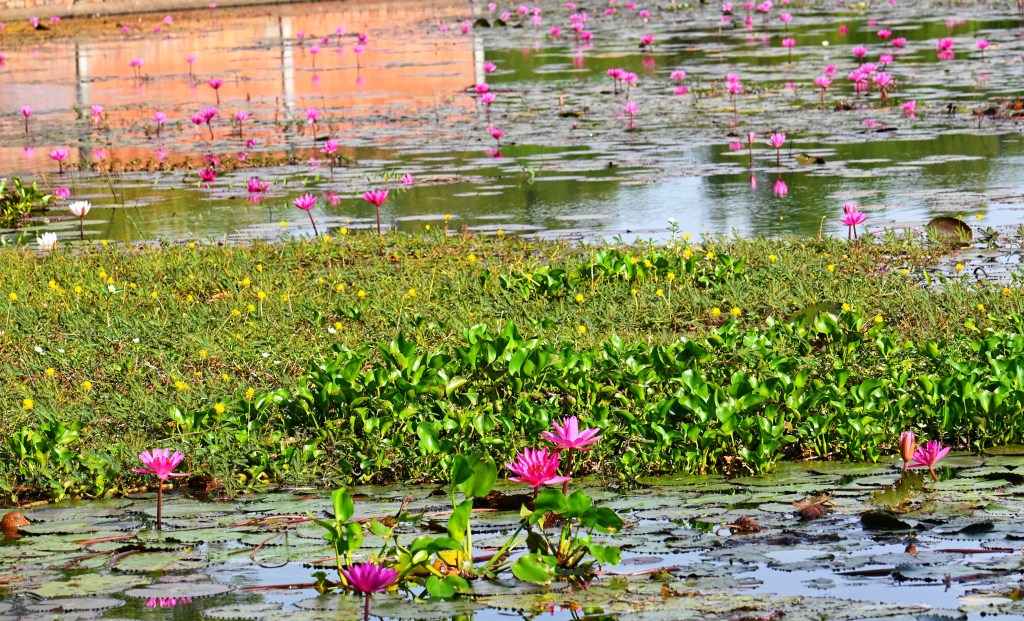
It is surrounded by overgrown brambles and trees and across the road is a flooded rice paddy in which brilliant fuchsia lotus blossoms open every morning to greet the sun. Boys fish for frogs which will be eaten.
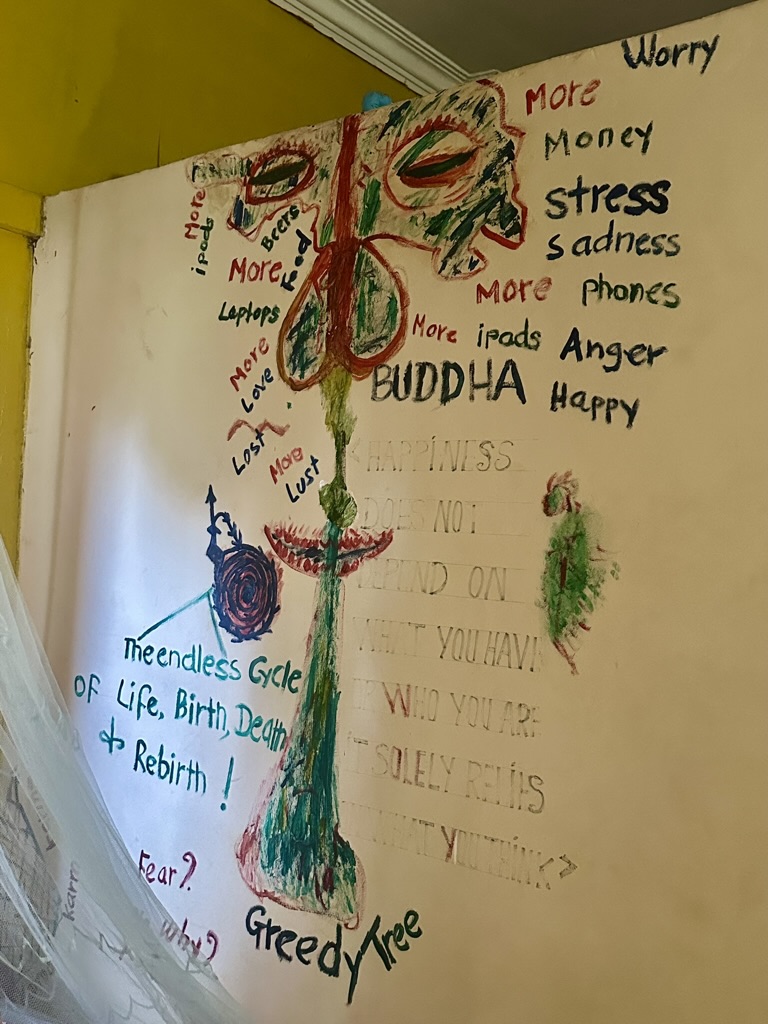
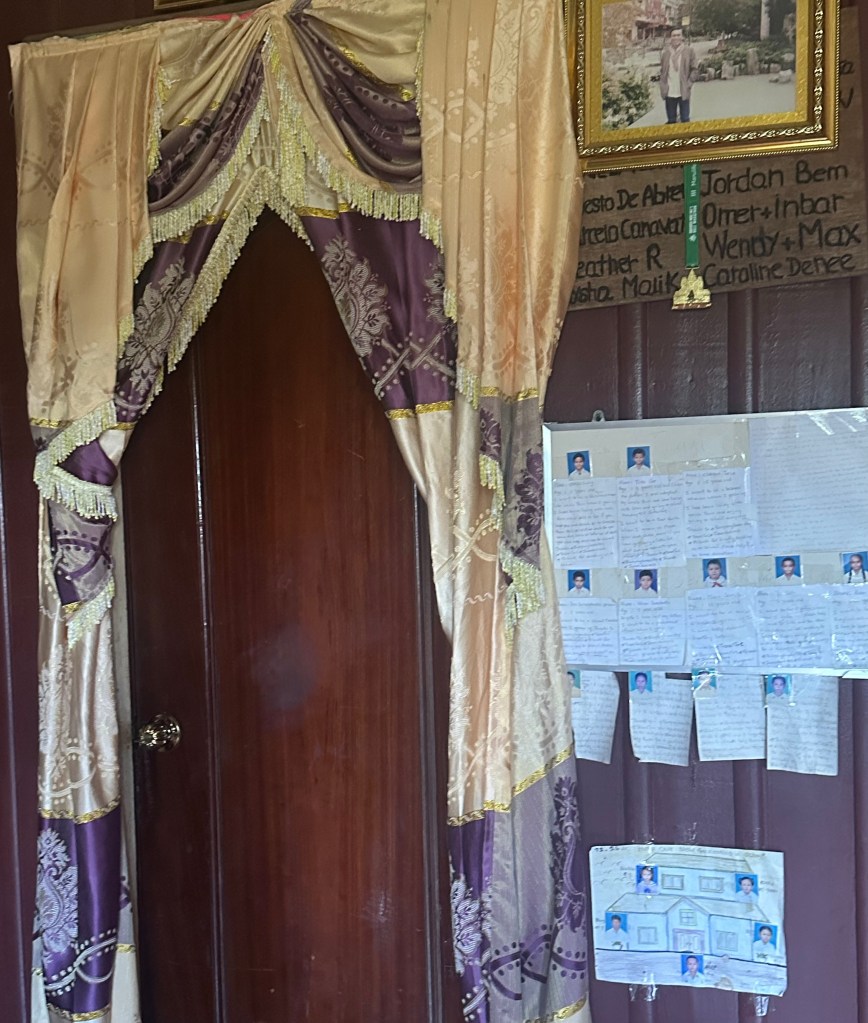
The rooms upstairs are simple but comfortable, adorned with inspirational sayings from Bun and Maria, colorful netted canopies over the bed, brocaded purple curtains and swags over the doors, inspirational inscriptions on the walls.
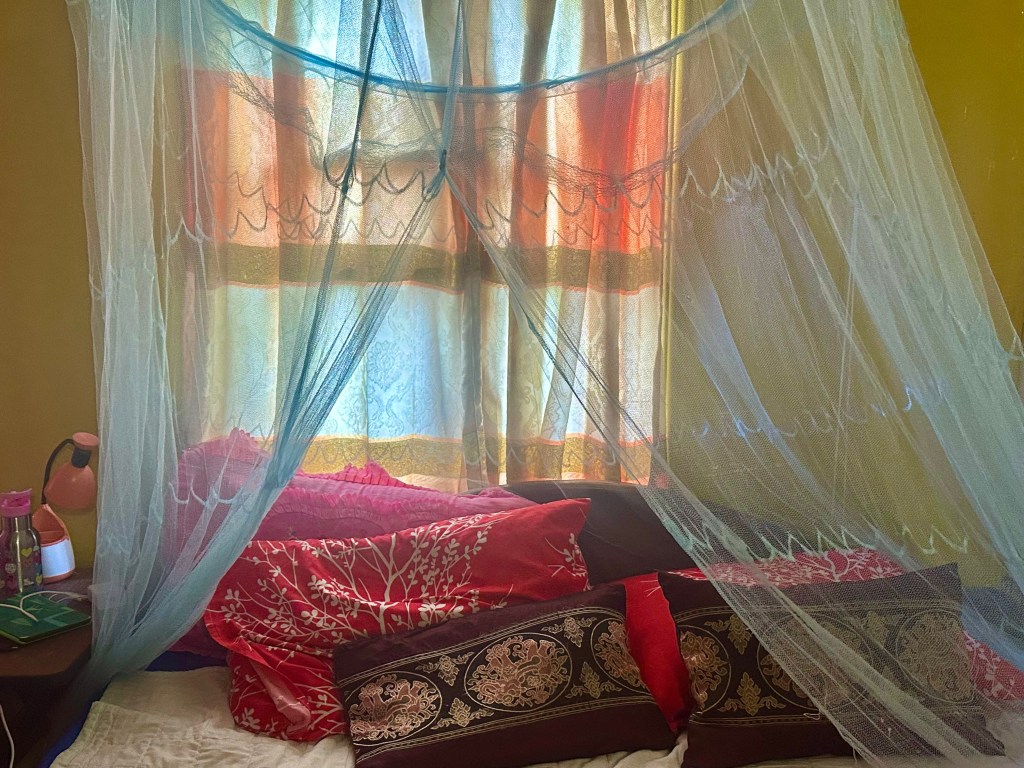
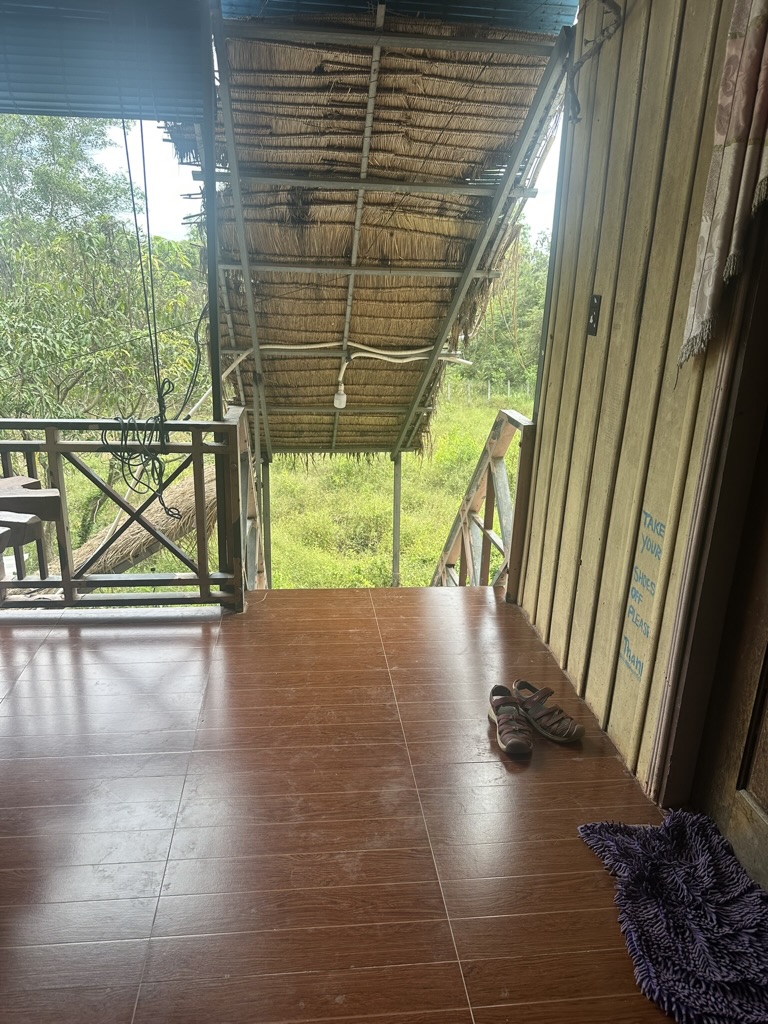
In the early morning, I made a cup of tea and sat in a slatted recliner on the burnished wood veranda outside our room, taking in the trees and fields around us
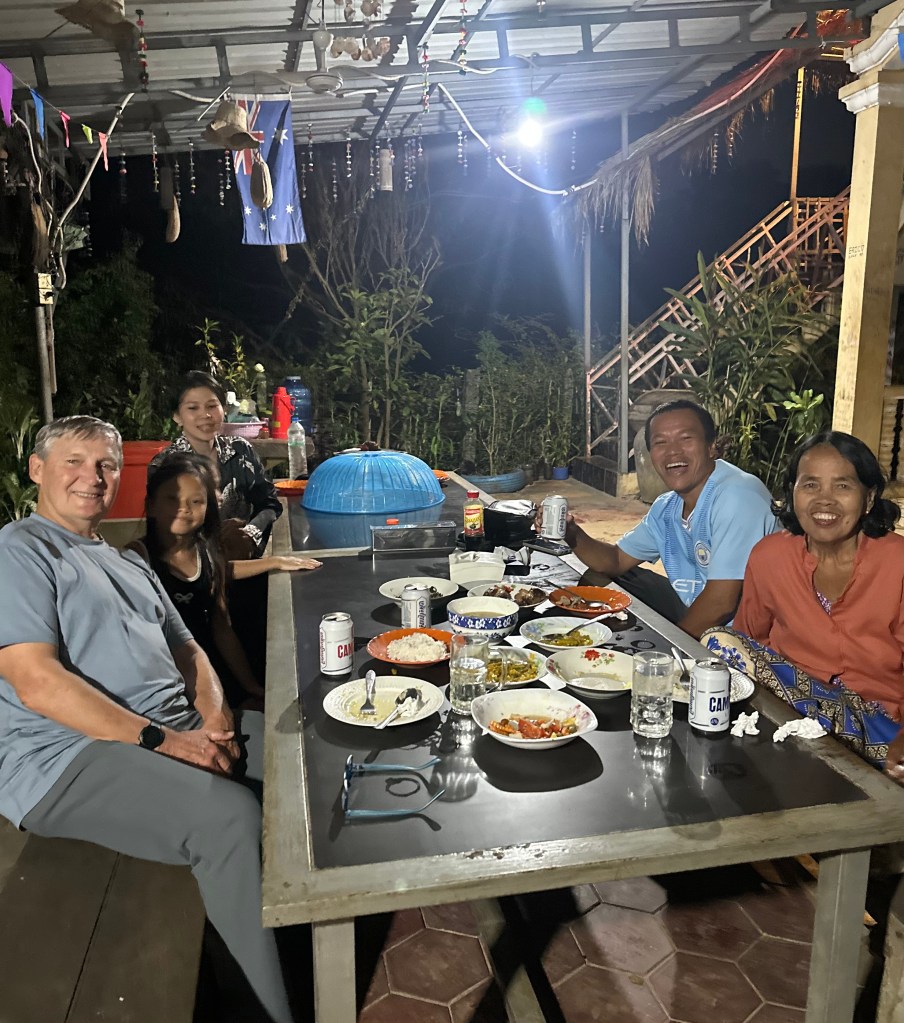
Bun and Marie and their three small children live downstairs but life centers around the outdoors. We ate meals cooked by Maria and her mom with the family at a long metal table. The three children practiced their English, always giving us hugs.
Bun is a guide as well as a host (you can use his guide services without staying at the homestay). Scott had insisted that Bun once won an award for being the best guide in the world, a feat Bun himself never mentioned.That said, you would be hard pressed to find a guide with more love for his people and his country, Buddhism and Khmer culture.
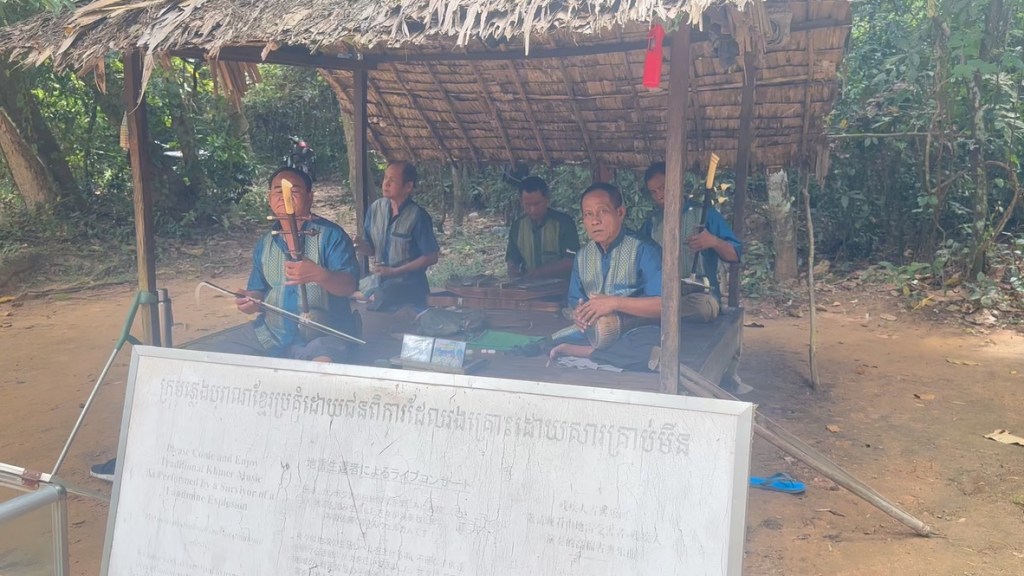
The Cambodian people have suffered as much as any people on the planet. Twenty-five percent of the population were slaughtered by Pol Pot and the Khmer Rouge between 1976 and 1979. With intellectuals and artists and professionals targeted,the country lost its beating heart for a generation. It feels impossible to go to Cambodia, even 45 years later and not consider the trauma that consumed the Cambodian people. At one temple we pass a group of musicians who had all lost limbs to land mines.
Bun lost many relatives, including his father. He first escaped the trauma and poverty by retreating to a Buddhist monastery as a young manWhile he later left the monastery to marry, go to college, make a living in the world of tourism, Bun seems to embody Buddhist teachings in his daily life. He devotes himself to caring for neighbors, raising money for local schools, insuring the education of poor children.
Bun slips Buddhist teachings into our touring. “Consciousness is like the sky, but we can’t see the reality of our consciousness because of our states of mind, which are like clouds” “Buddhists don’t pray to a god to change things, they pray that other humans will find the right path”. Bun gets on the phone often with a friend who has just experience a breakup. “Things will continue,” he tells the friend, “nothing in life is permanent”.
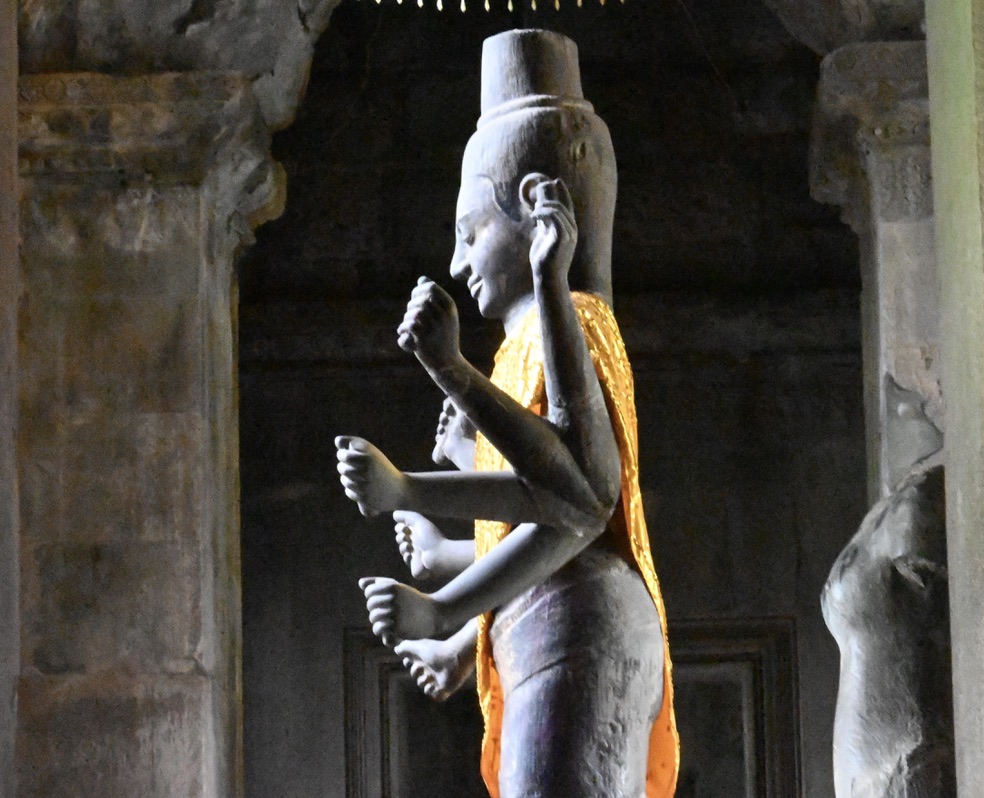
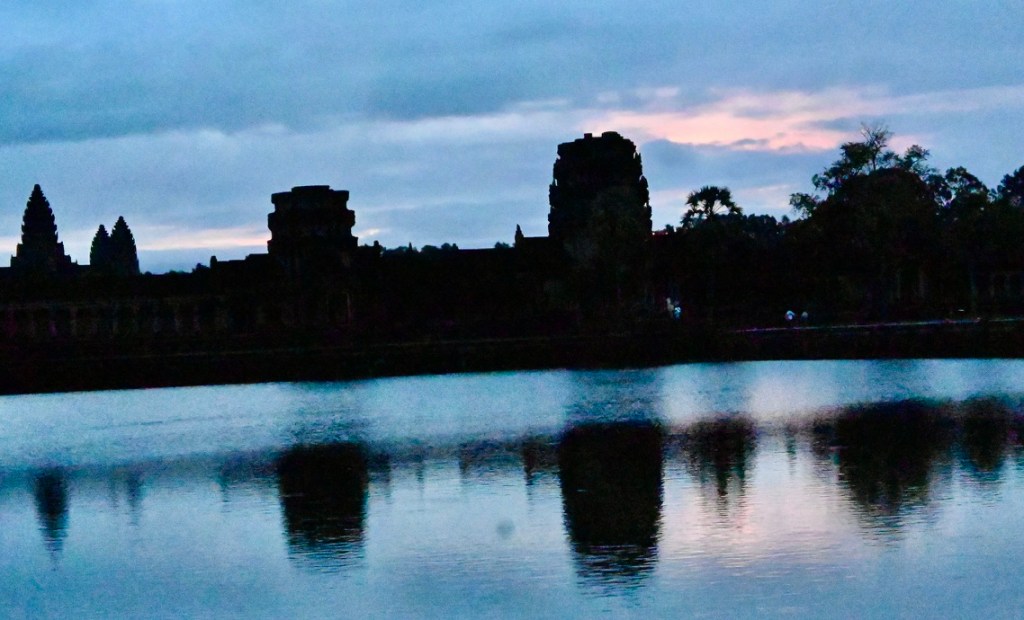
The great tourist attraction of Siem Reap is Angkor Wat, the dazzlingly ornate Hindu and Buddhist temple built by King Suryavarman II of the once mighty Khmer Empire in the 12th century. It is an expansive and palatial temple complex, with ornate carved tower dedicated to the central Hindu gods—Brahma the Creator, Shiva the Destroyer, and Shiva the Protector.

Bun delighted in pointing out the legends and history behind the now-faded carvings that adorn the stone walls: didactic drawings that illustrate the dismal fate of those who violate norms, stories from the Ramayana and Mahabharata of victories and defeats, images of god-heads.
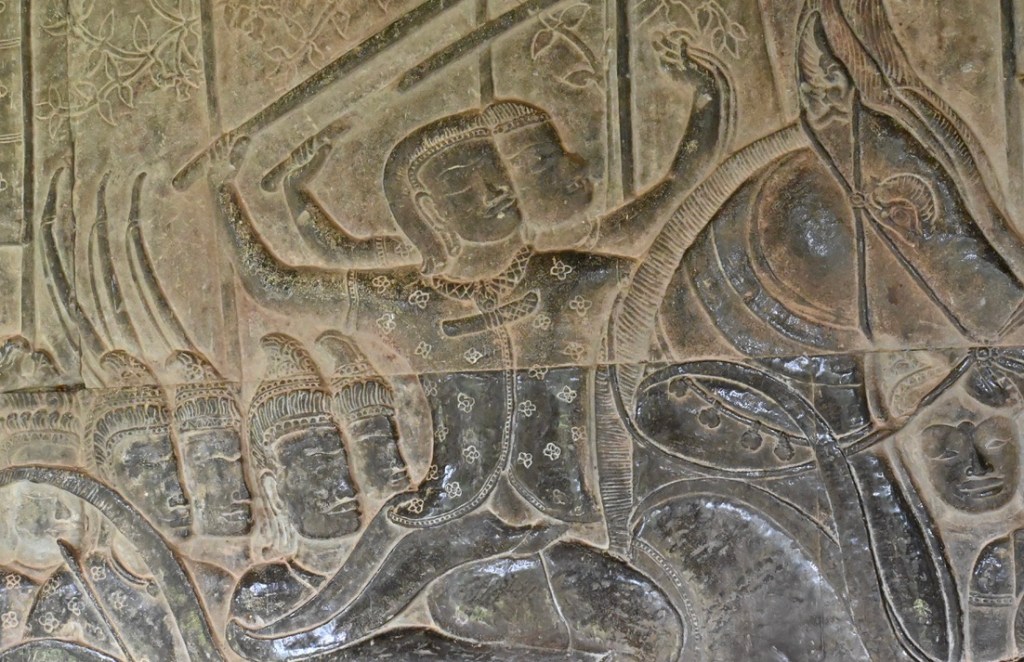

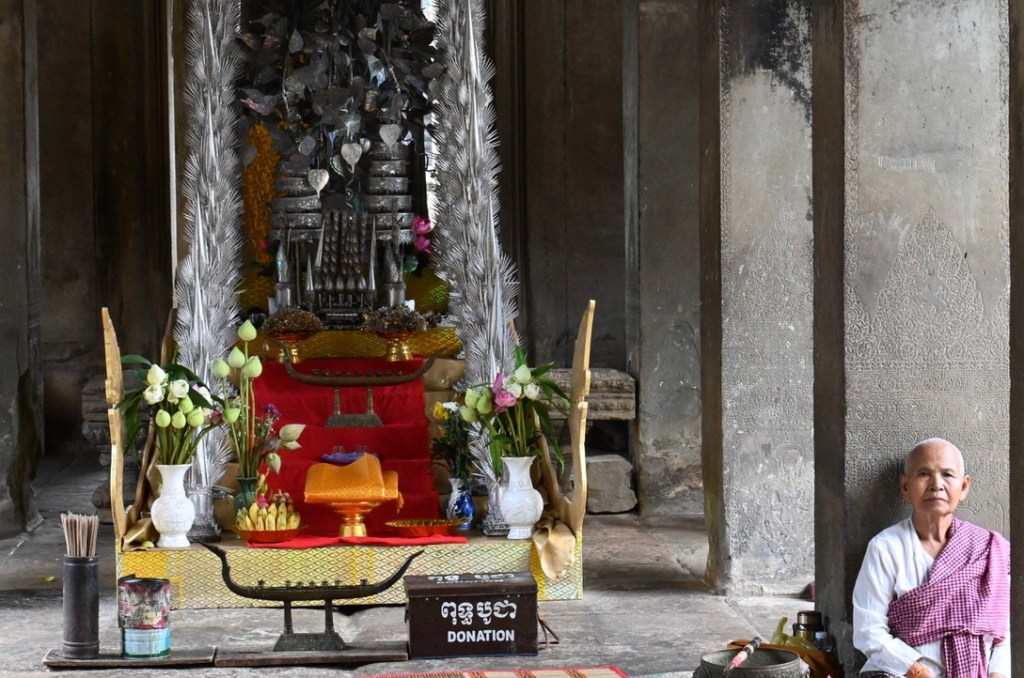
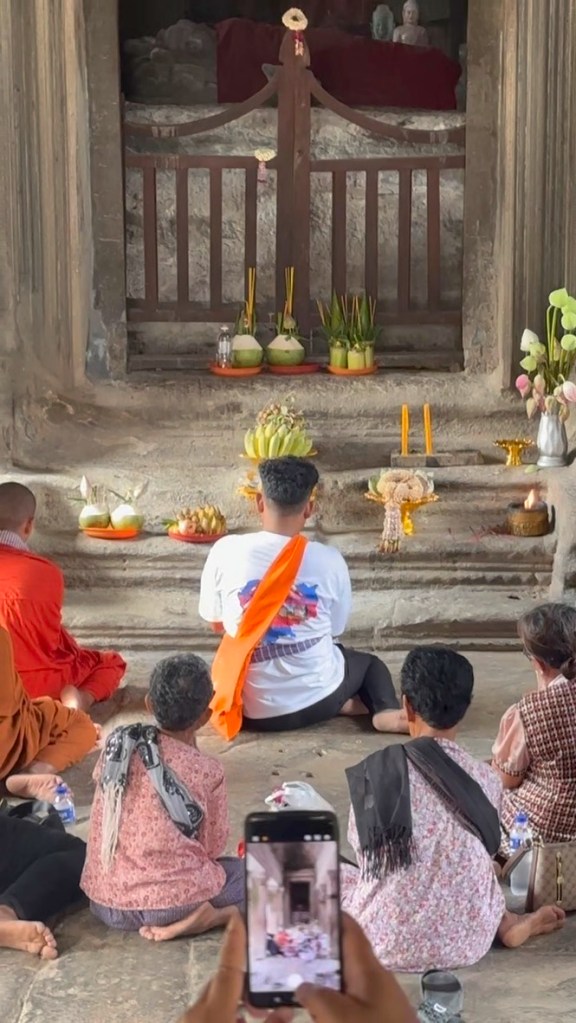
He tells us that in Cambodia the lines between Hindu and Buddhist practice are more blurred than in other parts of Southeast Asia. Angkor Wat feels as much like a living sacred place as a historical relic—one hears prayers and chants and sees altars brimming with offerings.
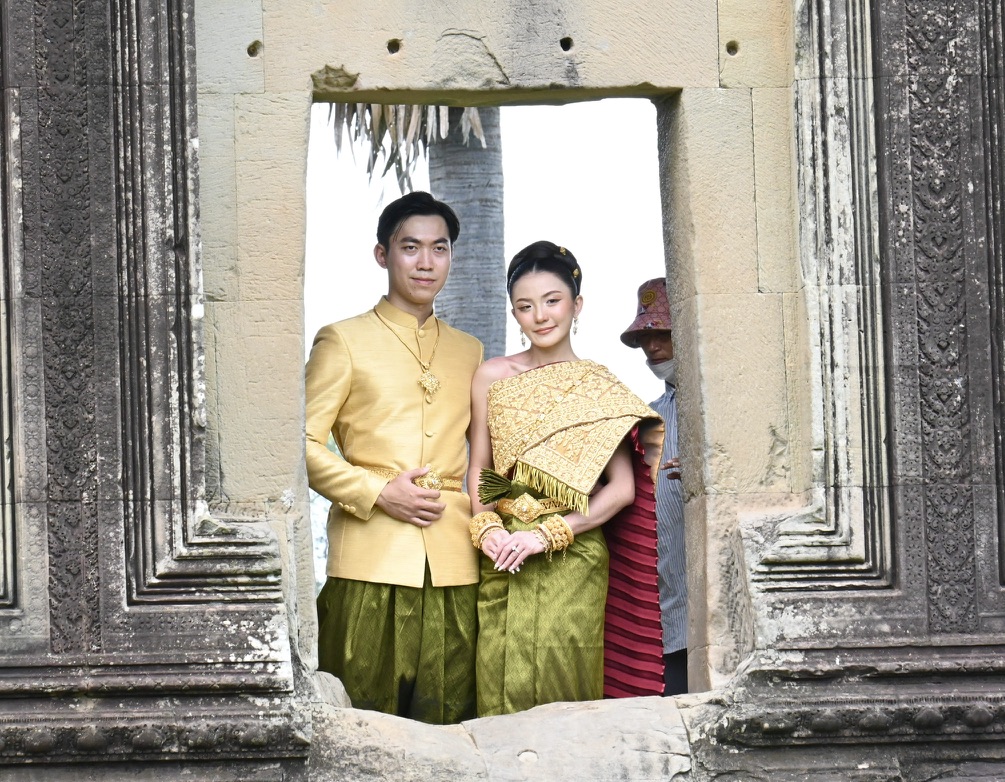
The day we were there coincided with a popular season for weddings in Cambodia. All across the space were soon-to-be married couples, radiant in their bridal silks, posing in the nooks and crannies of Angkor Wat.
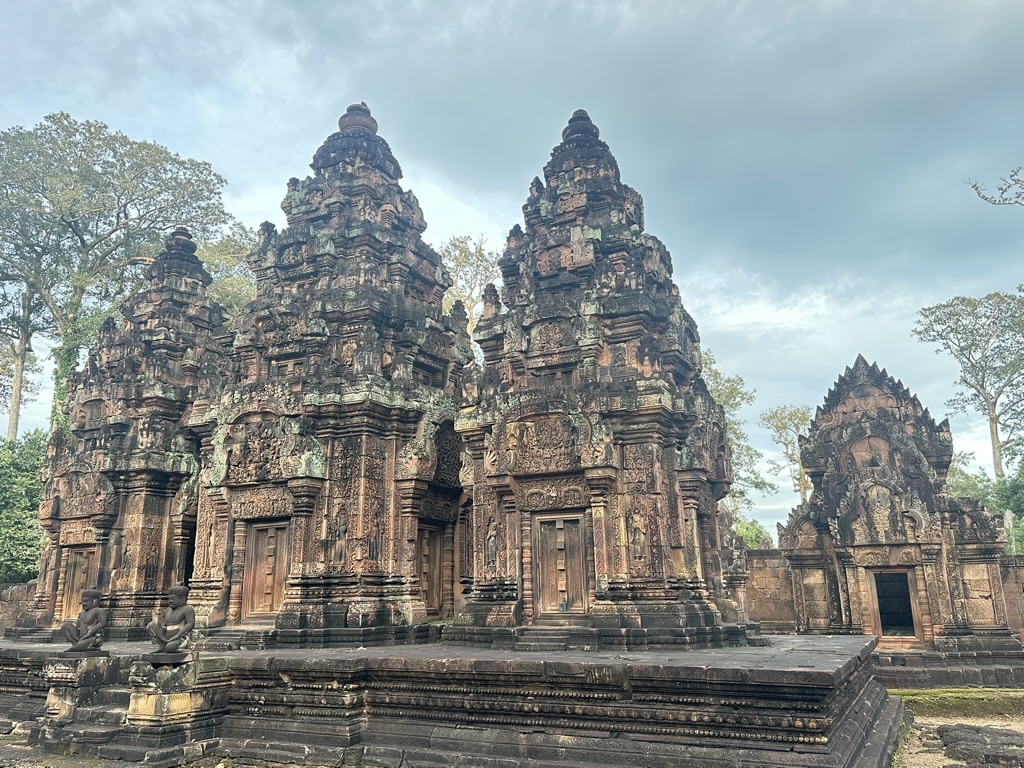
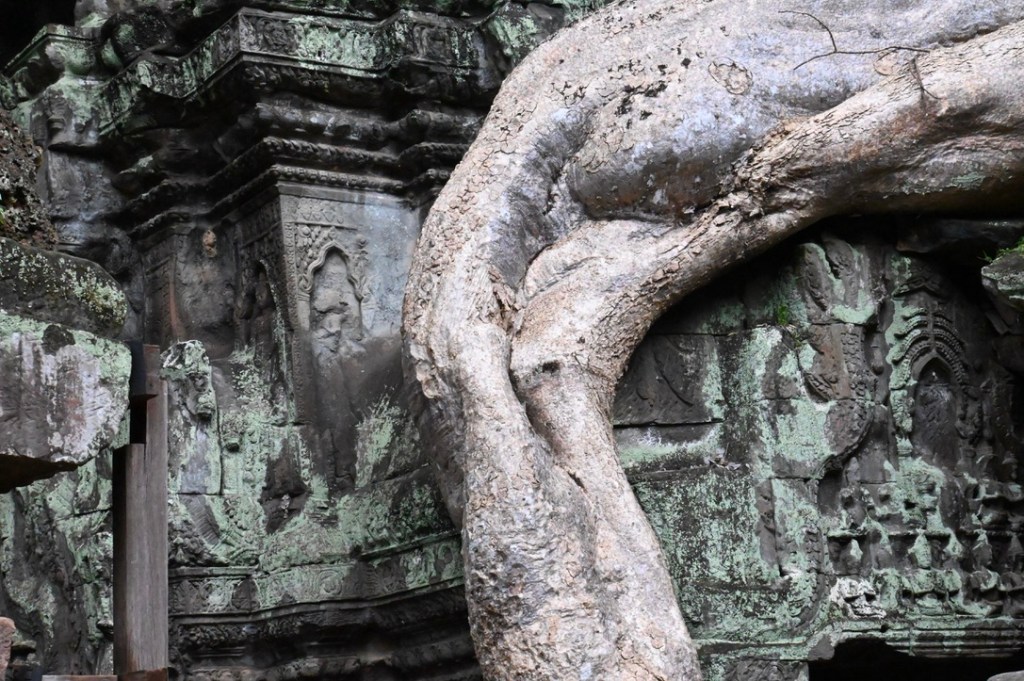
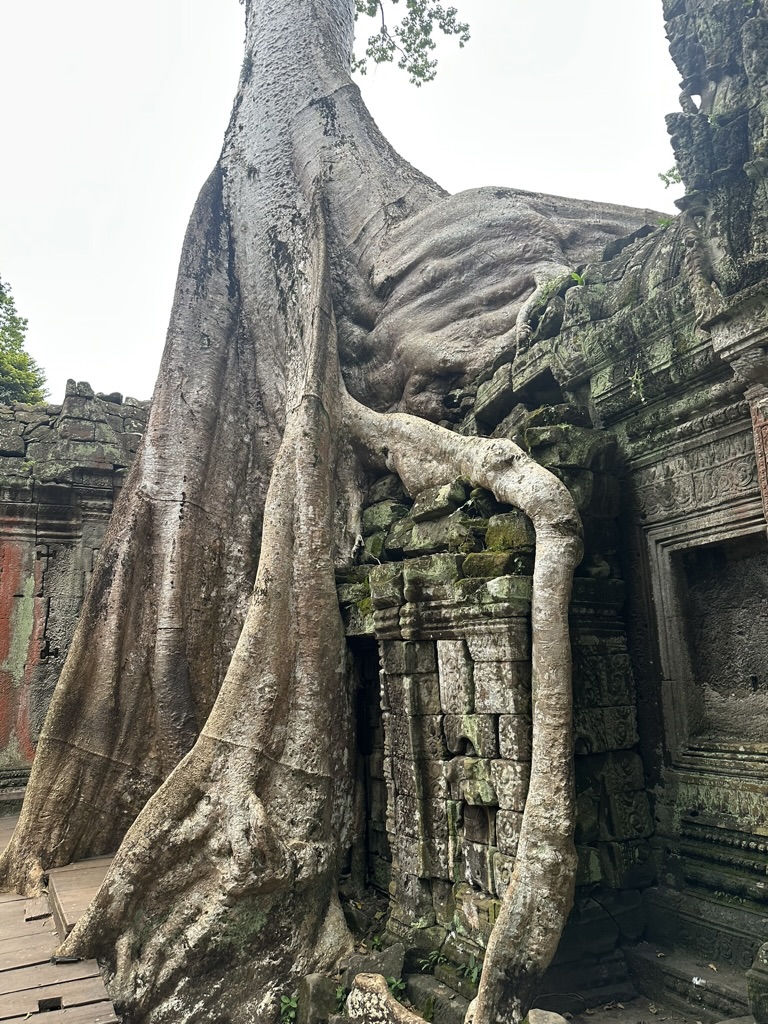
As dazzling as Angkor Wat is, it is not the only awe-inspiring temple around Siem Reap. While Angkor Wat has been restored and interpreted, the others live in states of decay and ruin, in places all but engulfed by bright green moss, creeping roots that look like the gnarled claws of a celestial giant, and branches of ancient banyan and spung trees.
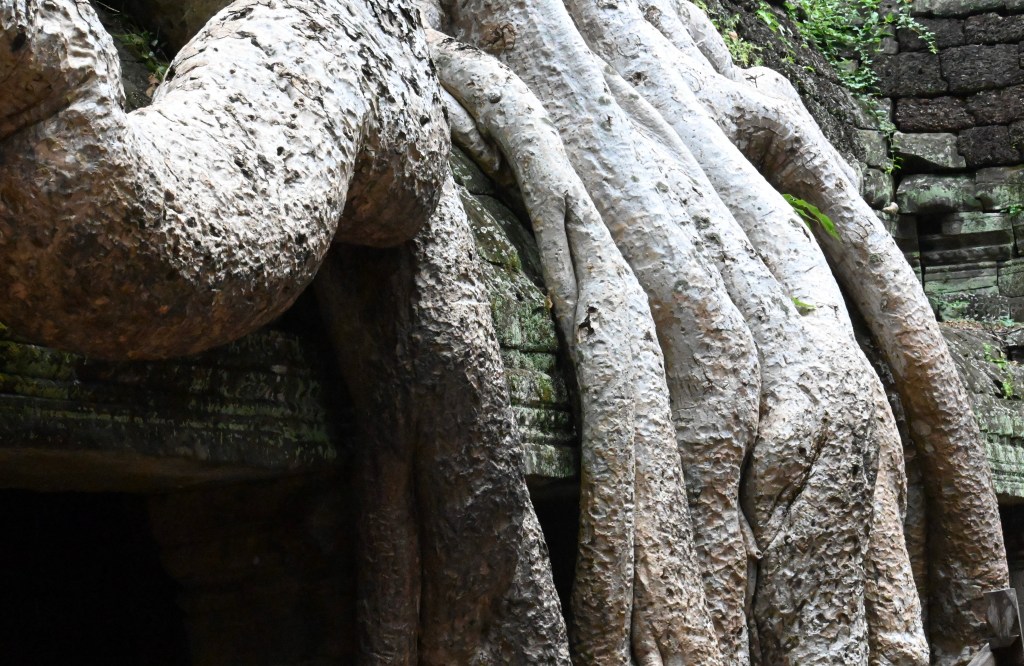
The overgrowth has so completely overwhelmed the ruins in places that there seems a complete merging of the natural and built worlds to a place of utter indivisibility.
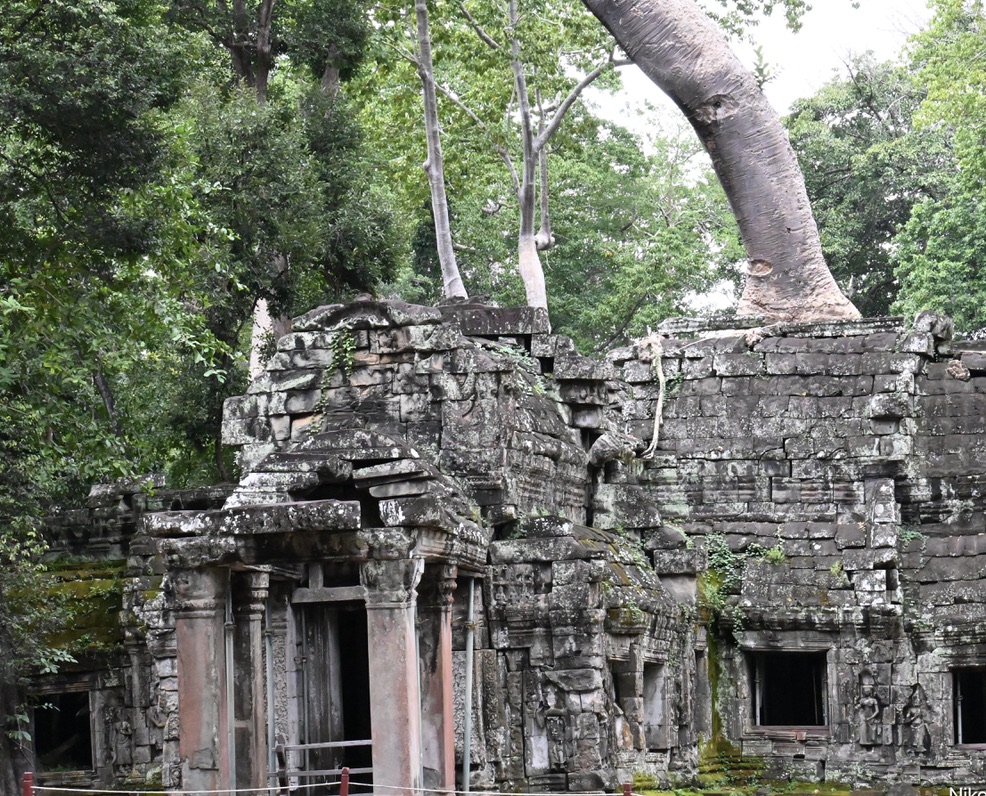
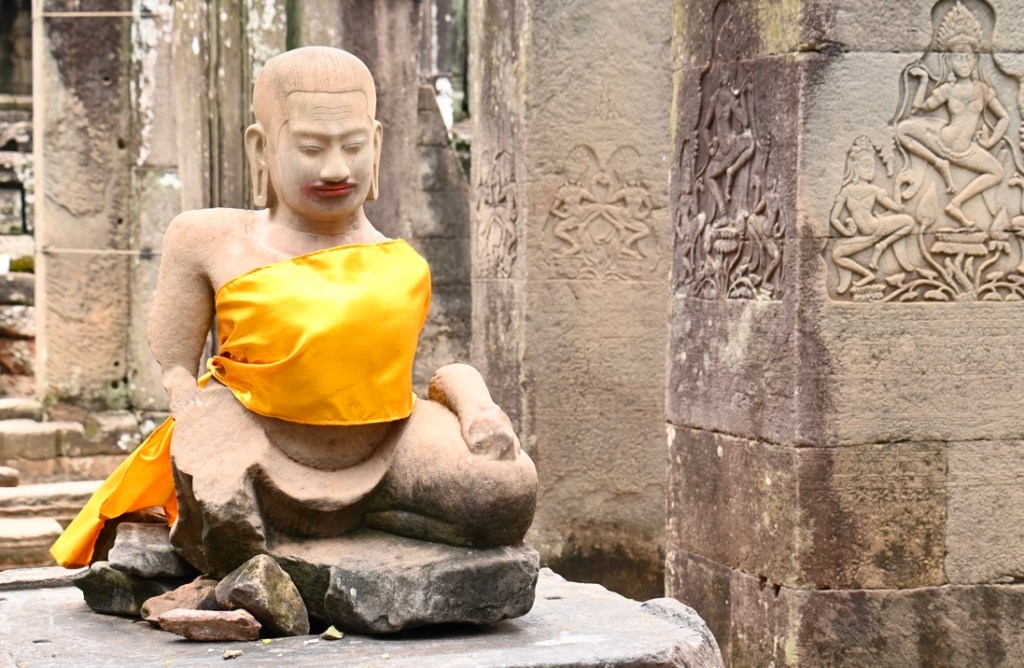
But even in these temples given over to nature are Buddhas wrapped in gold.
Bayon Temple, from the late 12th centuryn has over 50 towers each with the face of the Buddha.
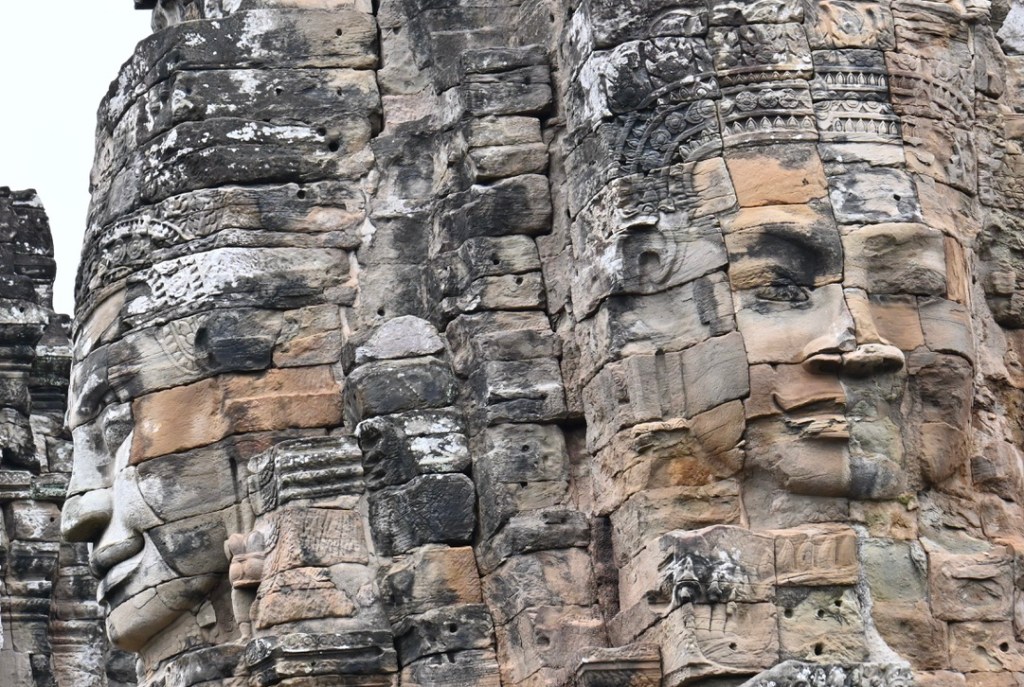
No wonder that these surreal places have become the sets for movies like Tomb Raider—but these places do not need Hollywood to tell us of their power.
On our third day in Siem Reap,after watching the sun rise over Angkor Wat, Bun drove us to the shores of Tonle Sap, the largest freshwater lake in Southeast Asia. About an hour south of Siem Reap lies the small community of Mechrey, a community whose lives and culture are inextricably tied to these waters.
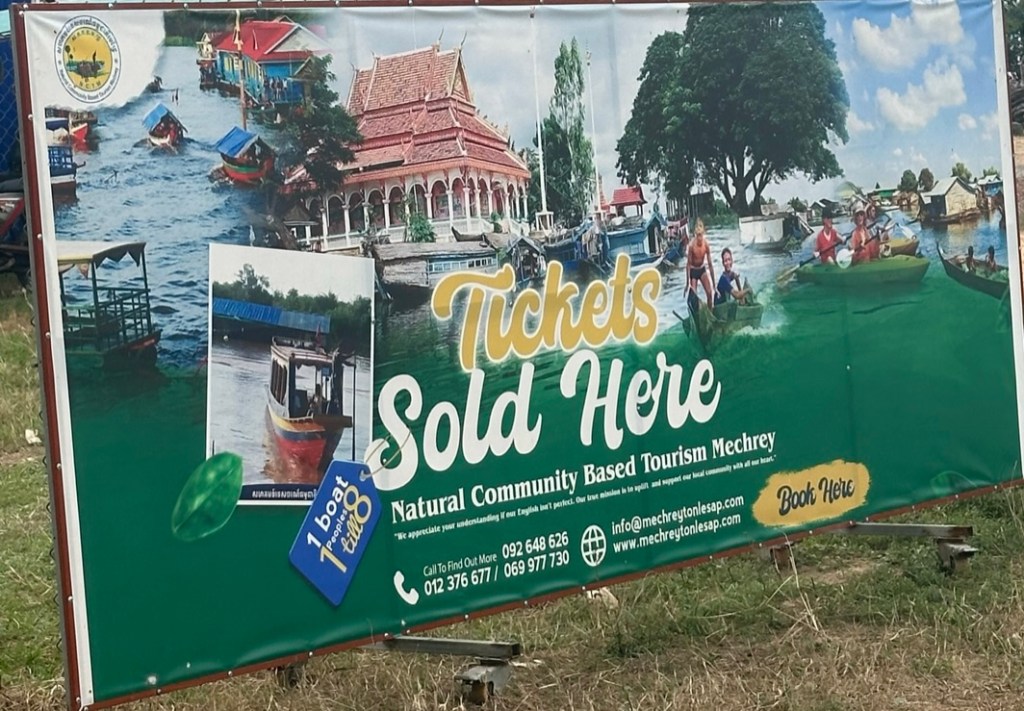
We park near a small collection of wooden buildings at the edge of the lake. A sign near the boat rental office proclaims “Natural Community Based Tourism” and in smaller letters “We appreciate your understanding if our English isn’t perfect. Our true mission is to uplift and support our community with all our heart”.
A guide led us along a row of dozens of long painted wooden boats.
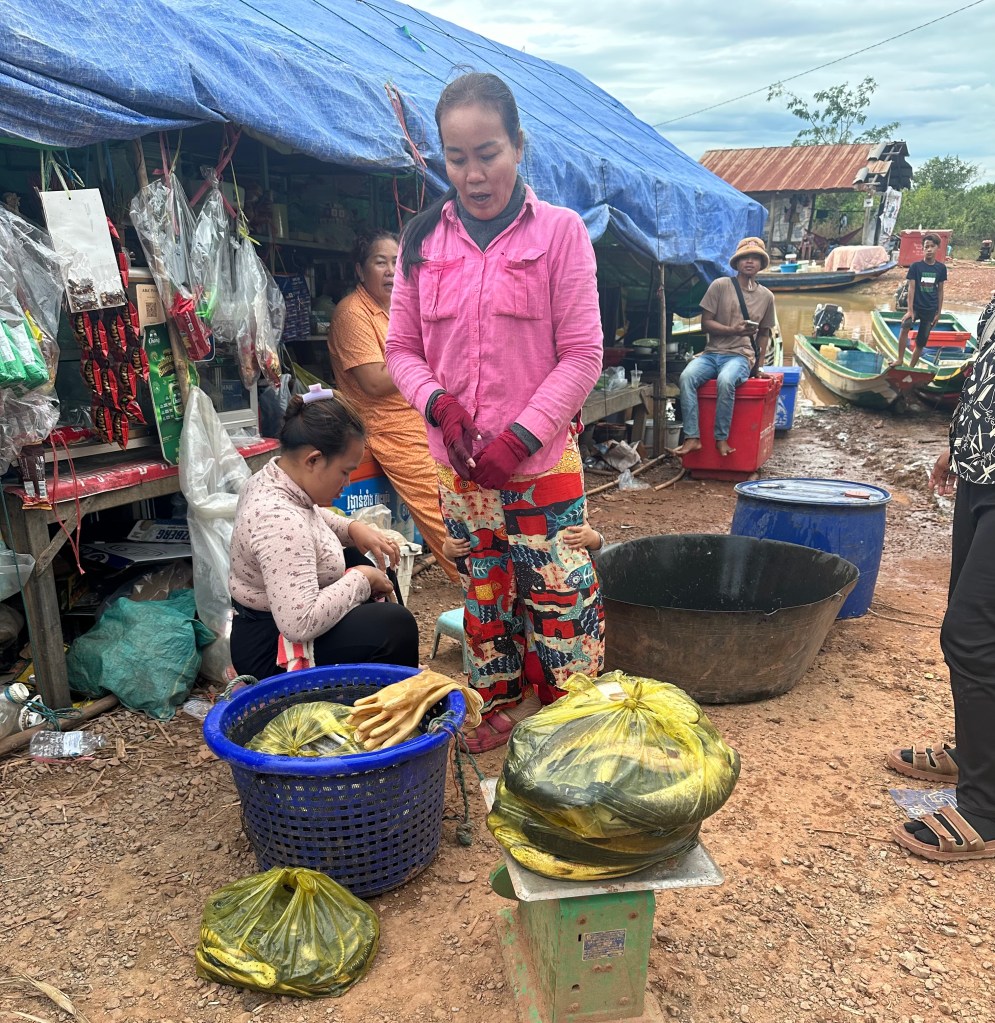
One of the villagers was chosen that day to take us out, through the swampy edges of the lake into open water and then on to the floating village.

The residents of Mechrey live in spare wooden huts with corrugated metal roofs, floating on small barge-like structures along the river channel. The paint has long since weatherd away.
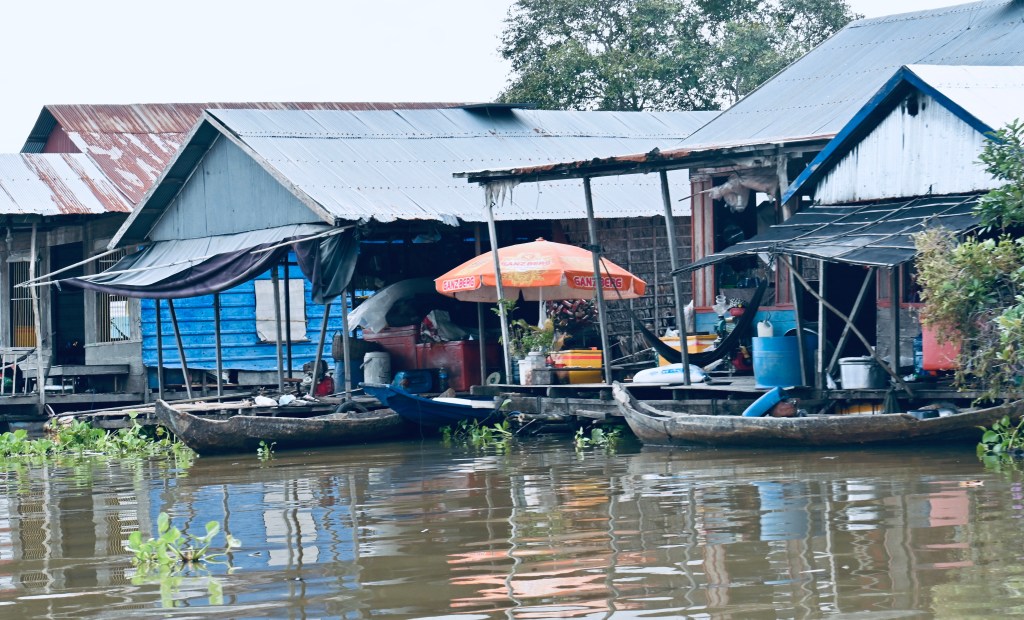
They are one or two rooms, mostly open to the water. Naked children romp around the barges, jump in the water, while women squat together around an open fire, cooking and talking.
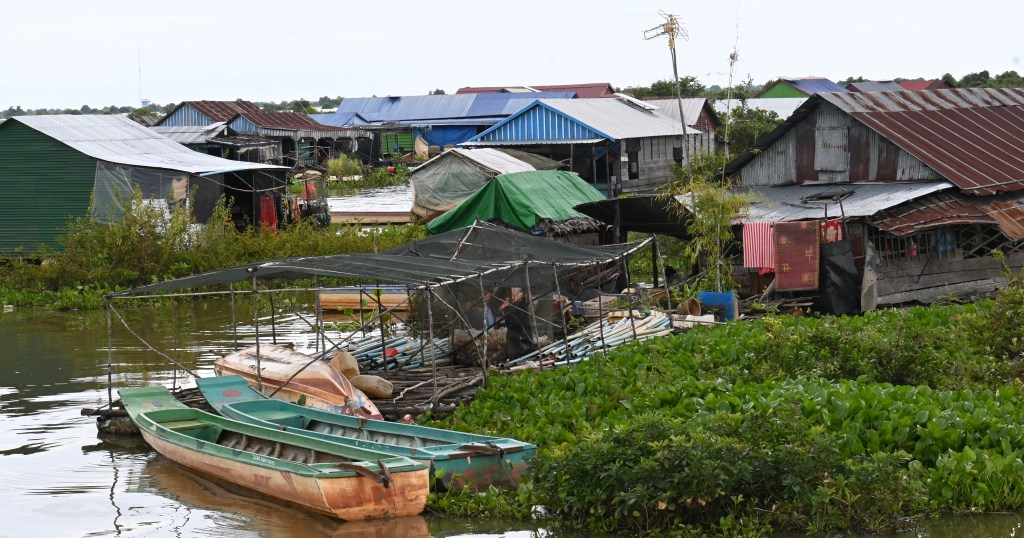
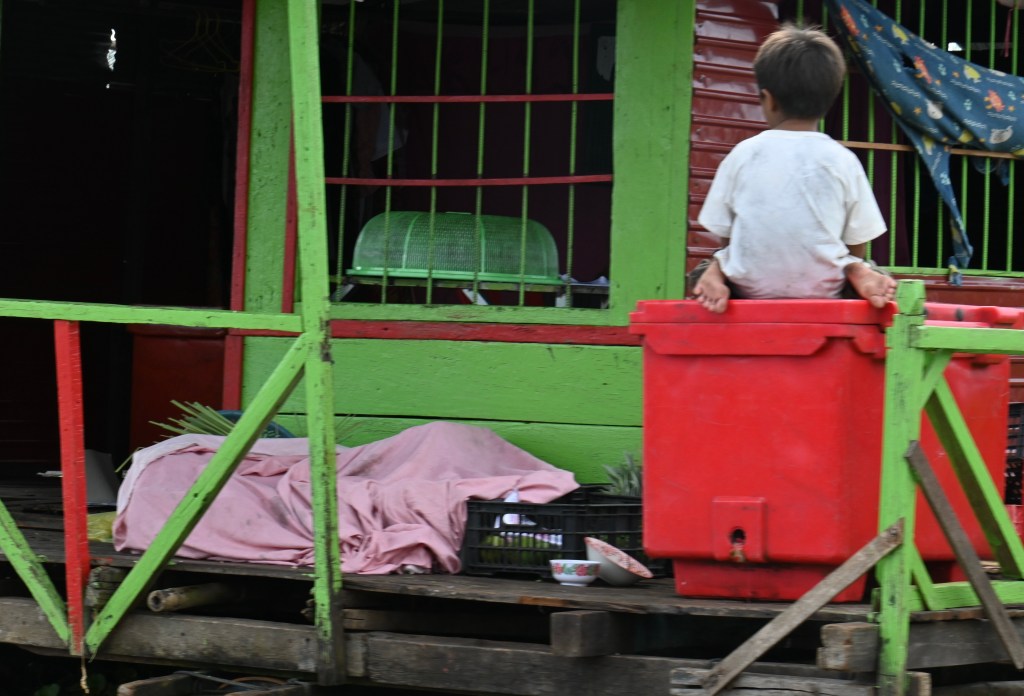
The men work around their boats, perhaps fishing, perhaps waiting for tourists, or repairing netting or a motor.
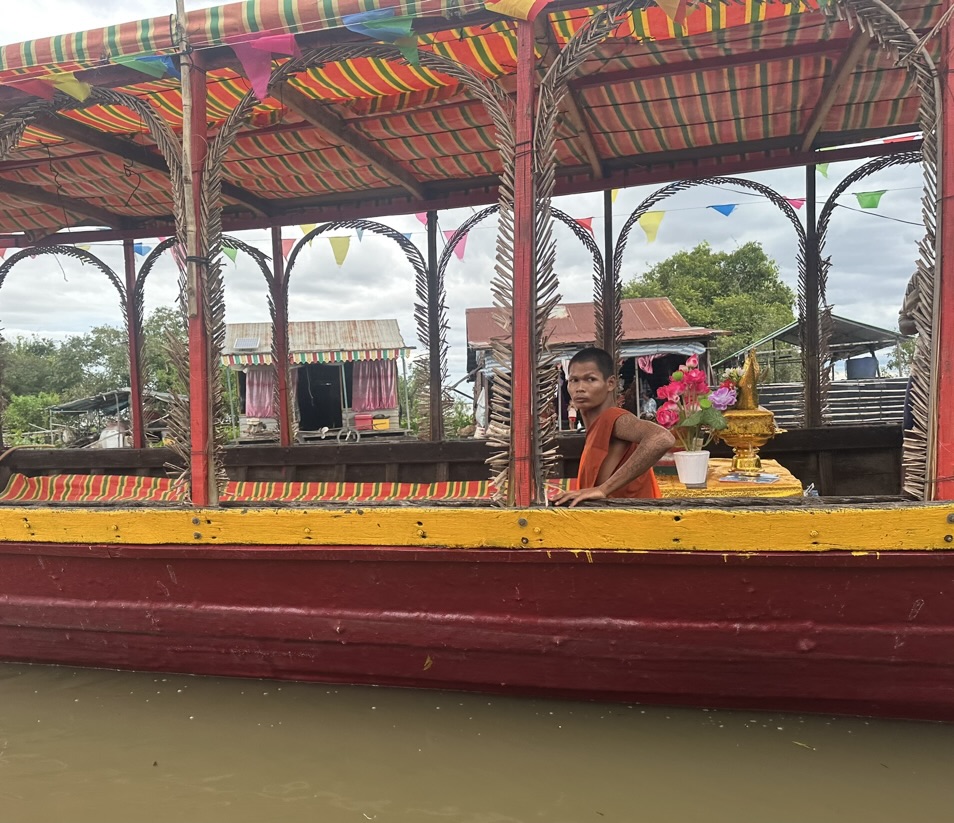

A mother is lying in a hammock with a baby. The most solid structure is a bright yellow Buddhist temple built on an island in the center of the village.
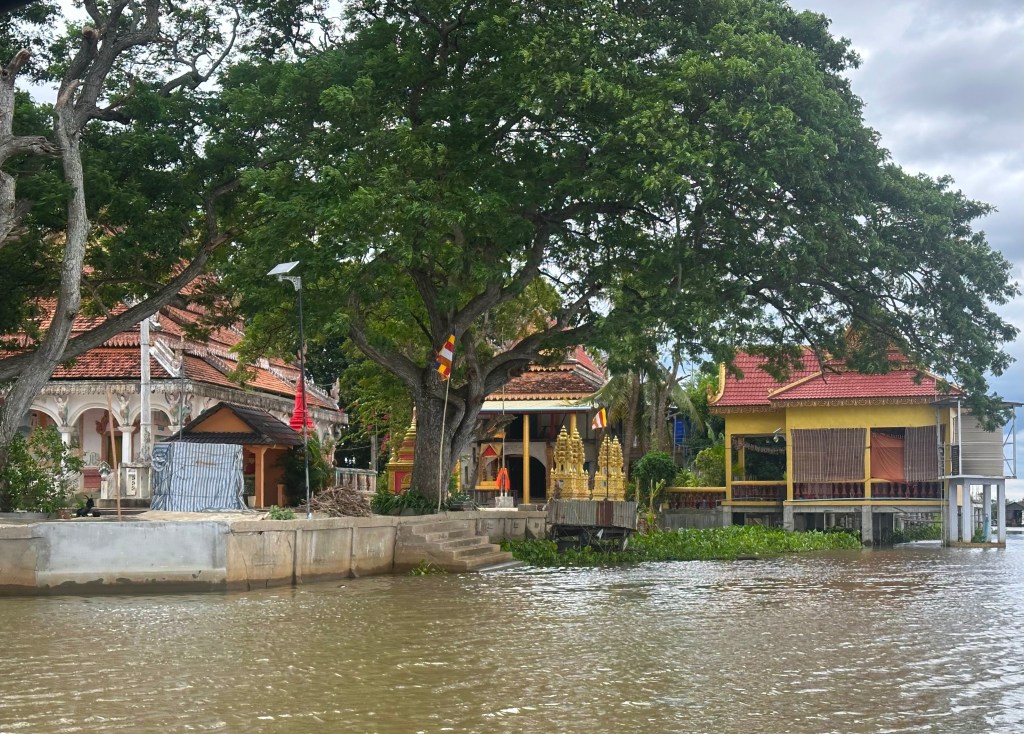
I am hesitant to take pictures at first. I struggle with the challenges of gazing into the homes of people whose material existence is completely different from my own. I tell myself not to snap “poverty porn”. But many of the people wave at us and Bun takes a few pictures and so I take some pictures to remember this place.
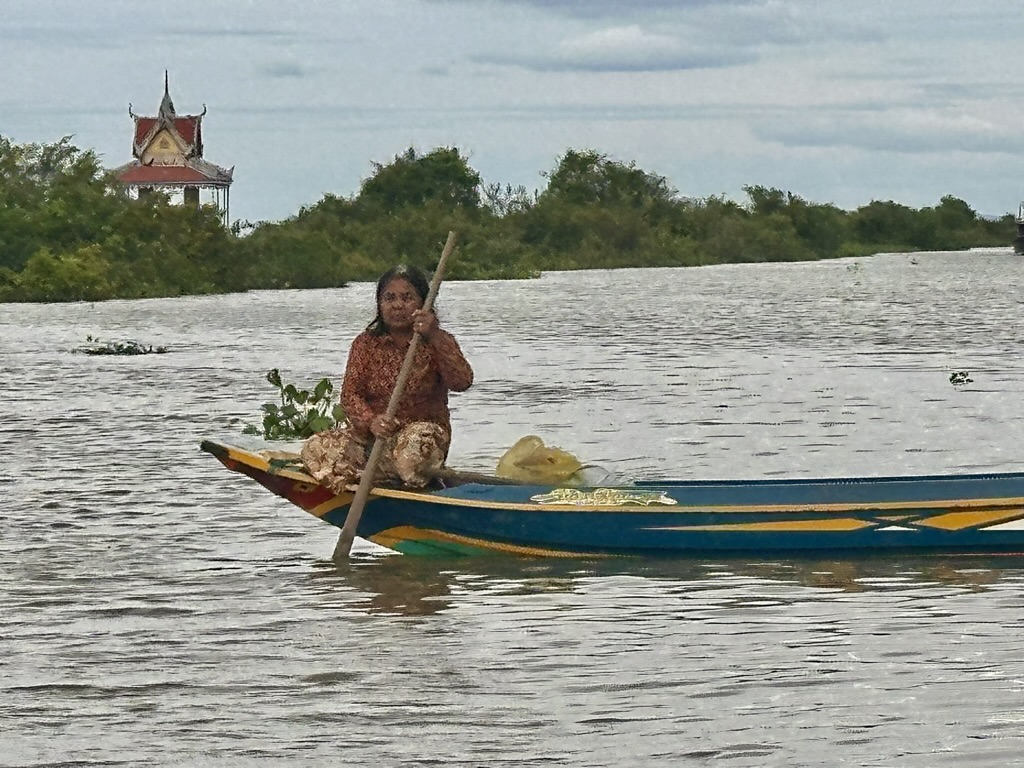
Perhaps Bun senses my discomfort. “These people are happy” he says to us more than once, “they like their simple life here on the water.” And as he says this, I feel I have encountered the true test of traveling—can I accept Bun’s statement without judgment, as a Buddhist might? Can I look at what seems to me extreme deprivation and imagine happiness? I think back to the sign at the dock and see before me the challenges of being a tourist in a struggling country like Cambodia. That the people in this floating village should feel the need to apologize for their English in their own country feels more like an indictment of Western tourism than any failing on their part.

Back in Siem Reap, we end our three and a half days with dinner out a local barbecue restaurant. We have offered to take Bun’s family out to dinner, and before we knew it, we had an evening with a sister and brother in law and a schoolmate of Bun’s children and his parents. We ate at long tables with hibachis in the center and cooked our own seafood, selected from heaping mounds of raw fish in the center of the cavernous room. This was all washed down with Cambodian beer and we were serenaded by Khmer pop music. It was a loudly convivial evening with Bun cheerfully translating nonstop for us.
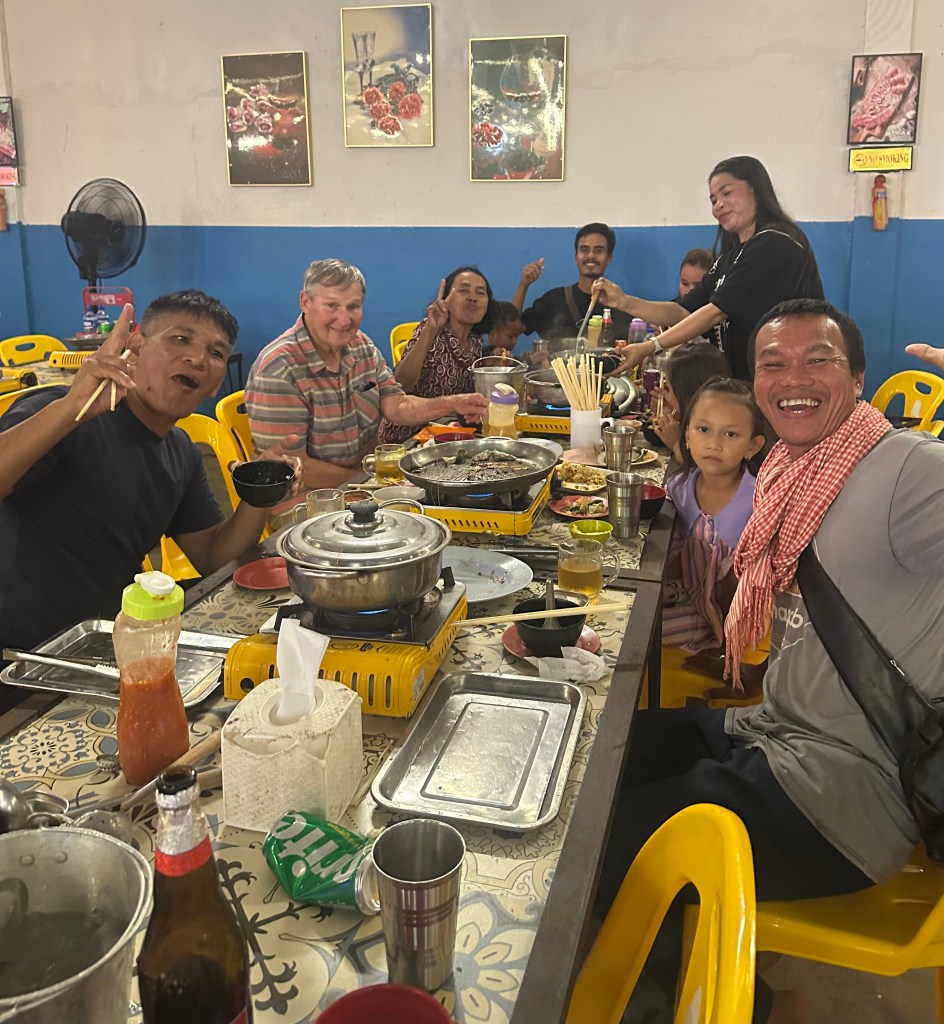
Just a little over three days in Siem Reap, lightly touching the surface of life in Cambodia, and yet, we left with images that will last for many years. There is something about staying in a home that alters your consciousness of a place. For a brief time, the otherness that separates fades away. I have learned something about accepting what life gives me.
[You can book Bun’s homestay and read other reviews here]
 Old and On the Way
Sharon, this is amazing! Wh
LikeLike
Janet, thanks so much! Coming from you an especially great comment to read.
LikeLike
Truly incredible. I love that the world can hold so many realities and experiences. Thank you for your take on it, and for taking those photos. It helps us understand too. Beautifully written too.
LikeLike
Fabulous insights into a very distant world. Love the pictures. You are not old but you are always on your way. Thanks for sharing !
LikeLike
Thank you!!
LikeLike