
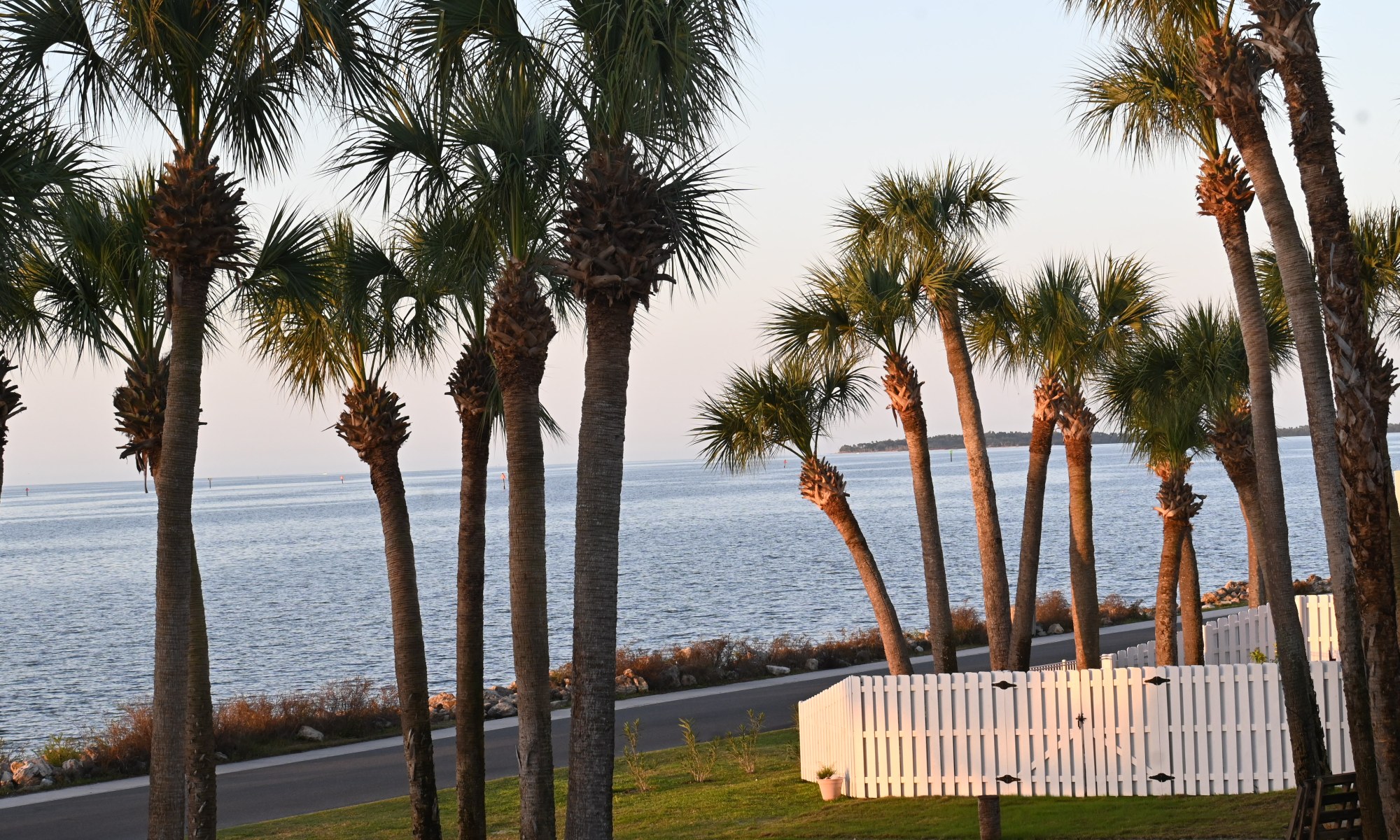
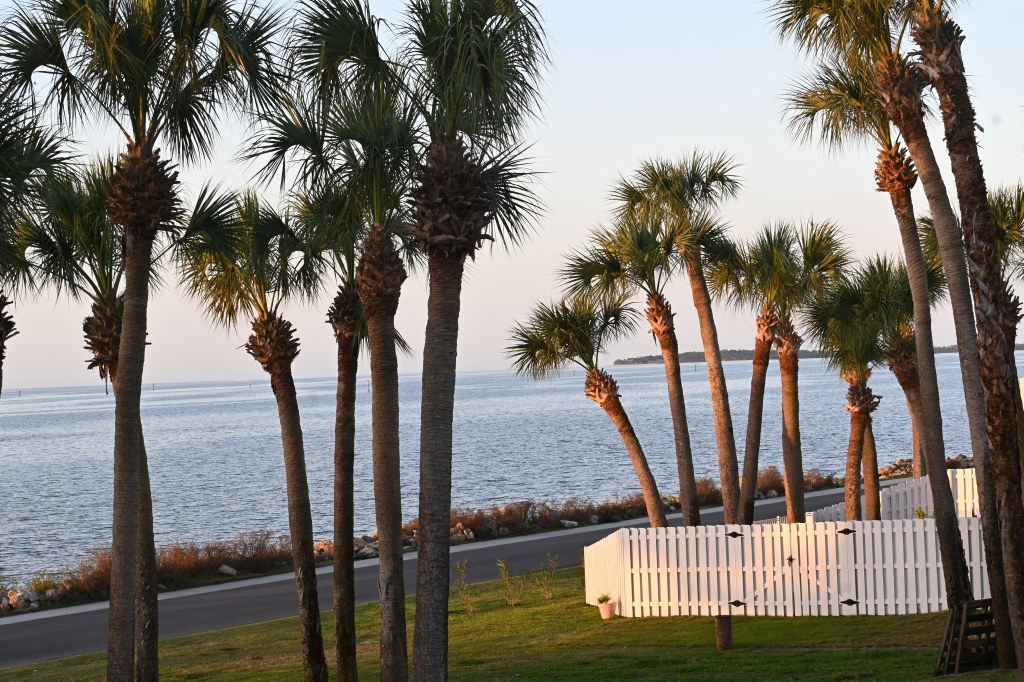
I am still finding it hard to believe that the state that is home to the grotesque vulgarity of Mar-A-Lago and the rapacious artificiality of Orlando still has Cedar Key, a place that is tranquil, unchanged, and vulnerable. I came in search of the “old Florida” and a place to quietly recharge after a cold Adirondack winter and family health challenges.
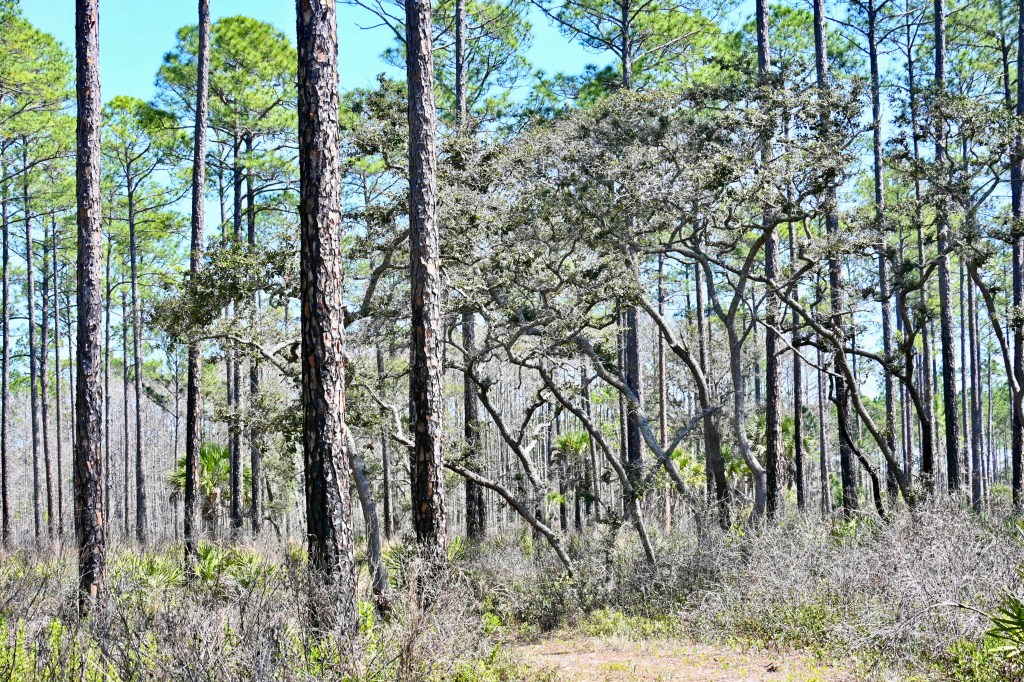
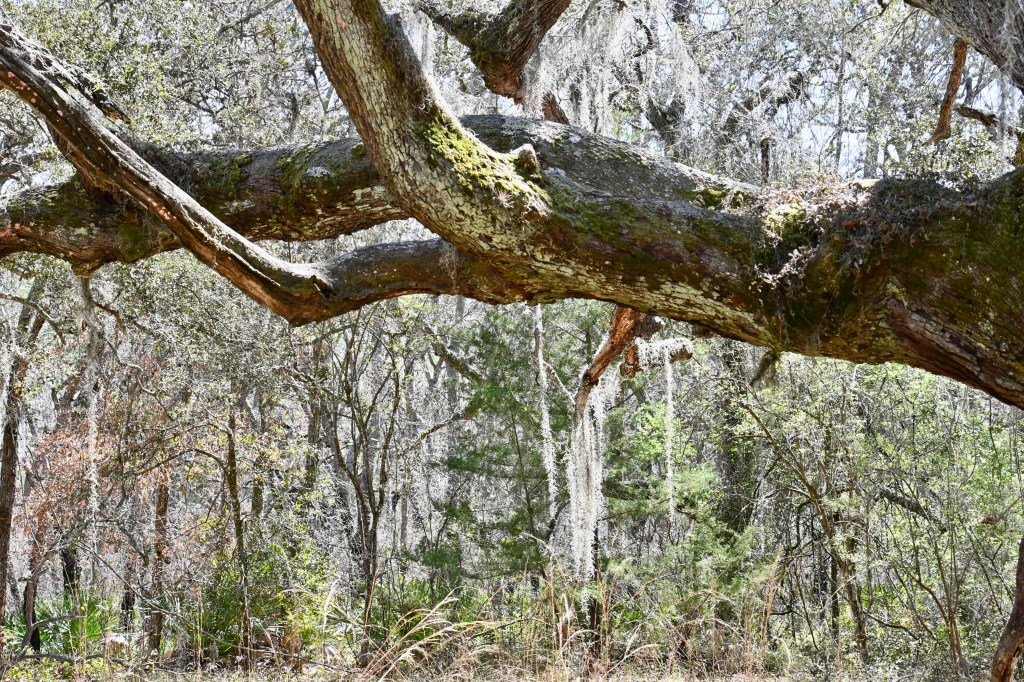
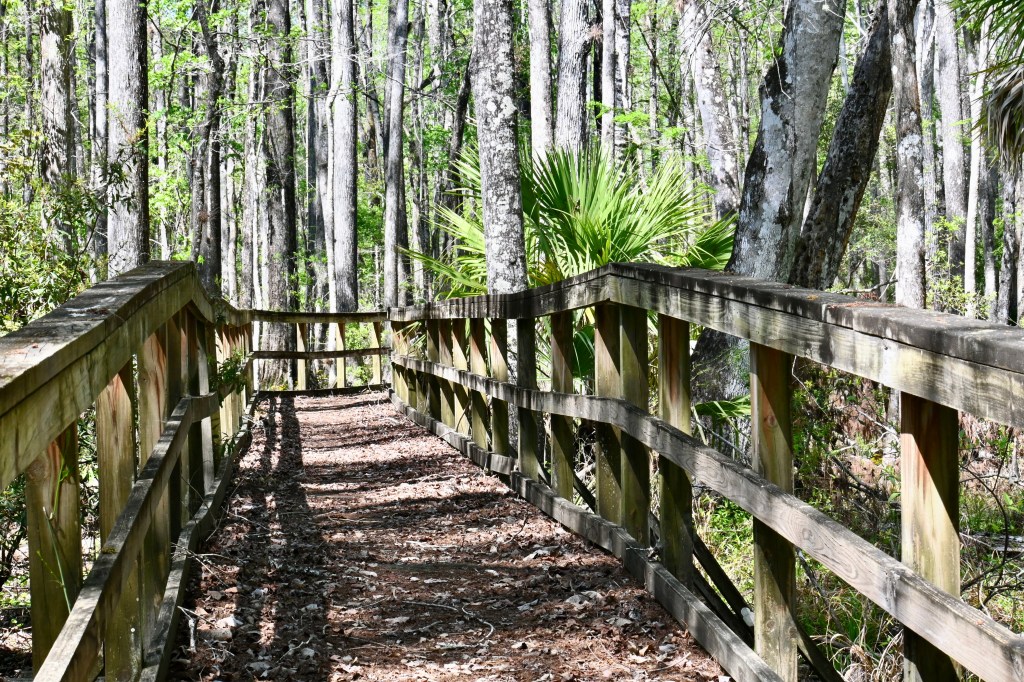
I had not even heard of Cedar Key long before I came, but now I feel renewed, with walks along the water, entranced by pelicans and horseshoe crabs, by mangrove edged lagoons and through forests filled with live oak, tall cypresses, saw palmettos and slash pines in a town miles from a traffic light.
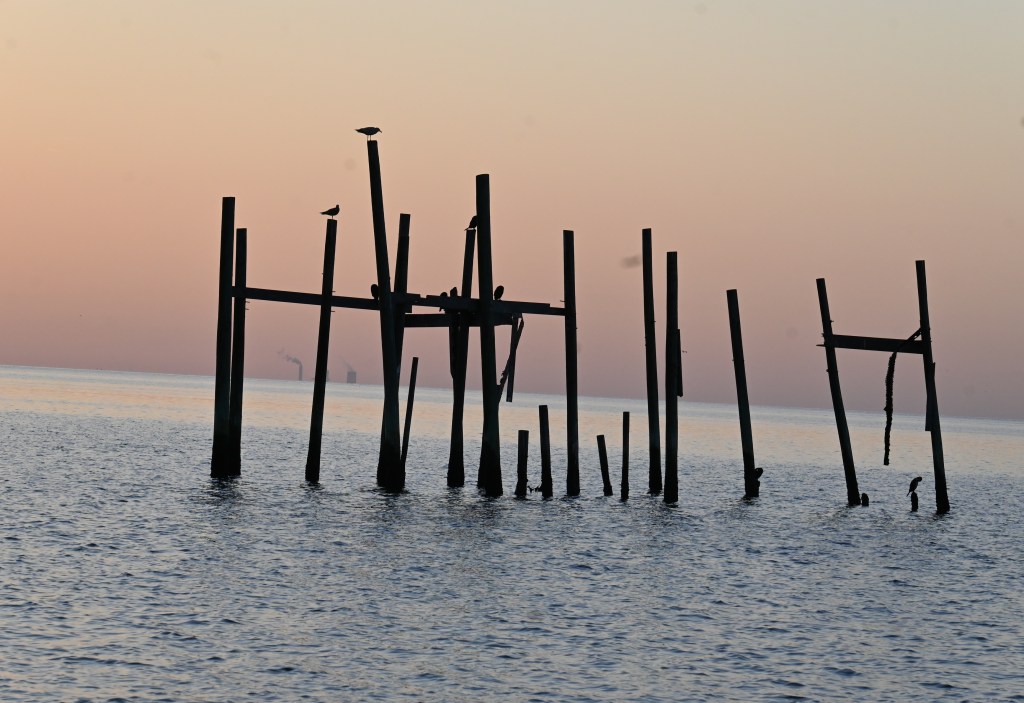
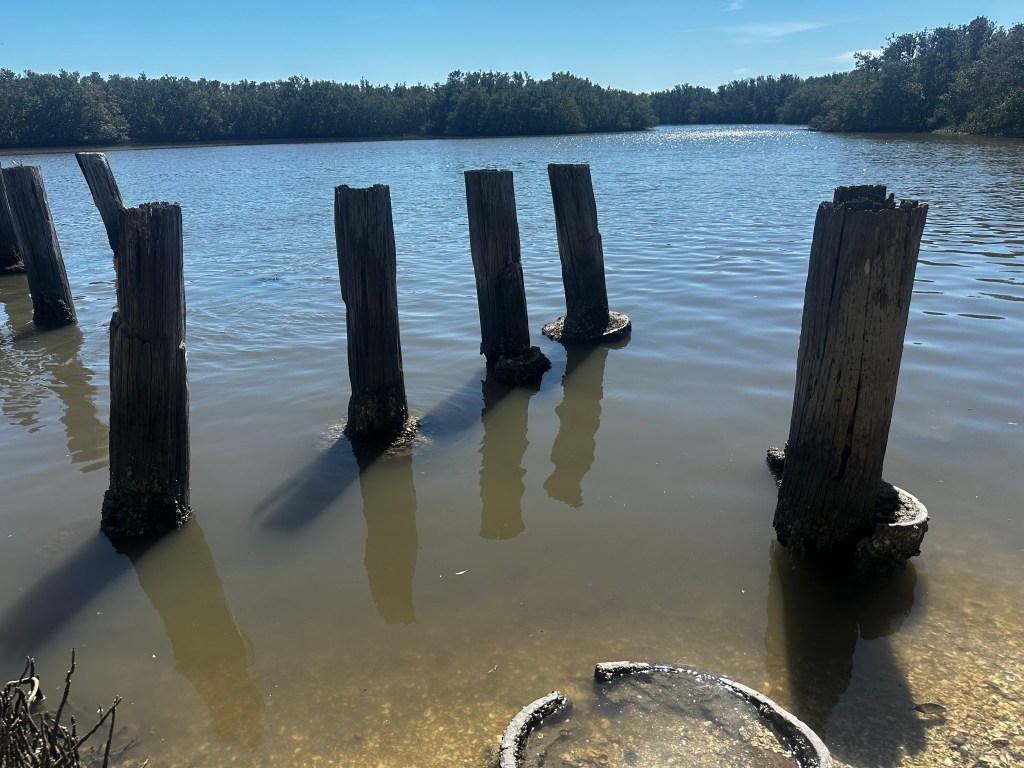
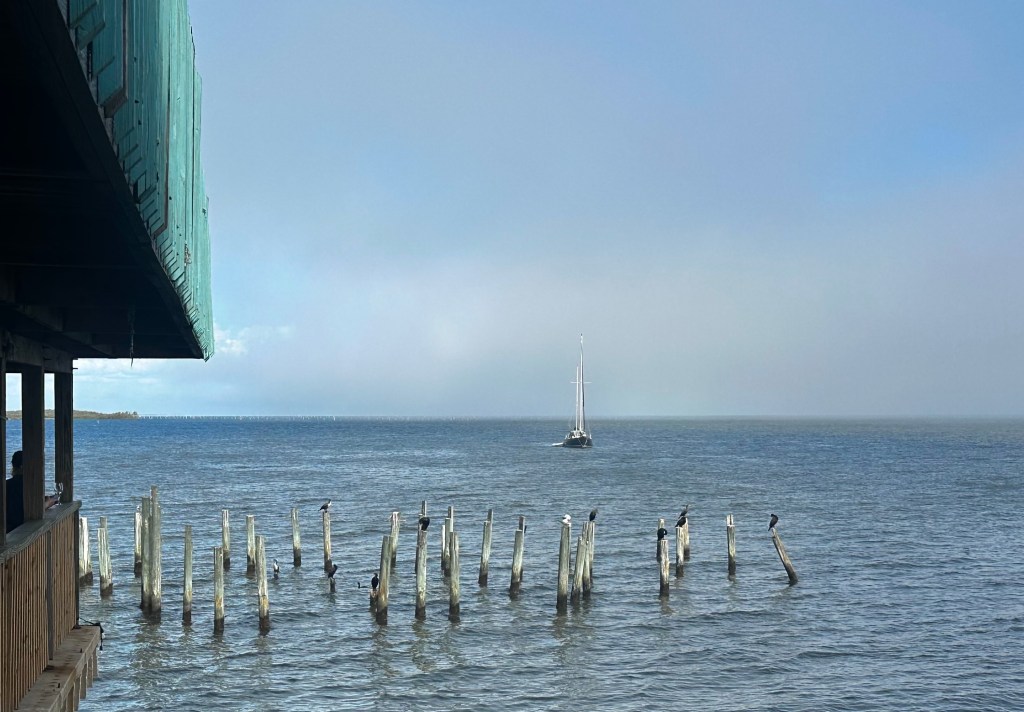
Cedar Key is a city of under 700 full-time residents, at the far end of a cluster of little islands jutting into the Gulf of Mexico in that part of northern Florida called the Big Bend. It’s a 20 mile drive through thick forests off US 98 until you get to the jumble of old fishing shacks, wooden bungalows, a smattering of new condos on high stilts, abandoned railroad piers sticking up through narrow lagoons.
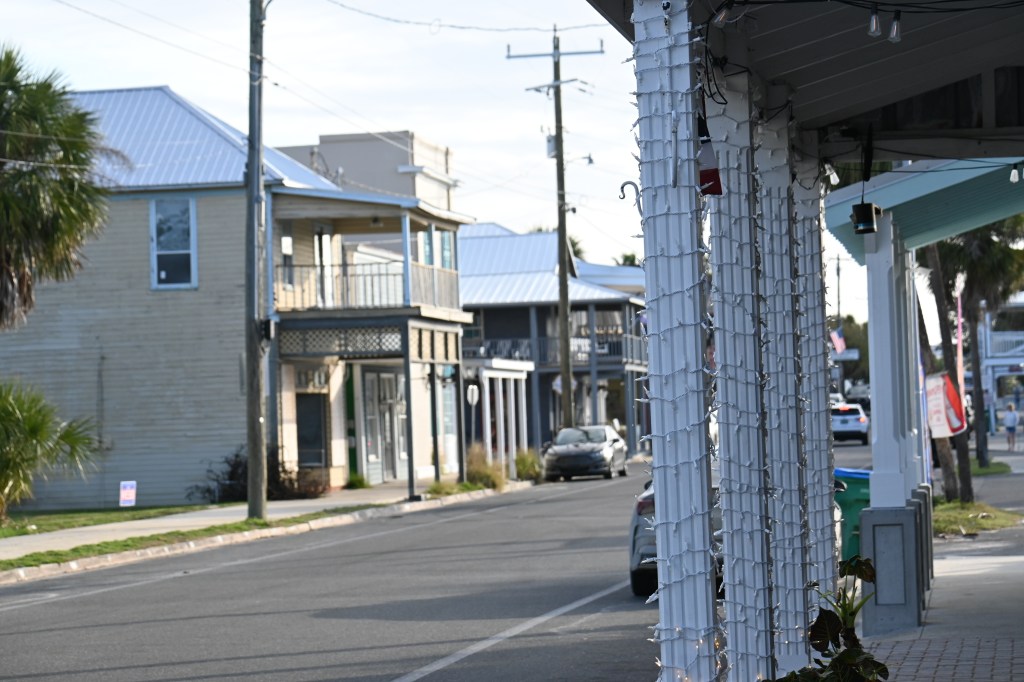
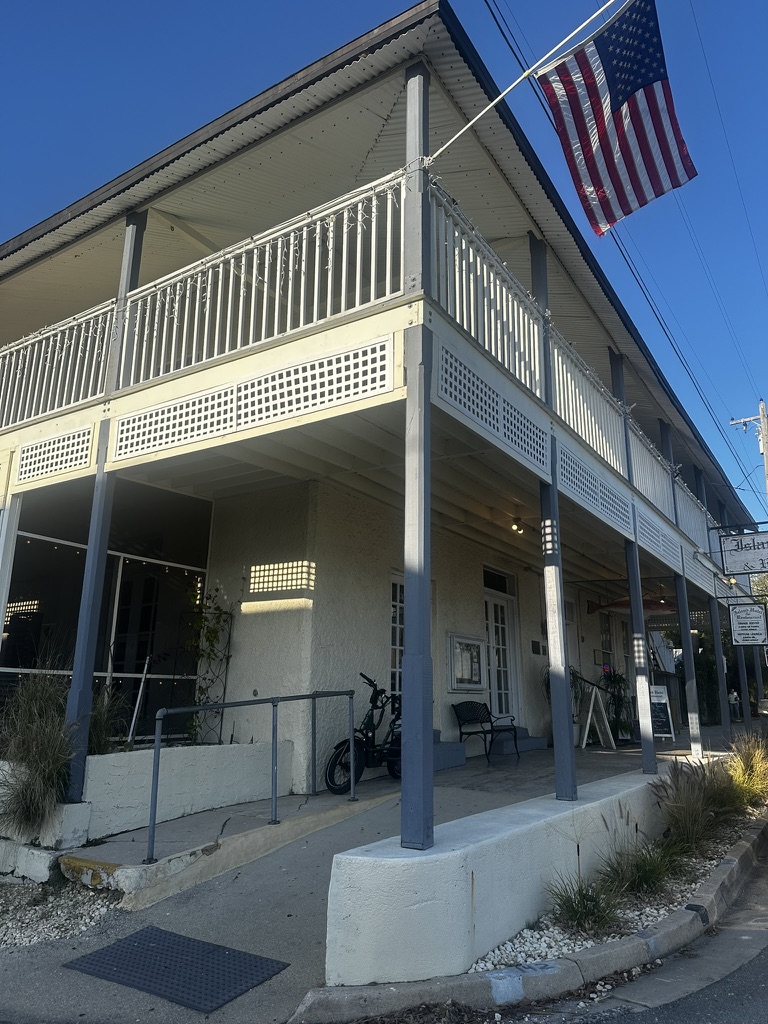
Finally, at the end of Florida 24, you reach the city of Cedar Key. Though Cedar Key is technically a city, the only thing urban about it are sidewalks. Three blocks anchored by the Historical Society Museum, the 1859 Island Hotel, Steamers Cafe, a bakery, a bar, the 1842 Coffee Shop, a small public library and a couple of gift shops. Dock Street, built out into the gulf past the marina, sports a couple more cafes and a souvenir shop.
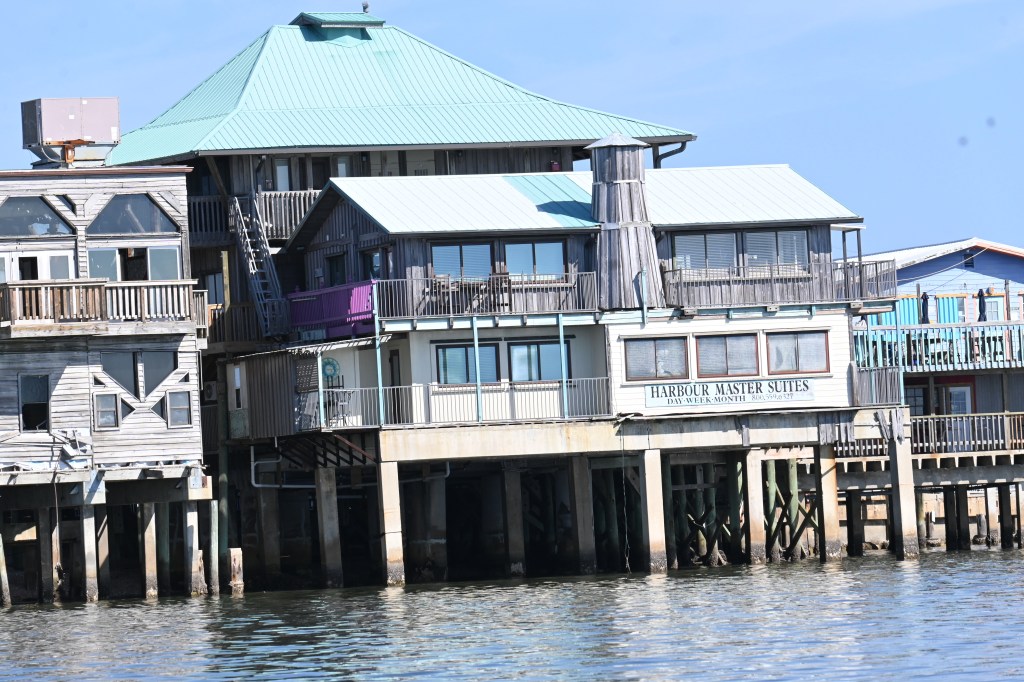
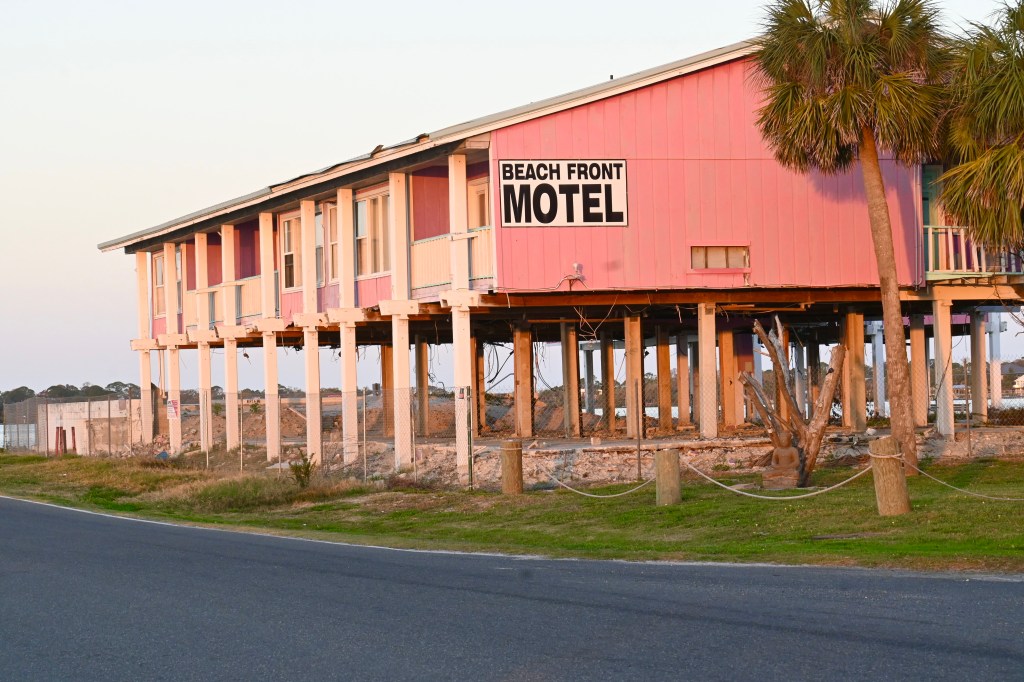
But the dock and the town still bear the ravages of 2024’s Hurricane Helene, with collapsed buildings, boarded up storefronts, an abandoned pink motel on the beach. The only grocery store in town was destroyed and never re-opened: we had to drive 35 minutes to Chiefland for provisions.
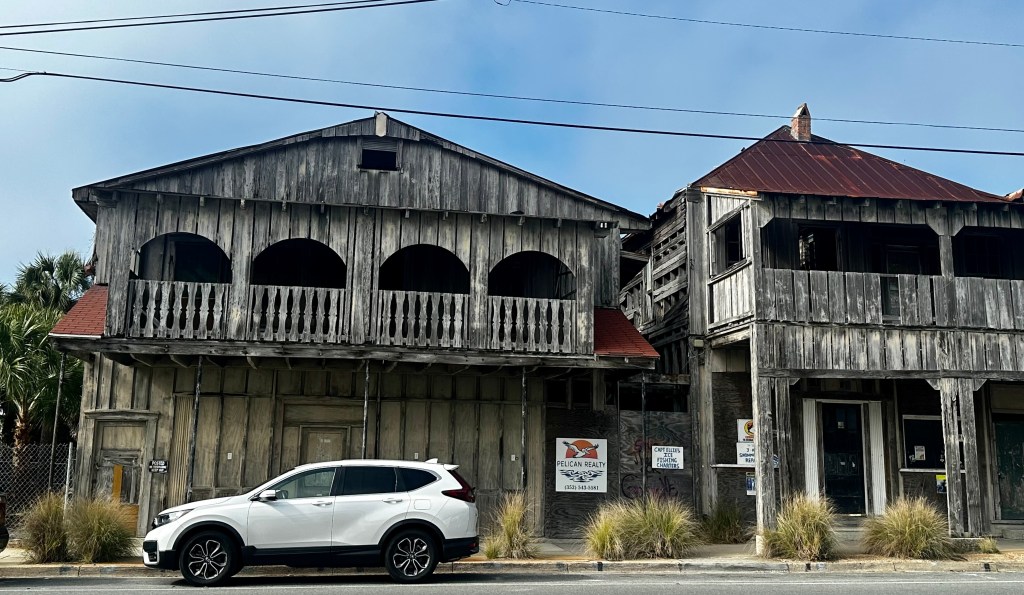
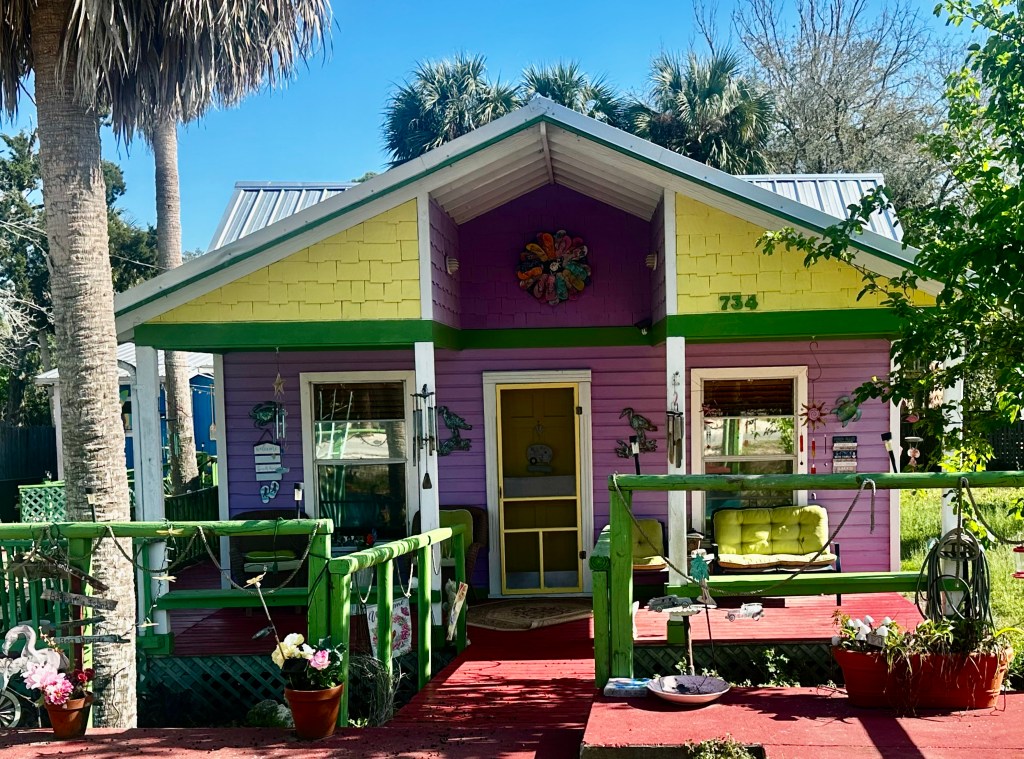
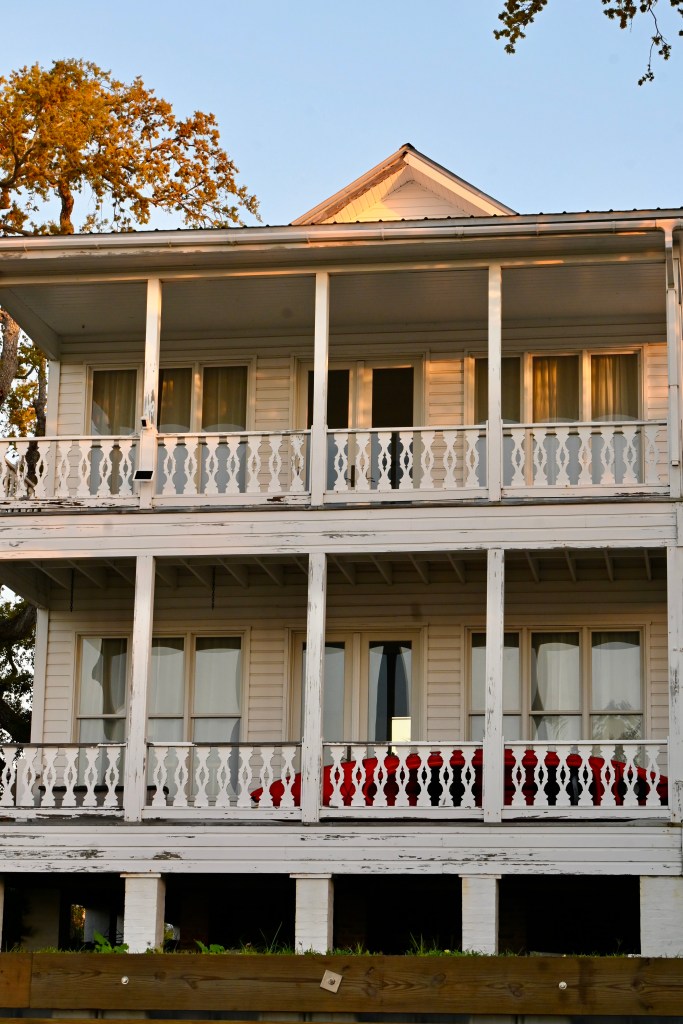
But what does exist, what survived, are the 100-year old wooden bungalows with their pointed eaves, in pastels of pink and yellow or Florida turquoise and elegant 19th century homes with wide verandas, like you might see in New Orleans or Key West. Some had been brought over from Atsena Otie Key, a mile out into the Gulf, when the last inhabitants of that once bustling island left for good, leaving only the nesting birds.
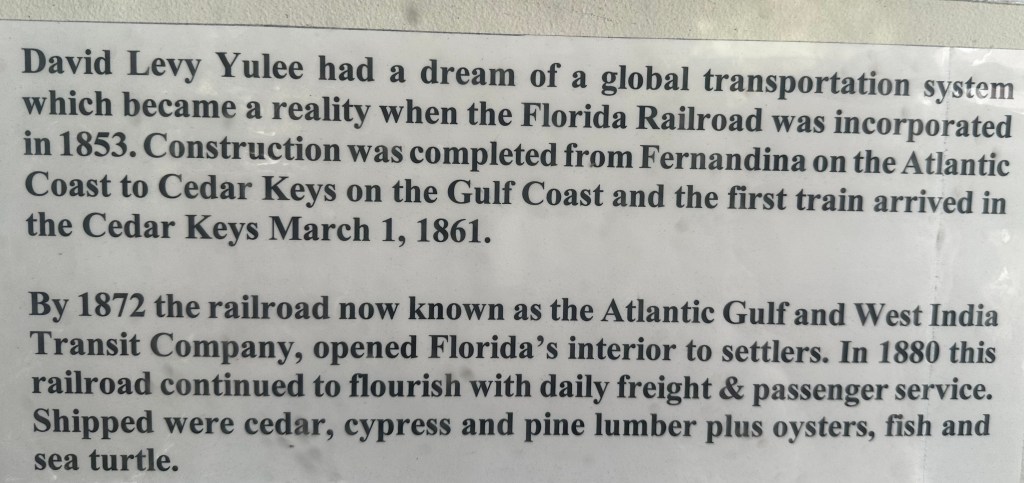
The “Cedar” of the Cedar Keys is the eastern red cedar that once filled the forests on these keys. In the 1860s Eberhard Faber, a German industrialist, discovered that these cedars made the perfect wood for pencils as they didn’t splinter. He built a pencil factory on Atsena Otie Key, then known as Depot Key, while the Eagle company built a factory on Way Key, where the “city” of Cedar Key is now. By then, the Florida Railroad had connected Cedar Key on the west with Fernandina on the Atlantic Coast, opening up commerce in northern Florida. For a while, Cedar Key was a busy port until eclipsed by Tampa to the south. And that was 100 years ago.
The founder of the Florida Railroad, David Levy Yulee, born in St Thomas to a wealthy Moroccan Jewish family, was the first person of Jewish descent elected to Congress. He was also an enslaver and later became the Secretary of State of the Confederacy. The county, Levy County, bears his name.
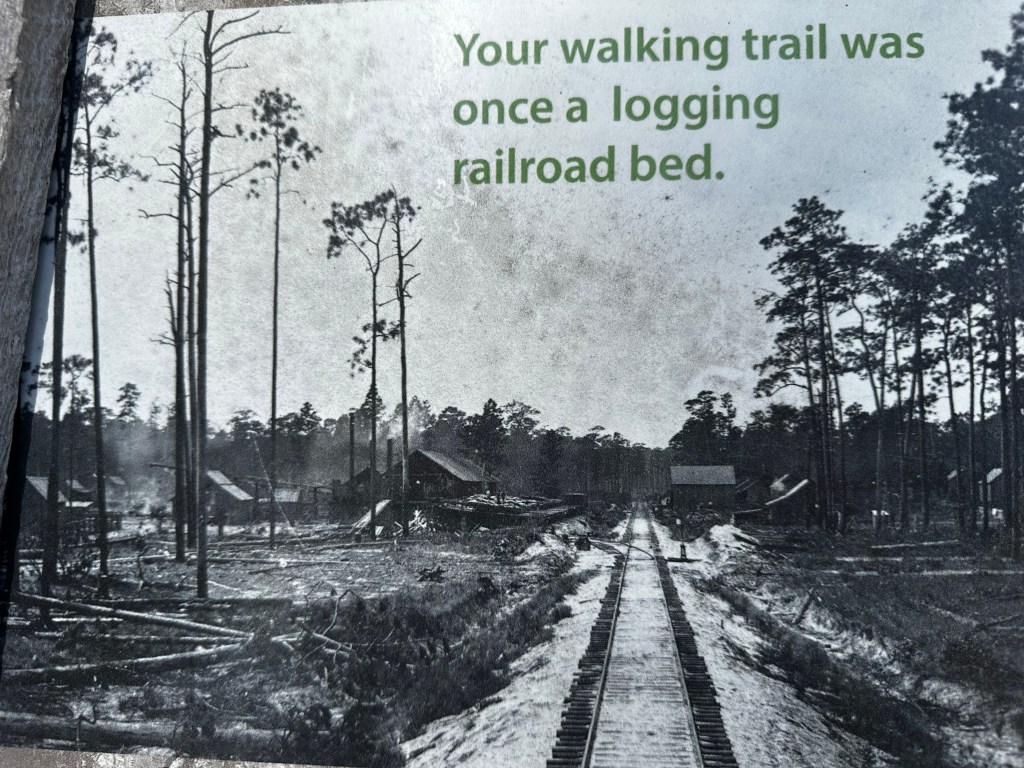
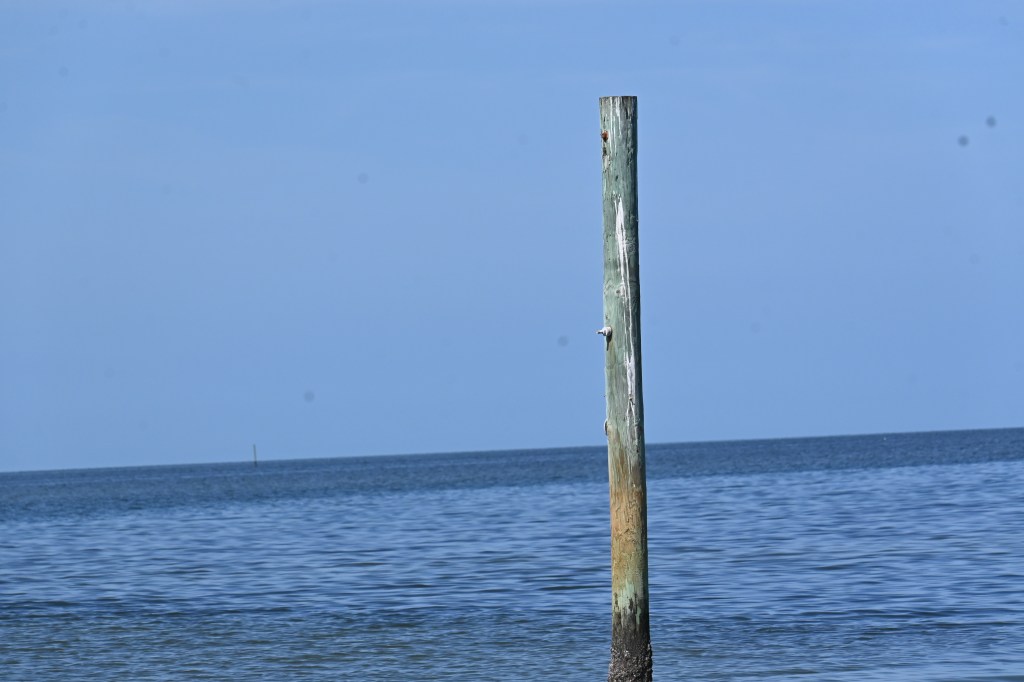
The pencil factories are long gone. The railroad is long gone save for the water-logged piers and a walking trail built on the raised bed of the railroad. They seem apt metaphors for this fragile place-technology born of the 19th century, useful and instrumental for their time.
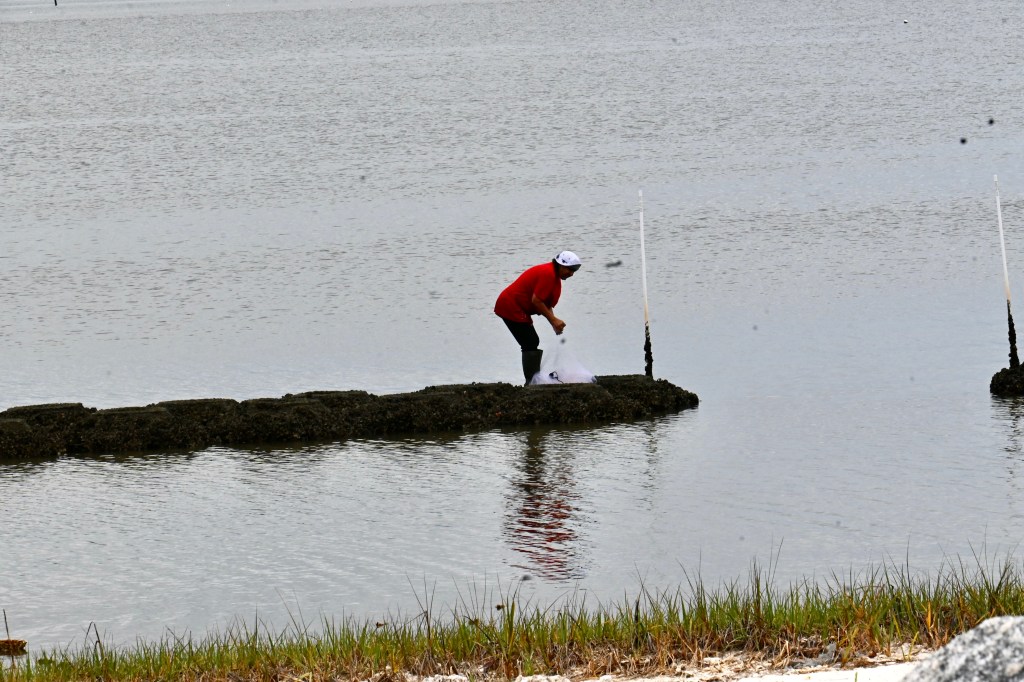
Some places adapt, others do not. In the Cedar Key Historical Museum, a room is devoted to loss of commercial net fishing, banned in Florida over thirty years ago. A video runs on a continual loop bemoaning the loss of that Cedar Key way of life. The net fisherman’s livelihood has been replaced by the farm-raised clam industry, there are still small boats that go out into the Gulf for shrimp, grouper, and the occasional oyster, among many others.
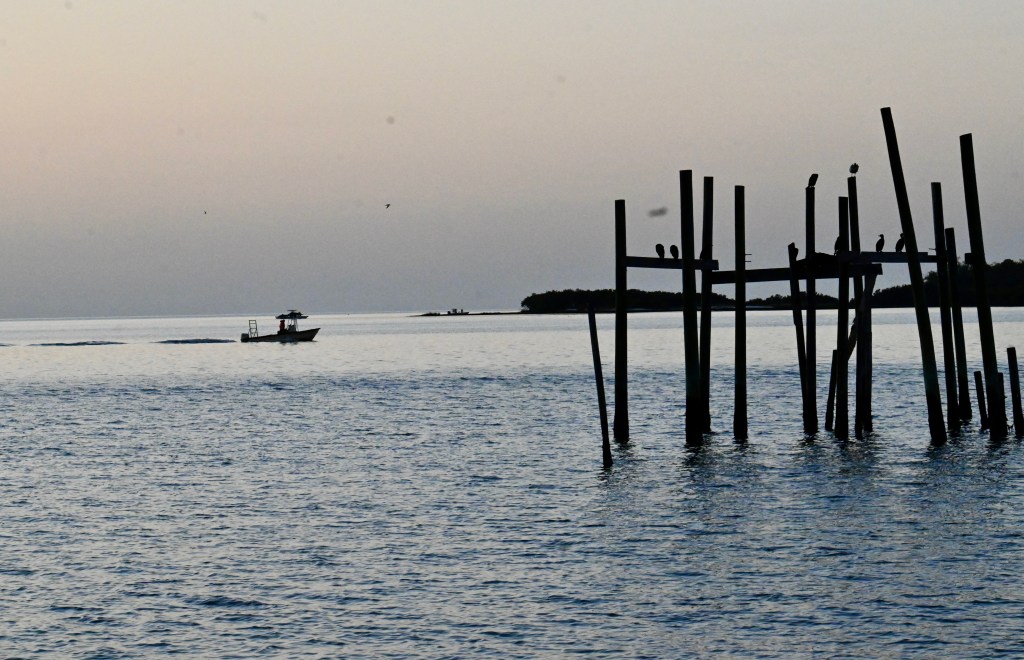
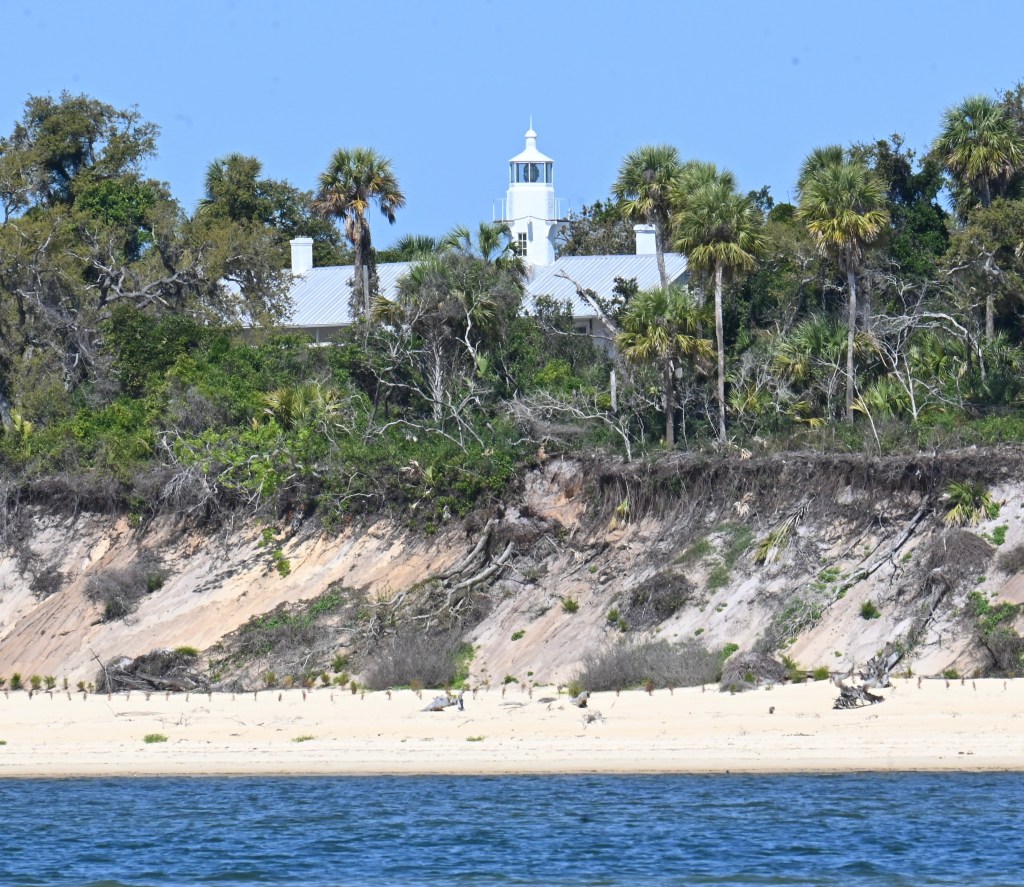
Boaters have naturally turned to tourism. A few local outfits have kiosks on the short Cedar Key pier. Our guide, Jeff, took us out on a flat-bottomed boat for a couple of hours to swing by the tiny keys at the very end of the archipelago, accessible only by boat. There is Atsena Otie, which once had a thriving village, Snake Key and Seahorse Key, with a lighthouse dating from 1854.
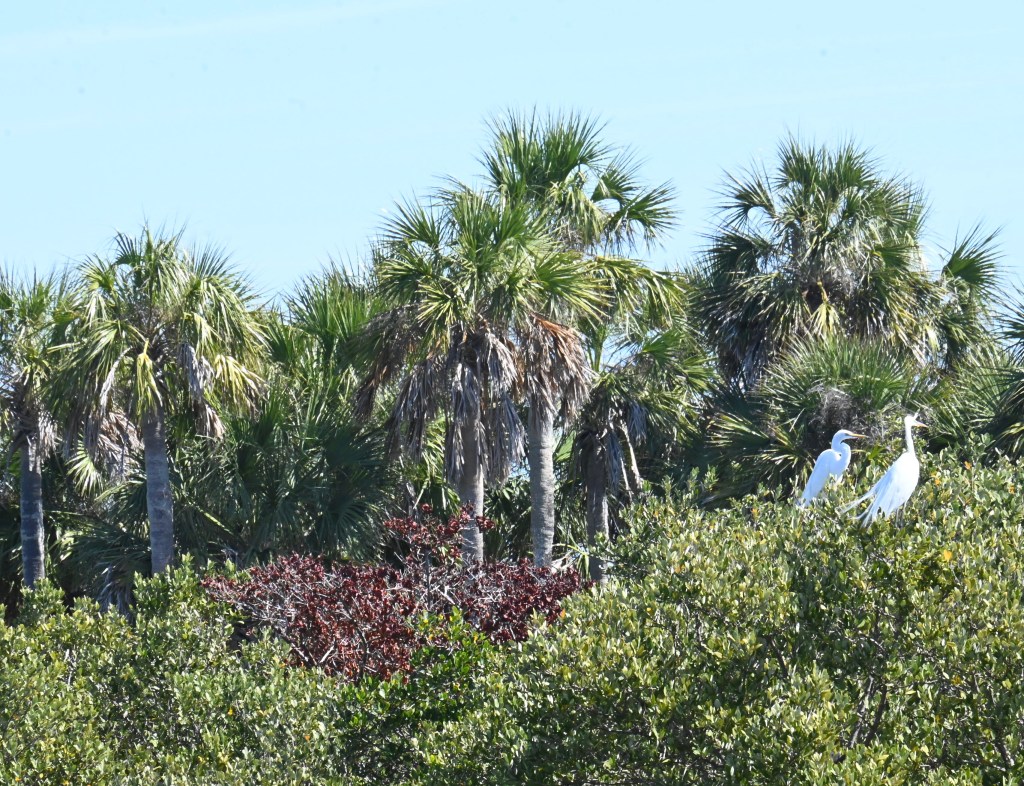
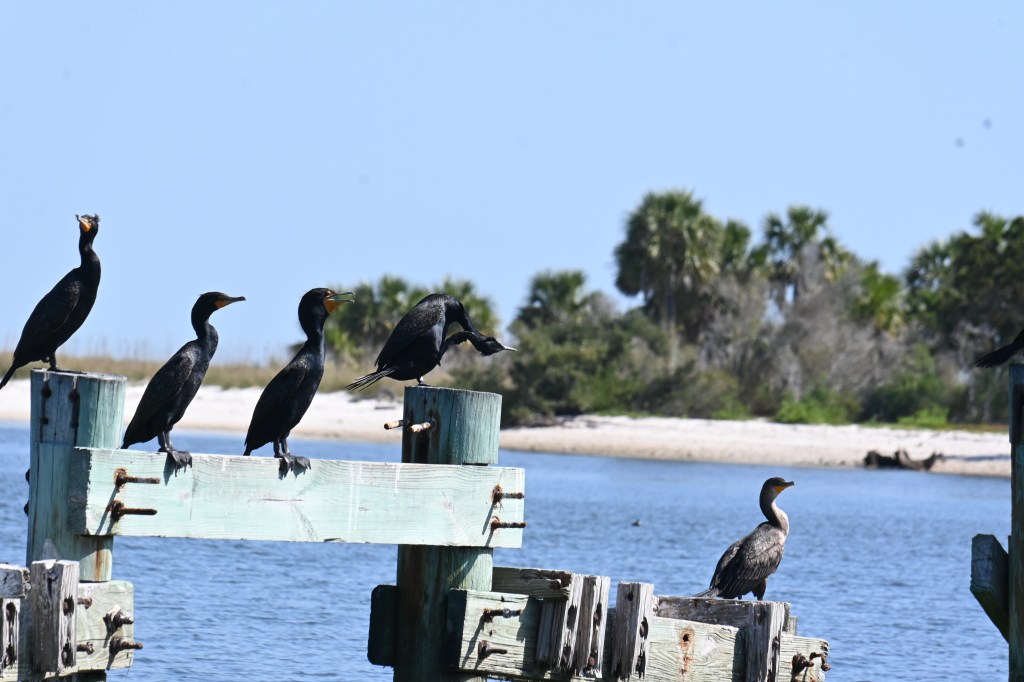
In 2015, a colony of over 10,000 nesting birds—ibises, egrets, cormorants- completely disappeared from Seahorse Key. As described in this Audubon article, no one has ever figured out what made them leave.
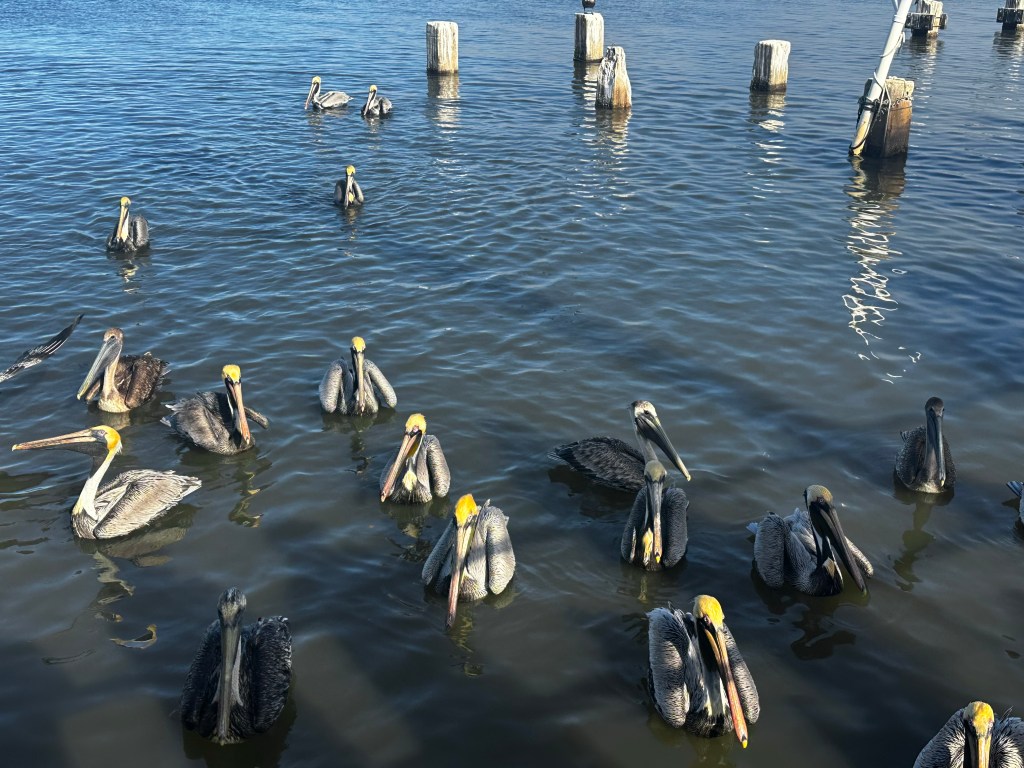
About 18 miles from Cedar Key is the Lower Suwanee National Wildlife Refuge, run by the US Fish and Wildlife Service. We spent a couple of hours walking through the forest, seeing few other visitors.
The ranger station was closed, with no indication of when it might reopen. Atsena Otie Key and Seahorse Key are also managed by USFWS. Jeff, our boat guide, told us that USFWS used to manage access to the tiny islands, trying to contain future damage to these vulnerable ecosystems, but no longer. “Budget cuts, I guess.” he said. I could not help but lament that this state, so staunch in its support of the current administration, had voted away the protections that might save these fragile mangrove habitats and warn of devastating hurricanes.
Jeff, who looks to be around 30, told us be moved to Cedar Key from Kansas in 2019. “It was here or Alaska,” he said, “I needed to get out of a bad situation.” He found a job on the boat when he got to Cedar Key, learned everything he could from the old fishermen.
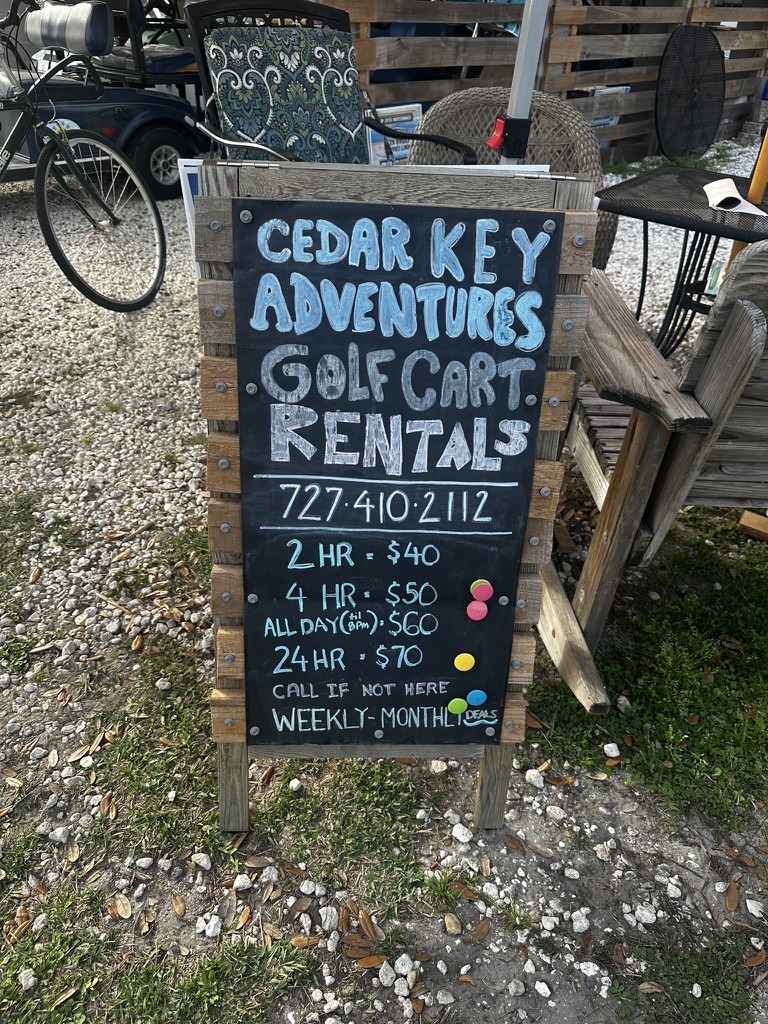
I can imagine Cedar Key as a place you might want to land when the situation is bad. At least if an unhurried life is what you need. A hand-painted sign on the beach next to a stack of kayaks has a cell phone number. The guy who rents those and his little fleet of golf carts will show up if you give him fifteen minutes. But no rush.
By our second day, we had adjusted to the languid pace. We strolled back and forth on the four blocks of “downtown”, peeked into the several gift shops and the hardware store, not really expecting anything to have changed.
We walked out the to the airstrip, past the neighborhood with the few big homes with private docks.
In four nights in Cedar Key, we ate three times at Steamers and and one night at the Island Hotel. In some ways, the food was interchangeable, shrimp, steamed clams, pasta. But the Island Hotel claims to have invented to heart of palm salad, served with a surprisingly delicious scoop of lime-peanut butter sorbet that melts into salad dressing.

When it was time to leave Cedar Key, I felt a little mournful. We passed a lawn sign for a local candidate for Cedar Key City Council. His campaign motto: “Don’t change Cedar Key, let Cedar Key change you.” So it is with small towns that “progress” has passed by. The locals mourn the lost past, hold on to the present, try to keep the future at bay. I live in a place like that, 1300 miles to the north. It is a delicate balance.
 Old and On the Way
Very interesting. Thanks for sharing
LikeLike
Sharon, thank you for discovering Cedar Key — and for all of your incredible stories and photos over the years. Enjoy the Everglades today!
LikeLike